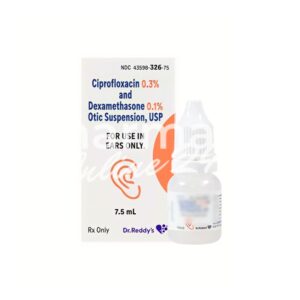
Ciprofloxacin + Dexamethasone
In stock
0.3/0.1%
from 27,73 £
In brief
- Ciprofloxacin + Dexamethasone ear drops combine an antibiotic and a steroid to treat infection and inflammation of the outer ear canal.
- Each 0.3/0.1% bottle can be ordered alone or in sets of 2, 3, 4, 5 or 6.
- The UK equivalent is a prescription-only ear-drop suspension, and your doctor or prescriber decides whether to use it.
Ciprofloxacin + Dexamethasone drops for a painful outer ear
Ciprofloxacin + Dexamethasone ear drops are meant for acute otitis externa, the infected, sore and often itchy ear canal that tends to follow swimming or a scratch. The antibiotic, ciprofloxacin, is active against Pseudomonas aeruginosa and Staphylococcus aureus, the two bacteria most commonly found. The steroid, dexamethasone, reduces swelling and discomfort so the drops can reach where they are needed. In the UK the corresponding product is a suspension containing 3 mg of ciprofloxacin and 1 mg of dexamethasone per millilitre, which is the same as the 0.3% and 0.1% shown here.
The bottle and how it fits UK practice
Each unit is a 0.3/0.1% dropper bottle, and up to six can be ordered together, which is more than a single course needs. A UK course takes one bottle at most, so spare bottles should not be used for later earaches without advice. The Ciprofloxacin + Dexamethasone sold here is an import, so look at the label for both ingredient names, the strength and an expiry date. Once opened, a bottle is not meant to be kept for another infection.
Getting the drops where they belong
Ciprofloxacin + Dexamethasone is used from the age of one, including by older people: four drops in the infected ear twice daily for seven days, with no change needed for liver or kidney function. Shake the bottle first. Cold liquid in the ear canal can bring on dizziness, so let the bottle warm in your hand for a while. Lie on your side with the affected ear uppermost, let the drops fall in, and stay still for roughly five minutes. A second person can help, particularly with a child. Keep the nozzle clear of the skin so that it stays clean. While the course lasts, keep water out of the ear; a shower cap, or cotton wool smeared with petroleum jelly, is a common sensible step. That last point is practical advice and not SmPC wording.
Reasons to hold back
Allergy to ciprofloxacin, to any other quinolone antibiotic, to dexamethasone or to something else in the suspension is a firm reason not to begin. Viral infections of the ear, such as herpes or chickenpox, and fungal ear infections are also contraindications, since a steroid could make them worse. In pregnancy the drops are for use only when clearly needed, and a breastfeeding mother should mention it. If you have ever been told you have a hole in the eardrum, or you have ear tubes, say so before the first drop, as that alters the choice of treatment.
Reactions and warning signs
Ear pain is among the reactions reported, at around one user in a hundred, together with itching, a rash around the ear and a feeling of blockage. Fluoroquinolone antibiotics can cause pain or swelling near a tendon, and visual disturbance; if either happens, stop the drops and speak to a doctor promptly. Swelling of the face or a spreading rash might point to an allergy and needs urgent medical help.
If the ear does not settle
A week is the normal length of a course, and symptoms that persist beyond it need another look. The SmPC also advises reassessment if ear discharge keeps coming back, since a foreign object, a cholesteatoma or a growth can sometimes hide behind what looks like repeated infection. Your GP or prescriber decides whether Ciprofloxacin + Dexamethasone is the right choice, or whether a different treatment or a referral is better.