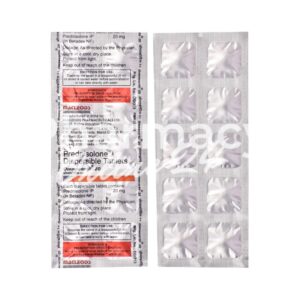
Deltacortril
In stock
5mg · 10mg · 20mg · 40mg
from 20,83 £
In brief
- Deltacortril is a gastro-resistant (enteric-coated) prednisolone tablet, a corticosteroid prescribed to control inflammation and allergic or autoimmune disease.
- Strengths of 5 mg, 10 mg, 20 mg and 40 mg are listed, with 30 to 360 tablets per pack, but UK Deltacortril exists only as 1 mg, 2.5 mg and 5 mg.
- It is prescription-only in the UK, and it is the doctor who plans the dose and its gradual reduction.
Deltacortril, a coated prednisolone tablet, in brief
Deltacortril is a brand of prednisolone, a synthetic corticosteroid that imitates cortisol, the hormone made by the adrenal glands, and at treatment doses it holds back the immune system and calms inflammation, which is why so many branches of medicine rely on it. The tablet has a coating that resists stomach acid and opens further down, in the small intestine, an arrangement intended to be kinder to the stomach even though the SmPC still lists indigestion and peptic ulcer among its warnings. Methylprednisolone is a different steroid and is not what this product contains.
What the SmPC lets prednisolone treat
Transplant rejection, adrenal insufficiency, certain blood cancers, autoimmune haemolytic anaemia, some kidney and eye diseases, pemphigus, sarcoidosis, autoimmune hepatitis, ulcerative colitis, polymyalgia rheumatica, rheumatoid arthritis, lupus and other connective tissue diseases, asthma and severe allergic reactions all appear among the indications in the SmPC, which groups them by organ system. The label calls steroid therapy palliative, meaning that the tablets ease an illness for as long as they are taken but do not remove its cause.
Listed strengths compared with UK Deltacortril
Four strengths feature here, 5 mg, 10 mg, 20 mg and 40 mg, each of them available as 30, 60, 90, 120, 180, 270 or 360 tablets. The UK authorisations, held by Phoenix Labs, cover gastro-resistant tablets of 1 mg, 2.5 mg and 5 mg, so only the 5 mg has a British counterpart, and the 10 mg, 20 mg and 40 mg tablets are not UK Deltacortril strengths and may be labelled differently. A prescription is required in the UK for oral prednisolone, which is a POM.
Setting the dose and bringing it down
Needs vary a great deal, and the adult range in the SmPC runs from 5 to 60 mg daily, as a single dose or divided, with the low end used for allergy, skin disease and rheumatoid arthritis and the top end for lymphoma and other blood disorders. As the illness settles the prescriber lowers the dose gradually towards the smallest amount that keeps control, and in a long course no single reduction should exceed 5 to 7.5 mg a day. A single morning dose on alternate days may be used when appropriate, which puts less pressure on the adrenal glands. In children the dose is adjusted according to response, and height and growth are followed.
The adrenal glands and the danger of an abrupt stop
Taking more than 7.5 mg a day of Deltacortril, or any prednisolone, for over three weeks can leave the adrenal glands making less cortisol of their own, and recovery may take months, which is the reason doses are tapered in smaller steps below 7.5 mg. Surgery, an injury or a serious illness during that recovery period may call for extra steroid cover, and the steroid treatment card is how staff are told. Signs of infection may be less obvious while taking prednisolone, a person who has never had chickenpox or measles and comes into contact with a case should seek urgent medical advice, and live vaccines are avoided during high-dose treatment and for a minimum of three months after it.
Who is excluded, and which medicines interfere
Untreated systemic infection, herpes simplex of the eye and allergy to prednisolone or any ingredient rule it out, and since lactose is in the formulation, galactose intolerance, Lapp lactase deficiency and glucose-galactose malabsorption are further bars. Closer watching is planned for diabetes, hypertension, heart failure, osteoporosis, epilepsy, stomach ulcers, earlier tuberculosis and a personal or family history of severe depression or other mood disorders. There are reports of Crohn’s disease flaring up after coated prednisolone. Enzyme inducers such as carbamazepine, phenytoin, phenobarbital and rifampicin weaken its effect, ketoconazole, ritonavir, ciclosporin and oestrogen-containing contraceptives strengthen it, an NSAID adds to the risk of gut ulcers and bleeding, and people on warfarin are likely to need their INR checked more often.
Adverse effects and the prescriber’s role
The longer the treatment and the higher the dose, the greater the risk. Mood, temper and sleep can all be disturbed, in some people to the extent of depression, and thoughts of self-harm need prompt help. Recognised effects also include a bigger appetite with weight gain, a rounder face, swelling from fluid, higher blood sugar, indigestion, thin skin that bruises easily, weaker muscles, thinner bones, cataract, glaucoma and changes to periods. Choosing Deltacortril, its strength and how long it is taken falls to the prescriber.