Amiloride
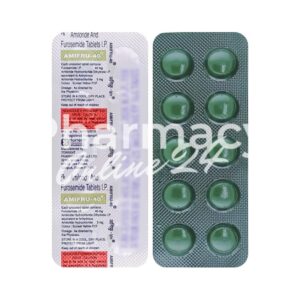
In brief
- Amiloride is a prescription-only medicine (POM) in the UK.
- Amiloride is used to treat oedema, hypertension and to assist management of congestive heart failure; it is a potassium‑sparing diuretic that blocks epithelial sodium channels (ENaC) in the distal tubule and collecting duct, reducing sodium reabsorption and limiting potassium excretion.
- Usual adult dosage is 5–10 mg daily as a starting dose; doses may be given once daily or divided, and can be titrated up to 20 mg/day in divided doses for congestive heart failure under close monitoring.
- Administered orally as tablets (commonly 5 mg); also available in fixed combinations with thiazide diuretics.
- Onset of diuretic effect is typically within 2–4 hours after oral administration, with clinical effects evident within a few hours.
- Duration of action is usually around 24 hours (allowing once‑daily dosing for many patients), though monitoring and individual response may vary.
- Avoid excessive alcohol while taking amiloride; alcohol can worsen dizziness, dehydration and blood‑pressure effects and may increase the risk of adverse reactions.
- The most important and common adverse effect is hyperkalaemia (high potassium); other frequent side effects include nausea, vomiting, diarrhoea, headache, dizziness, muscle cramps and fatigue.
- Would you like to try amiloride without a prescription?
Basic amiloride information
- INN (international nonproprietary name): Amiloride.
- Brand names available in the United Kingdom: generic amiloride hydrochloride (various manufacturers)
- ATC code: C03DB01 (potassium-sparing diuretics, plain)
- Forms and dosages: Tablets 5 mg; combination products with thiazide or loop diuretics also exist
- Manufacturers in the United Kingdom: Mylan, Teva and other generic manufacturers
- Registration status in the United Kingdom: Licensed by the MHRA
- OTC / Rx classification: Prescription-only medicine (POM)
Legal status and availability in the UK
Amiloride is a prescription-only medicine (POM) in the UK.
In our online pharmacy, amiloride is available without a prescription, with discreet delivery to the United Kingdom in 9–21 days.
Quick product snapshot (essential facts)
What amiloride is and classification
- INN: Amiloride.
- ATC code: C03DB01 — Potassium-sparing diuretics, plain.
- Legal status: Prescription-only medicine (POM in the UK).
- Typical strengths: Most commonly supplied as 5 mg tablets; fixed-dose combinations with thiazide or loop diuretics are also available.
Brands and packaging in the UK
Typical brands and pack formats
In the UK amiloride is supplied as generic amiloride hydrochloride 5 mg tablets from manufacturers such as Teva and Mylan, usually in packs of 28 or 56 tablets.
Indications and typical regimens
Approved uses and routine dosing patterns
What will my doctor prescribe amiloride for?
Amiloride is mainly used for oedema from heart failure, cirrhosis or nephrotic syndrome and as an adjunct in hypertension management to reduce thiazide- or loop-induced hypokalaemia.
| Indication | Typical starting dose | Titration / max |
|---|---|---|
| Oedema / hypertension | 5–10 mg once daily (may split) | Increase as needed; usual maximum 20 mg/day in divided doses |
| Congestive heart failure | Start 5 mg daily | Titrate cautiously up to 20 mg/day with monitoring |
| With thiazide diuretics | Amiloride 5 mg with thiazide (e.g., 50 mg hydrochlorothiazide) | Adjust based on potassium and clinical response |
When to take
- Take once daily or in divided doses as prescribed by the clinician.
- For mild dosing, splitting into morning and evening doses is common practice.
- Start low in older patients and those with renal impairment, then titrate based on serum potassium.
How amiloride works (mechanism in plain language)
Pharmacology simplified for patients and pharmacists
- ENaC action: Amiloride blocks epithelial sodium channels (ENaC) in the distal nephron, reducing sodium reabsorption.
- Potassium effect: Reduced sodium reabsorption diminishes potassium excretion, so amiloride is potassium-sparing.
- Comparative potency: Produces modest natriuresis compared with loop diuretics; its role is often to prevent hypokalaemia rather than to produce strong diuresis.
Onset is within hours of oral dosing, and duration varies with dose and renal function, which is why monitoring guides dose changes.
Contraindications and practical precautions
Absolute and relative contraindications
- Absolute contraindications: known hypersensitivity to amiloride or excipients.
- Absolute contraindications: anuria or acute or chronic severe renal impairment and Addison’s disease.
- Absolute contraindications: baseline hyperkalaemia (>5.5 mmol/L) at initiation.
- Relative precautions: mild to moderate renal dysfunction, diabetes mellitus, elderly patients, hepatic impairment, and concurrent use of ACE inhibitors or ARBs.
Red flag: urgent action needed
Arrange urgent review and do not start or increase dose if serum potassium is above 5.5 mmol/L.
Verify recent serum potassium and creatinine before initiating or increasing dose and flag any interacting medicines on the patient’s record.
Side effects, monitoring and lab guidance
Side effects and monitoring
| Side effect | Frequency | Pharmacist action |
|---|---|---|
| Hyperkalaemia | Most clinically significant (potentially serious) | Check latest serum potassium; advise urgent GP/ED review for levels >5.5 mmol/L or symptoms |
| Nausea, vomiting, diarrhoea | Common | Advise fluids; consider holding drug and arranging blood tests if severe or dehydrated |
| Headache, dizziness, fatigue | Common | Counsel on avoiding hazardous tasks until effects known; review bloods if persistent |
| Arrhythmia (secondary to hyperkalaemia) | Rare but serious | Immediate emergency referral; request ECG and electrolytes |
Suggested monitoring timetable
- Baseline serum potassium and creatinine prior to initiation.
- Repeat at 1–2 weeks after starting or dose change.
- Then at around 3 months and periodically thereafter, or more often in renal impairment, elderly or when co-prescribed ACEi/ARB.
Drug interactions and co-prescribing notes
High-priority interactions
Which combinations raise the biggest concerns?
- Do not combine amiloride with other potassium-sparing agents or potassium supplements without clear monitoring — the hyperkalaemia risk is additive.
- Avoid or review co-prescription with ACE inhibitors, ARBs or direct renin inhibitors, as these increase serum potassium.
- NSAIDs and COX-2 inhibitors can reduce renal perfusion and potentiate hyperkalaemia; counsel patients on OTC NSAID avoidance where possible.
| Interacting drug/class | Effect | Severity |
|---|---|---|
| ACE inhibitors / ARBs | Increase potassium; risk of serious hyperkalaemia | High |
| Potassium supplements / salt substitutes | Directly raise potassium | High |
| NSAIDs | May reduce renal perfusion, increasing potassium | Moderate |
| Triamterene | Same class — additive potassium retention; should not be co-prescribed | High |
Run an interaction check, avoid OTC potassium or salt substitutes and arrange earlier lab checks if combinations are necessary.
Special populations — renal, elderly, pregnancy, paediatrics
Dose adjustments and safety considerations
- Renal impairment: Contraindicated in severe impairment or anuria; in mild–moderate impairment use minimal doses and monitor K+/creatinine closely.
- Elderly: Start low (5 mg) and monitor more frequently because of reduced renal function and polypharmacy.
- Pregnancy / breastfeeding: Limited data; use only if the benefits outweigh risks and after specialist review; usually avoided unless essential.
- Paediatrics: Not routinely recommended under 18 years; specialist paediatric guidance required for off-label use.
Abnormal renal results should be flagged to the prescriber if eGFR falls, and carers should be given written signs of hyperkalaemia to watch for.
Overdose, missed dose and emergency advice
Recognition and immediate actions
What to watch for in overdose or missed doses.
Overdose may cause marked hyperkalaemia with symptoms such as muscle weakness, cardiac arrhythmia, nausea, vomiting and hypotension.
Immediate action for suspected overdose is to seek emergency medical care; the hospital team will perform ECG and serum electrolytes urgently.
Treatment options for severe hyperkalaemia include intravenous calcium for cardiac membrane stabilisation, insulin with glucose to drive potassium intracellularly, nebulised salbutamol, and dialysis when indicated.
Missed dose advice: take as soon as remembered unless it is close to the next scheduled dose; do not double the dose.
What to do in an emergency
- Suspected overdose or severe symptoms → call emergency services immediately.
- Advise patient to go to nearest emergency department for ECG and blood tests.
- If mild symptoms and unsure → contact GP or urgent care and arrange same‑day blood test for potassium.
Alternatives and comparison
When to choose amiloride versus other agents
| Drug | Mechanism | Pros | Cons |
|---|---|---|---|
| Amiloride | ENaC blocker (distal nephron) | Predictable potassium-sparing effect; fewer endocrine side-effects | Limited diuretic potency; hyperkalaemia risk |
| Triamterene | ENaC blocker | Similar potassium-sparing action | Not to be combined with amiloride; additive hyperkalaemia risk |
| Spironolactone / Eplerenone | Aldosterone antagonists | Effective for hyperaldosteronism; stronger diuretic effect in some patients | Endocrine side-effects (spironolactone); still risk of hyperkalaemia |
Amiloride is often favoured in combination with thiazides to preserve potassium while maintaining diuresis.
The final choice depends on the indication, renal function and whether endocrine side-effects (seen with spironolactone) are a concern.
Storage and handling
Practical instructions
- Store at controlled room temperature, generally 20–25°C, and protect from moisture and light.
- Advise patients to keep the medicine dry, out of reach of children, and not to share it with others.
- During acute illness with dehydration or diarrhoea advise patients to seek medical review and have blood tests before continuing.
Patient counselling
Counselling points
- Explain purpose: This medicine helps reduce fluid retention and helps prevent low potassium when used with other diuretics.
- Dosing: Take exactly as prescribed; some patients split the daily dose into morning and evening.
- Red flags to report: muscle weakness, palpitations, severe dizziness, or feeling generally unwell — these can be signs of high potassium.
- Interactions: avoid OTC potassium supplements, salt substitutes and discuss ongoing ACE inhibitor or ARB therapy with the prescriber.
- Monitoring: baseline potassium and renal function, repeat 1–2 weeks after start or dose change, then periodically.
- Missed dose: take when remembered unless near the next dose; do not double up.
- Storage: keep in original pack, in a dry place away from children.
Delivery across the United Kingdom
| City | Region | Delivery Time |
|---|---|---|
| London | Greater London | 9–21 days |
| Birmingham | West Midlands | 9–21 days |
| Manchester | Greater Manchester | 9–21 days |
| Glasgow | Scotland | 9–21 days |
| Leeds | West Yorkshire | 9–21 days |
| Sheffield | South Yorkshire | 9–21 days |
| Liverpool | Merseyside | 9–21 days |
| Bristol | South West | 9–21 days |
| Edinburgh | Scotland | 9–21 days |
| Newcastle Upon Tyne | North East | 9–21 days |
| Belfast | Northern Ireland | 9–21 days |
| Cardiff | Wales | 9–21 days |
| Nottingham | East Midlands | 9–21 days |
| Southampton | South East | 9–21 days |
| Brighton | South East | 9–21 days |