Memantine
In stock
10mg
from 66,96 £
In brief
- Memantine calms glutamate overactivity at NMDA receptors and is prescribed in moderate to severe Alzheimer’s disease.
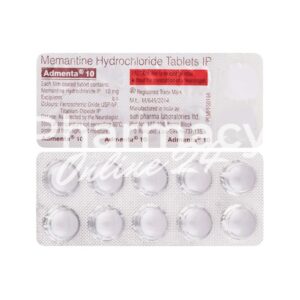
- Memantine comes here as a 10 mg tablet only, and the packs contain 30, 60, 90, 120 or 180 tablets.
- Memantine is a prescription-only medicine in Britain, started and overseen by an experienced doctor.
Memantine and its place in Alzheimer’s treatment
Memantine is used in moderate to severe Alzheimer’s disease, where it may help to preserve everyday function and thinking for a time. It acts on NMDA receptors in the brain. In Alzheimer’s disease nerve cells appear to be overstimulated by glutamate, and memantine dampens that excess signalling without stopping the normal activity that supports memory. It does not halt the underlying illness. Ebixa is the most familiar UK brand, and several generic memantine tablets are licensed in Britain as well.
The tablet strength and pack sizes
Pack counts for the 10 mg tablet are 30, 60, 90, 120 and 180. As the stock is imported, the carton may be printed for another market, so check the strength and the expiry date on the strip before every new pack. Store the tablets in their blister, away from heat and damp, and keep them where a person with memory problems cannot take extra by mistake.
How treatment is started and raised
The SmPC says treatment should be begun and supervised by a doctor experienced in dementia care, and started only if a caregiver is available to monitor medicine intake regularly. The dose is stepped up by 5 mg each week until it reaches the usual maintenance level of 20 mg a day, which is also the maximum, and the same applies over the age of 65. With moderate kidney impairment (creatinine clearance 30 to 49 ml/min) 10 mg a day is given, rising to 20 mg only after a week or more if it is tolerated, while in severe impairment (5 to 29 ml/min) the dose stays at 10 mg. Memantine is not advised in severe liver impairment, and the SmPC does not cover anyone under 18. The doctor reassesses the benefit within about three months.
Cautions and conditions that matter
Anyone allergic to the drug or its ingredients should not take it. The doctor will want to know about fits or epilepsy, a heart attack in the recent past, heart failure that is not under control, and blood pressure that stays high. Conditions that make the urine more alkaline, such as a severe urinary tract infection, or sweeping changes in diet, can raise memantine levels. Dizziness and confusion can affect driving and the use of tools; the doctor will say whether it is safe to carry on.
Medicines that interact
Amantadine, ketamine and dextromethorphan act at the same receptor and should not be combined with memantine. L-dopa, dopamine agonists and anticholinergic drugs can all act more strongly alongside it, whereas barbiturates and neuroleptics may lose some of their effect. Baclofen and dantrolene may change in effect, and the action of warfarin needs watching. Give the prescriber a complete list of all prescribed and bought medicines.
Reactions people report
Dizziness, headache, constipation, raised blood pressure, sleepiness and breathlessness are among the commoner effects. Confusion, hallucinations, tiredness and vomiting are uncommon; seizures are very rare. Tell the doctor about any sudden worsening of behaviour or memory. Treatment is a decision for the doctor, who will weigh benefit against risk, and the family should keep that conversation going throughout the course. Carers’ observations about mood, sleep and daily activity are often more telling than a short clinic visit, so keep a note of them.