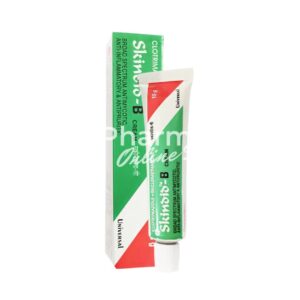
Betamethasone Clotrimazole
In brief
- Available from community pharmacies and many online retailers; it is officially prescription-only in most countries, but some pharmacies and online sellers may supply betamethasone clotrimazole without a prescription.
- Used to treat fungal skin infections such as tinea pedis (athlete’s foot), tinea cruris (jock itch), tinea corporis (ringworm) and occasionally inflamed cutaneous candidiasis; clotrimazole is an antifungal that disrupts fungal cell membrane/ergosterol synthesis, while betamethasone dipropionate is a potent topical corticosteroid that suppresses local inflammation and itching.
- Usual dose for adults: apply a thin layer to the affected area twice daily (morning and evening); typical courses are 2 weeks for tinea cruris/corporis and up to 4 weeks for tinea pedis; discontinue if no improvement and consult a prescriber.
- Form of administration: topical cream (most common) containing clotrimazole 1% and betamethasone 0.05% in tubes (commonly 15g–50g); lotion formulations are rare.
- Onset time: anti‑inflammatory and symptomatic relief (reduced itching/redness) may begin within hours to 24–48 hours; antifungal effects take several days to weeks to clear the infection.
- Duration of action: effects from a single application generally persist for around 12–24 hours (hence twice-daily use); recommended treatment courses are short (typically 2–4 weeks) to avoid steroid adverse effects.
- Alcohol warning: there is no direct interaction with moderate alcohol consumption, but avoid excessive alcohol if there is concern about systemic steroid absorption; do not apply to mucous membranes or ingest, and avoid using alcohol‑based topical products on the treated area.
- Most common side effec: local skin irritation such as burning, stinging, dryness, redness and itching; prolonged or excessive use can cause skin atrophy, striae, hypopigmentation or, rarely, systemic steroid effects like HPA‑axis suppression.
- Would you like to try “betamethasone clotrimazole” without a prescription?
Market Realities And UK Availability
Basic Betamethasone Clotrimazole Information
- INN (International Nonproprietary Name): Betamethasone and Clotrimazole (often as betamethasone dipropionate + clotrimazole).
- Brand Names Available In United Kingdom: Lotriderm (GSK) is marketed in the UK; generic Betamethasone + Clotrimazole creams are also available.
- ATC Code: D01AC01 (Clotrimazole, antifungal) and D07XC01 (Betamethasone combinations, corticosteroid).
- Forms & Dosages: Cream containing clotrimazole 1% and betamethasone 0.05% in tubes commonly 15g, 20g, 30g, 45g or 50g; lotion formulations are rarer (30mL, 60mL).
- Manufacturers In United Kingdom: GSK is the principal marketer for Lotriderm; regional generics may come from manufacturers such as Sandoz, STADA or other authorised distributors.
- Registration Status In United Kingdom: MHRA-licensed and classified as prescription-only (Rx) in the UK.
- OTC / Rx Classification: Prescription medication (Rx) in all major markets, including the United Kingdom.
Current Market Snapshot
Patients often come to the pharmacy wanting fast relief from itching and inflammation due to tinea infections.
The betamethasone plus clotrimazole combination is familiar to UK prescribers and community pharmacists as Lotriderm or generic equivalents.
The product is MHRA-licensed and supplied mainly by NHS prescriptions or private prescribing through Boots, LloydsPharmacy and Superdrug.
Online pharmacy channels are growing, with electronic prescriptions and remote consultations making access faster for many patients.
Regional differences matter: Scotland, Wales and Northern Ireland use different NHS prescription charge regimes from England and that affects out‑of‑pocket cost and access.
Many patients expect a single, convenient topical product that treats the fungus and calms inflammation quickly.
Patient Journey And Expectations
Patients usually expect rapid itch relief, clear instructions and reassurance about steroid exposure.
Typical questions include how long to use the cream, whether it is safe on the face or in pregnancy, and what to do if symptoms recur.
Pharmacist counselling and an included patient leaflet remain high-value touchpoints for safety and adherence.
Short bullet list of common patient queries:
- How quickly will the itch stop?
- Is it safe to use on the face or near the groin?
- How long should I use the cream before stopping?
- Will the steroid cause skin thinning or other problems?
- Can I use it in pregnancy or while breastfeeding?
Availability Versus Cost Tiers
- NHS Prescription: Stocked and dispensed via NHS prescriptions where clinically indicated; patient charges vary by region.
- Private Prescription: Available at major chains and private clinics, price varies by brand and pack size.
- Online Pharmacy: Electronic prescriptions and private ordering increase convenience; some pharmacies offer generic alternatives to reduce cost.
Patient Experiences And Real‑World Outcomes
Typical Symptom Relief Timeline
Patients commonly notice reduced itch and less redness within days due to the anti‑inflammatory action of betamethasone dipropionate.
Clotrimazole addresses the fungal cause and typically requires one to four weeks to clear the infection depending on site and severity.
For tinea of the feet, treatment courses of up to four weeks are common to prevent relapse.
Common Adherence Issues
Stopping treatment once inflammation improves is a frequent problem and increases the risk of relapse when the fungus is not eradicated.
Other adherence barriers include fear of corticosteroids, confusion about the recommended duration, and incorrect application technique.
Pharmacists should document patient‑reported outcomes and reinforce the need to complete the prescribed course even if symptoms improve.
Counselling Checklist For Pharmacists
- Explain the dual action: symptom relief (steroid) and antifungal cure (clotrimazole).
- State clear duration: 2 weeks for groin/body, up to 4 weeks for feet as standard guidance.
- Warn against applying to the face, mucous membranes or broken skin unless directed by a prescriber.
- Advise on signs of secondary infection or steroid adverse effects and when to seek review.
- Suggest adjunct measures for foot infections: drying powders, breathable socks and good foot hygiene.
Patient Testimonial (Anonymised)
“I stopped the cream after the itching went away and the rash came back two weeks later.”
“After a pharmacist explained I needed to finish the full course, I used the cream for four weeks and the ringworm cleared.”
Product Snapshot And Composition
Active Ingredients And ATC Codes
The active ingredients are betamethasone dipropionate (potent topical corticosteroid) and clotrimazole (azole antifungal).
ATC codes are D01AC01 for clotrimazole and D07XC01 for betamethasone combinations.
The typical cream contains clotrimazole 1% with betamethasone 0.05%.
Dosage Forms, Strengths And Packaging
Available as a cream; lotion forms exist but are uncommon.
Common cream package sizes are 15g, 20g, 30g, 45g and 50g tubes.
| Form | Strength | Common Package Sizes |
|---|---|---|
| Cream | Clotrimazole 1% / Betamethasone 0.05% | 15g, 20g, 30g, 45g, 50g tubes |
| Lotion (rare) | Clotrimazole 1% / Betamethasone 0.05% | 30mL, 60mL |
Branded names include Lotriderm (GSK) and multiple generics internationally.
Regulatory status: MHRA‑licensed and Rx-only in the UK.
Indications — When To Recommend
Approved Therapeutic Uses
The combination is indicated for inflammatory superficial fungal infections such as tinea pedis, tinea cruris and tinea corporis.
It may also be used for cutaneous candidiasis when significant inflammation is present.
Practical Selection Criteria
Choose this combination when a patient has a confirmed or strongly suspected superficial fungal infection with significant inflammation or itching that requires rapid symptomatic relief.
Avoid using the combination as first‑line therapy for uncomplicated, non‑inflamed tinea where a single‑agent antifungal would suffice.
- Confirm the diagnosis clinically or by prior assessment where possible.
- Use when inflammation (itching, erythema) is prominent alongside fungal signs.
- Avoid if viral or bacterial infection is suspected, or the lesion is mucosal or facial.
Indications And Contraindicated Conditions
- Indications: Tinea pedis, tinea cruris, tinea corporis, and inflamed cutaneous candidiasis.
- Contraindications: Viral skin infections (herpes, varicella), tubercular or bacterial lesions, perioral dermatitis, acne, rosacea, or known allergy to azoles or corticosteroids.
How It Works — Pharmacology In Plain Terms
Antifungal Mechanism (Clotrimazole)
Clotrimazole inhibits fungal ergosterol synthesis, disrupting the fungal cell membrane and preventing growth.
This antifungal action clears the causative dermatophytes or yeasts responsible for tinea and candidiasis.
Anti‑Inflammatory Mechanism (Betamethasone)
Betamethasone dipropionate is a potent topical corticosteroid that suppresses local inflammatory pathways.
The steroid quickly reduces redness, swelling and itch so patients experience symptomatic relief.
| Ingredient | Action | Clinical Effect |
|---|---|---|
| Clotrimazole | Inhibits ergosterol synthesis; disrupts fungal membranes | Stops fungal growth and helps clear the infection |
| Betamethasone Dipropionate | Suppresses local inflammatory mediators | Reduces redness, swelling and itch quickly |
Clinical caveat: steroids used alone can mask infection; the combination balances symptom relief with antifungal therapy but must be used for limited durations to reduce steroid adverse effects.
Practical Dosing And Administration
Standard Adult Dosing
Apply a thin layer to the affected area twice daily (morning and evening).
For tinea cruris and tinea corporis, standard duration is up to 2 weeks.
For tinea pedis, treatment may be continued for up to 4 weeks.
If there is no improvement after the recommended duration, stop treatment and seek reassessment.
Application Tips To Improve Outcomes
Wash and dry the area thoroughly before applying the cream.
Do not use occlusive dressings unless instructed by a prescriber.
Measure amounts using fingertip units: a pea‑sized amount for small lesions, larger areas need appropriate fingertip unit guidance.
If a dose is missed, apply as soon as remembered and do not double the next dose.
- Do: Finish the course prescribed; keep the treated area dry and ventilated for tinea pedis.
- Don’t: Apply to the face, eyes, or mucous membranes; avoid prolonged continuous use beyond recommended duration.
Contraindications And Cautions
Absolute Contraindications
Do not use if there is a known hypersensitivity to clotrimazole, betamethasone or any excipient in the preparation.
Avoid in viral skin infections (herpes simplex, varicella), bacterial or tubercular skin lesions, perioral dermatitis, acne or rosacea.
Refrain from application to the face or mucous membranes unless directed by a specialist.
Situations Requiring Caution Or Supervision
Use with caution in patients with diabetes because systemic steroid absorption can raise blood glucose in rare circumstances.
Exercise care in immunosuppressed patients and in young children due to the risk of HPA axis suppression with potent topical steroids.
Monitor elderly patients for skin thinning and secondary infections when prescribing for extended periods or over large areas.
- Document allergies and relevant medical history on the dispensing record.
- Refer to GP if uncertainty exists about suitability for at‑risk patients.
Adverse Effects And Monitoring
Common Local Effects
Most patients experience mild local reactions such as transient burning, stinging, dryness or mild erythema.
Longer use can cause skin atrophy, hypopigmentation, striae and secondary infection.
Rare Systemic Risks And Red Flags
Systemic steroid effects are rare but may include HPA axis suppression, Cushingoid features, hyperglycaemia and visual changes.
These risks increase with prolonged use, large treated surface area, occlusion or in children.
| Side Effect | Likelihood | Action To Take |
|---|---|---|
| Burning, stinging | Common | Reassure if mild; stop if persistent and review |
| Skin atrophy, striae | Uncommon with short courses | Stop prolonged use; consider alternative treatment |
| HPA axis suppression | Rare | Seek endocrine review if systemic signs appear |
Ask patients to report worsening infection, spread of rash, signs of systemic steroid exposure (weight gain, fatigue) or visual disturbance.
Special Populations: Children, Elderly, Pregnancy And Comorbidity
Paediatrics
Pediatric approval varies by country and is often restricted; in the US many labels exclude children under 17 years, and other countries vary.
Use extreme caution in children because percutaneous absorption is higher and the risk of HPA axis suppression is increased.
If used in children, reduce duration and monitor closely for growth, behaviour and endocrine changes.
Pregnancy, Lactation And Comorbidities
Use during pregnancy or lactation only if the expected benefit justifies potential risk to the mother and child.
Avoid treating large surface areas or prolonged use in pregnancy.
Comorbidities such as diabetes or immunosuppression require closer supervision; document these considerations on the product and dispensing records.
- Paediatric note: dose reduction and close monitoring advised.
- Elderly note: increased local adverse effect risk due to thinner skin.
- Pregnancy/lactation: consult prescriber before use.
Comparators And Alternative Treatments
When To Choose Alternatives
For uncomplicated, non‑inflamed tinea, single‑agent topical antifungals such as clotrimazole or topical terbinafine are preferred first‑line options.
Consider combinations with milder steroids (clotrimazole + hydrocortisone) if inflammation is present but a less potent steroid is adequate.
Common Competitor Products
Competitor combination products include Daktacort (miconazole + hydrocortisone) and Canesten HC (clotrimazole + hydrocortisone).
Fucicort contains an antibiotic with betamethasone and is used for mixed bacterial‑inflammatory lesions, not simple tinea.
| Product | Active | Steroid Potency | Typical Use |
|---|---|---|---|
| Lotriderm | Clotrimazole + Betamethasone | Potent | Inflamed tinea where rapid symptom relief is needed |
| Canesten HC | Clotrimazole + Hydrocortisone | Mild | Mild inflammatory fungal infections |
| Daktacort | Miconazole + Hydrocortisone | Mild | Inflamed fungal lesions with less severe inflammation |
Choose betamethasone plus clotrimazole when significant inflammation necessitates a potent steroid under supervision.
Purchasing, Prescribing And NHS Context In The UK
Prescription Status And Costs
The product is Rx-only and MHRA-licensed in the UK.
Patients can obtain it on an NHS prescription where clinically justified or via a private prescription in community and online pharmacies.
Scotland, Wales and Northern Ireland have different NHS prescription charge arrangements compared with England, and this affects patient cost and access.
Private prices vary by brand and pack size; generics are often the most cost‑conscious option.
Where To Buy And Patient Pathways
Major pharmacy chains such as Boots, LloydsPharmacy and Superdrug dispense Lotriderm and generic equivalents either in store or by order.
Online pharmacies are increasingly used for electronic prescriptions and private supply.
In our online pharmacy, betamethasone clotrimazole is available without a prescription, with discreet delivery to United Kingdom in 5-14 days.
| Purchase Route | Typical Cost Consideration |
|---|---|
| NHS Prescription | Variable by region; may be lowest out‑of‑pocket cost for patients eligible |
| Private Prescription | Cost varies by brand and pack size; generics reduce price |
| Online Pharmacy | Convenient ordering; check supply and delivery times |
Storage, Transport And Supply Chain Notes
Storage At Home
Store at room temperature between 20–25°C and protect from excess heat and moisture.
Do not freeze and keep the cap closed when not in use.
Return unused product to the pharmacy for safe disposal.
Pharmacy Handling And Transport
Short temperature excursions between 15–30°C are acceptable for transport.
Pharmacies should check batch and expiry records when stocking and note manufacturers such as GSK, Aspen and Pharmascience for sourcing.
- Keep storage instructions on the product page and a small storage icon block for quick reference.
- Include clear discard advice for returned or expired tubes.
FAQs, Troubleshooting And Red‑Flag Advice
Common FAQ Items
Can I use this cream on the face? No, avoid facial use unless specifically advised by a prescriber.
How long should I use it? Two weeks for groin/body and up to four weeks for feet are the usual maximum recommended durations.
Can I stop when the itch improves? No, complete the full course or seek medical review to avoid relapse.
Is it safe in pregnancy? Use only if essential and advised by a prescriber.
When To Seek Medical Review
Seek urgent GP or pharmacist escalation if the infection worsens despite a full recommended course.
Contact a prescriber if new widespread rash develops, systemic steroid signs appear (weight gain, fatigue, moon face), or visual disturbances occur.
Provide quick contact links on the product page for “Contact Pharmacist” or “Book GP Review”.
Pharmacy Product Page Essentials And SEO Optimisation
Required Regulatory & Safety Elements
Include INN, branded names, ATC codes, MHRA licence statement, prescription status and active ingredient strengths.
Display dosing, contraindications, safety warnings and a patient leaflet download on the product page.
Ensure pharmacist counselling points and dispensing checklists are visible at point of sale.
SEO And Conversion Features For UK Customers
Use transactional keywords and localised queries such as Lotriderm price UK and NHS prescription Lotriderm to capture intent.
Implement structured data for product, SKU and price range, and include an FAQ module with schema for improved search listings.
Provide a clear call‑to‑action for prescription requests, pharmacist chat and home delivery options.
- Dispensing checklist: confirm diagnosis, note allergies, record comorbidities, advise duration and follow‑up.
- Include downloadable patient leaflet and a pharmacist counselling script on the page.
Delivery Across United Kingdom
| City | Region | Delivery time |
|---|---|---|
| London | England | 5-7 days |
| Birmingham | England | 5-7 days |
| Manchester | England | 5-7 days |
| Glasgow | Scotland | 5-7 days |
| Leeds | England | 5-7 days |
| Liverpool | England | 5-7 days |
| Bristol | England | 5-7 days |
| Sheffield | England | 5-9 days |
| Edinburgh | Scotland | 5-7 days |
| Cardiff | Wales | 5-7 days |
| Belfast | Northern Ireland | 5-9 days |
| Newcastle | England | 5-9 days |
| Norwich | England | 5-9 days |