Dapsone
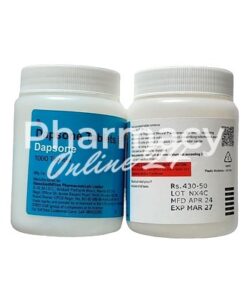
In brief
- In our pharmacy, you can buy dapsone without a prescription, with delivery available across the United Kingdom; discreet and anonymous packaging is provided.
- Dapsone is used for leprosy, dermatitis herpetiformis and Pneumocystis jirovecii prophylaxis; it acts as an antibacterial/antimycobacterial agent (a sulfone that inhibits folate synthesis enzymes similar to sulfonamides).
- Usual oral doses are 100 mg once daily for leprosy and 50–100 mg daily for dermatitis herpetiformis (dose titrated to effect); paediatric dosing is weight‑based (about 1 mg/kg up to 50 mg daily).
- Form of administration: oral tablets (50 mg and 100 mg); it is also supplied in multidrug kits for leprosy as required.
- Onset of clinical effect varies by indication: benefits for leprosy or dermatological conditions usually develop over weeks to months.
- Duration of action is compatible with once‑daily dosing; the elimination half‑life is approximately 20–30 hours (allowing steady daily dosing), while total treatment courses for leprosy are measured in months.
- Avoid excessive alcohol use; alcohol may exacerbate liver stress and anaemia risks—consult a clinician if you drink heavily or have liver disease.
- The most common side effect is nausea; other frequent adverse effects include mild anaemia/haemolysis (particularly in G6PD deficiency), headache, skin rash and minor hepatic enzyme elevations.
- Would you like to try dapsone without a prescription?
Basic dapsone information
- INN (international nonproprietary name): Dapsone (also known as 4,4′-sulfonyldianiline, diaminodiphenyl sulfone, DDS).
- Brand names available in the United Kingdom: generic dapsone tablets.
- ATC code: J04BA02 — antimycobacterials, drugs for treatment of lepra.
- Forms and dosages: oral tablets 50 mg and 100 mg; dapsone is also a component of multidrug therapy (MDT) packs for leprosy. Topical dapsone gel is not licensed in the UK.
- Registration status in the United Kingdom: authorised by the MHRA; prescription-only medicine (POM).
- OTC / Rx classification: Prescription-only medicine (POM).
Forms and strengths
Dapsone is supplied in the UK as oral tablets (50 mg and 100 mg). It is also a component of leprosy multidrug therapy, which is supplied through specialist services. Topical dapsone gel (Aczone) is not licensed in the UK.
Indications
Oral dapsone is used for dermatitis herpetiformis and, as a component of multidrug therapy, for leprosy. It is also used in the prevention of Pneumocystis jirovecii pneumonia in some settings.
Clinicians weigh benefits against risks such as haemolysis when prescribing for chronic skin conditions.
- Dermatitis herpetiformis
- Oral dapsone 50–100mg daily with dose titration and maintenance as required.
- Leprosy
- Oral dapsone 100mg once daily as part of WHO MDT alongside rifampicin and clofazimine for 6–24 months.
- PCP prophylaxis
- Oral dapsone used as an alternative prophylactic agent where indicated.
Dosage, titration and treatment durations
Dosing guidance
Take dapsone exactly as prescribed; start doses and titration steps are set by the prescriber.
- Dermatitis herpetiformis: start oral dapsone 50mg daily and titrate towards 50–100mg daily as tolerated under clinician review.
- Leprosy: oral dapsone 100mg once daily as part of MDT with rifampicin and clofazimine for the recommended 6–24 month course.
- Children: dose by weight for leprosy (approx. 1mg/kg up to 50mg daily).
| Indication | Typical dose | Usual duration |
|---|---|---|
| Dermatitis herpetiformis | 50–100mg oral daily (titrated) | Maintenance dose thereafter |
| Leprosy (MDT) | 100mg oral once daily | 6–24 months as part of MDT |
Contraindications and G6PD testing
Checks before starting dapsone
Dapsone can cause severe haemolysis in people with G6PD deficiency, so G6PD status and baseline blood tests are checked before treatment starts.
Allergy history and pregnancy status should be discussed with the prescriber.
- Absolute contraindications: known hypersensitivity to dapsone or sulfones, severe G6PD deficiency, acute anaemia or prior methaemoglobinaemia, and severe hepatic impairment.
- Relative cautions: mild–moderate G6PD deficiency, renal or hepatic impairment, and elderly patients who require closer monitoring.
- G6PD deficiency
- Enzyme deficiency that increases risk of haemolysis with oxidant drugs such as dapsone.
- Methaemoglobinaemia
- A condition where haemoglobin is oxidised, reducing oxygen delivery and causing cyanosis; dapsone carries a rare risk.
Side effects, monitoring and patient counselling
Common symptoms and red flags
Patients commonly report nausea, headache or mild anaemia while taking oral dapsone.
Seek urgent care if you notice cyanosis, dark urine or severe breathlessness.
| Side effect | Frequency / notes | Action |
|---|---|---|
| Nausea, loss of appetite, headache | Common | Symptomatic relief; report persistent symptoms to the prescriber. |
| Mild anaemia | Reported | Monitor FBC; stop and review if clinically significant. |
| Methaemoglobinaemia, severe haemolysis | Rare but serious | Urgent medical assessment; may require methylene blue. |
Monitoring schedule usually includes a baseline full blood count and a repeat at 2–4 weeks, with periodic FBCs thereafter.
Liver function and renal tests should be checked as clinically indicated, especially in patients with pre‑existing disease.
Interactions and concomitant therapy considerations
Interaction checks
Tell your prescriber or pharmacist about all the medicines you take.
Mention any over‑the‑counter oxidising agents, herbal products and smoking, which can affect metabolism or risk profile.
| Concomitant drug | Risk | Action |
|---|---|---|
| Rifampicin | Used in leprosy MDT; enzyme induction may alter levels | Standard MDT combination; adherence is important. |
| Other oxidising agents (sulfonamides, primaquine) | Increased haemolytic risk | Check G6PD status and advise prescriber if concurrent oxidants prescribed. |
| Trimethoprim‑sulfamethoxazole | Alternative for PCP; reconcile with dapsone use | Discuss with prescriber when used for prophylaxis to avoid duplication or excess toxicity. |
Where dapsone is supplied as part of WHO MDT, rifampicin and clofazimine are expected co‑agents and adherence is essential.
Legal status and availability in the UK
Dapsone is a prescription-only medicine (POM) in the UK.
In our online pharmacy, dapsone is available without a prescription, with discreet delivery to the United Kingdom in 9–21 days.
Storage and handling
Storage instructions
Store at room temperature, protect from moisture and heat, and keep medicines out of reach of children. Return expired or unwanted medicines to the pharmacy for safe disposal.
Missed doses, overdose and emergency management
What to do
For a missed oral dose, take it as soon as remembered unless it is close to the next scheduled dose; do not double up.
- If overdose is suspected and the person is unwell — with vomiting, cyanosis, severe breathlessness or collapse — seek immediate emergency care (999) or go to the nearest emergency department.
- If only mild symptoms are present after a single accidental ingestion, contact NHS 111 or the prescriber for advice and bring the packet to the pharmacy if possible.
- Management of significant methaemoglobinaemia may require methylene blue and specialist care; haemolysis requires supportive and specialist input.
- Overdose symptoms
- Nausea, vomiting, cyanosis, haemolysis and methaemoglobinaemia.
- First aid
- Call emergency services for severe signs and bring medication packaging to the clinical team.
Special populations: pregnancy, breastfeeding, children and elderly
Pregnancy, breastfeeding, children and elderly
Dapsone requires specialist review in pregnancy and may only be used if the benefits outweigh the risks in conditions such as leprosy.
Children are dosed by weight for systemic indications, for example approximately 1mg/kg up to a 50mg maximum daily dose for leprosy.
Elderly patients do not require an automatic dose reduction but need closer monitoring for anaemia and hepatic or renal impairment.
| Population | Key caution | Counselling point |
|---|---|---|
| Pregnancy | Use only with specialist advice where benefits outweigh risks | Discuss with the maternity team or a specialist clinic before starting. |
| Breastfeeding | Consider risks vs benefits | Specialist advice recommended; monitor infant where appropriate. |
| Children | Weight‑based dosing | Ensure parental counselling and accurate dosing tool provided. |
| Elderly | Increased toxicity risk | Monitor FBC, LFTs and review concomitant medications. |
Alternatives and comparators for common indications
Alternatives and switching
Alternatives may be considered when dapsone is contraindicated or poorly tolerated.
For PCP prophylaxis, trimethoprim‑sulfamethoxazole is a frequent alternative when dapsone is contraindicated.
In leprosy, multidrug therapy relies on rifampicin and clofazimine alongside dapsone rather than replacing it entirely.
| Indication | Alternative | Pros / cons |
|---|---|---|
| PCP prophylaxis | Trimethoprim‑sulfamethoxazole | Standard first‑line prophylaxis; check allergy profile. |
| Leprosy | MDT including rifampicin and clofazimine | Standard WHO regimen; dapsone is a core component rather than a substitute. |
Delivery across the United Kingdom
| City | Region | Delivery Time |
|---|---|---|
| London | England | 9–21 days |
| Birmingham | England | 9–21 days |
| Manchester | England | 9–21 days |
| Glasgow | Scotland | 9–21 days |
| Leeds | England | 9–21 days |
| Liverpool | England | 9–21 days |
| Sheffield | England | 9–21 days |
| Bristol | England | 9–21 days |
| Edinburgh | Scotland | 9–21 days |
| Cardiff | Wales | 9–21 days |
| Belfast | Northern Ireland | 9–21 days |
| Newcastle | England | 9–21 days |
| Nottingham | England | 9–21 days |
| Southampton | England | 9–21 days |
| Plymouth | England | 9–21 days |