Fludrocortisone
In stock
100 mcg
from 44,97 £
In brief
- Fludrocortisone is a corticosteroid that acts on salt and water balance, used mainly as replacement in Addison’s disease.
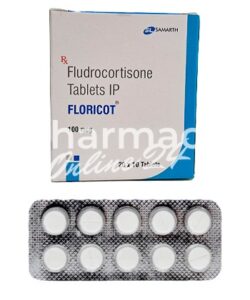
- The 100 mcg tablet is listed in packs of 30, 60, 90, 120, 180, 270 or 360.
- It is prescription-only in the UK, and the doctor sets the dose and arranges monitoring.
Fludrocortisone and the hormone it replaces
Fludrocortisone is a synthetic version of aldosterone, the adrenal hormone that tells the kidneys to keep sodium and get rid of potassium. When the adrenal glands fail, as in Addison’s disease, salt is lost, blood pressure falls and potassium creeps up. Fludrocortisone makes up part of that shortfall. The UK SmPC also lists salt-losing adrenogenital syndrome. It is used alongside a glucocorticoid such as hydrocortisone rather than instead of it, because it has little effect on inflammation or on the stress response.
The tablet and its pack counts
A single strength, 100 microgram (0.1 mg), is listed. Packs of 30, 60 or 90 tablets suit a first order, and larger packs of 120 to 360 are available for longer supply. Most doses are one tablet or less. Some people need only 0.05 mg; whether a 100 microgram tablet can be divided into equal doses depends on the product, so check its leaflet or ask a pharmacist. Check the strip for the strength each time and keep the tablets in a dry place.
Doses and what shapes them
For adults, the SmPC range is 0.05 mg to 0.3 mg a day, adjusted according to blood pressure, sodium and potassium levels and how the person feels. Children usually need 0.05 to 0.1 mg daily. Fludrocortisone is a long-term treatment. If an illness, injury or operation puts the body under strain, the steroid cover may need to be increased, and this is something to plan with the doctor.
Steroid safety
Carrying a steroid card is good practice, and you should not stop fludrocortisone suddenly, as the body cannot make up the shortfall on its own. Anyone on a corticosteroid who has not had chickenpox, shingles or measles should avoid contact with the infection and tell the doctor at once if exposed. Live vaccines should generally be avoided on high doses. The SmPC forbids use during an untreated systemic infection. Corticosteroids can cause blurred vision from cataract, glaucoma or central serous chorioretinopathy.
Drugs that raise or lower its effect
Three enzyme inducers, rifampicin, phenytoin and carbamazepine, make the body clear fludrocortisone faster; ketoconazole and cobicistat, as inhibitors of CYP3A, do the reverse. Diuretics and amphotericin can drive potassium too low, and low potassium makes digoxin more toxic. Oestrogens, antidiabetic drugs, anticoagulants, NSAIDs and ciclosporin may also interact. Give the prescriber a full list of your medicines.
Effects to be aware of
Too much fludrocortisone shows up as fluid retention, swollen ankles, raised blood pressure, headache, muscle weakness from low potassium and, in time, heart strain. Too little leaves the old symptoms of dizziness on standing, tiredness and salt craving. Reported reactions include angioedema and psychiatric changes such as low mood or confusion. Regular blood pressure checks and blood tests are part of treatment. Your doctor decides the dose and any changes. If vomiting or diarrhoea means the tablets cannot be kept down, contact the doctor the same day, because salt and water can be lost quickly in someone who depends on this replacement.