Medroxyprogesterone
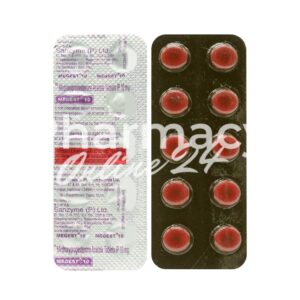
In brief
- In our pharmacy, you can buy medroxyprogesterone without a prescription, with delivery in 9–21 days throughout the United Kingdom. Discreet and anonymous packaging.
- Medroxyprogesterone is used for contraception, endometriosis, abnormal uterine bleeding, secondary amenorrhoea, and some hormone-related cancers. It is a progestogen that works by mimicking progesterone, suppressing ovulation, thickening cervical mucus, and altering the uterine lining.
- The usual dose depends on the condition: 150 mg by intramuscular injection every 3 months for contraception, 104 mg by subcutaneous injection every 3 months, or 5–10 mg orally daily for 5–10 days for certain gynaecological conditions; cancer treatment doses are higher and individualised.
- The form of administration is tablet, intramuscular injection, or subcutaneous injection.
- The effect of the medication begins within a few hours to a few days for oral treatment, while contraceptive injections may take up to 7 days to become fully effective if not started at the recommended time.
- The duration of action is about 3 months for injectable forms; oral courses usually last 5–10 days per cycle, depending on the indication.
- Do not drink alcohol in excess, as it may worsen dizziness, drowsiness, mood changes, or stomach upset.
- The most common side effects are menstrual irregularities or amenorrhoea, weight gain, headache, abdominal bloating or pain, dizziness, mood changes, acne, hair loss, and decreased libido.
- Would you like to try medroxyprogesterone without a prescription?
Medroxyprogesterone at a glance
- INN (international nonproprietary name): Medroxyprogesterone
- Brand names available in the United Kingdom: Depo-Provera, Sayana Press, Provera, generic medroxyprogesterone products
- ATC code: G03AC06; L02AB02; G03DA02
- Forms & Dosages: Oral tablets 2.5 mg, 5 mg and 10 mg; IM suspension 150 mg/mL; subcutaneous injection 104 mg/0.65 mL
- Manufacturers in the United Kingdom: Pfizer, Pharmacia & Upjohn, and generic manufacturers where authorised
- Registration status in the United Kingdom: authorised by the MHRA; prescription-only medicine (POM)
- OTC / Rx classification: Prescription-only medicine (POM)
In the UK, medroxyprogesterone is supplied as Depo-Provera for injectable birth control, Provera for tablets, or as a generic on prescription. It is a prescription-only medicine (POM), usually supplied after NHS or private prescribing.
Common UK pack types
For contraception, the main UK route is the Depo-Provera injection, supplied as a 150 mg/mL suspension for intramuscular use. For gynaecology, the tablets are commonly prescribed as 2.5 mg, 5 mg or 10 mg blister packs. Injections need appointment planning, while tablets depend on repeat supply and adherence at home.
What medroxyprogesterone is
Medroxyprogesterone is a progestogen, which means it acts like a progesterone-type hormone in the body. Depending on the product and why it is prescribed, it can help suppress ovulation, support hormone balance, or stabilise the endometrium. That is why the same INN appears in injectable birth control, medroxyprogesterone acetate tablets and specialist cancer regimens.
The ATC codes reflect that split: G03AC06 for systemic progestogens used mainly in contraception, L02AB02 for endocrine therapy in cancer, and G03DA02 for reproductive hormone use.
Brand names, formulations and pack formats
| Brand or form | Route | Pack format | Practical point |
|---|---|---|---|
| Depo-Provera | Injection | 150 mg/mL suspension | Long-acting contraception and clinic administration |
| Sayana Press | Subcutaneous injection | 104 mg/0.65 mL pre-filled syringe | Convenient pre-filled format |
| Provera | Tablets | 2.5 mg, 5 mg, 10 mg blister packs | Useful when cyclic dosing is prescribed |
Oral versus injectable formats
Tablet products such as medroxyprogesterone acetate tablets are often chosen when a clinician wants a short, cyclical course. Injectables such as Depo-Provera are better known for contraception because they remove daily pill-taking from the routine. That difference matters for people who want flexibility, privacy or a treatment plan that fits school, shift work or caring responsibilities.
Packaging differences that affect convenience and adherence
Blister packs help people track daily tablets, while a pre-filled syringe or vial is designed for a scheduled appointment or controlled administration.
How medroxyprogesterone works in everyday terms
Short definition of medroxyprogesterone
Medroxyprogesterone is a progestogen that helps the body behave as if progesterone is present. For contraception, the main effect is ovulation suppression. For uterine lining problems, it helps with endometrial protection and stabilisation. That is the key idea behind the contraception mechanism and hormone balance effects.
Why route of administration changes the effect
Injected forms are designed for sustained exposure over weeks, which is why they are used on a 12 to 13 week schedule. Oral forms are taken in short daily courses, so they suit cyclical treatment plans and are easier to stop or adjust if needed. Same medicine family, different clinical job.
Main uses
- Contraception, especially long-acting injectable birth control.
- Endometriosis, where endometriosis progestin therapy may be used as part of medical treatment.
- Uterine bleeding, including abnormal bleeding patterns where a cyclic regimen is chosen.
- Secondary amenorrhoea, when bleeding needs to be induced or regulated.
- Specialist oncology use, including endometrial or renal carcinoma in selected patients.
Every brand and form is not used for every condition. An injection for contraception is not the same as an oral course for bleeding or amenorrhoea. That is why the indication is checked before treatment.
Everyday gynaecology uses
Everyday uses are contraception, menstrual irregularities, secondary amenorrhoea and uterine bleeding, where medroxyprogesterone acetate tablets are used with attention to timing and cycle dates.
Specialist and oncology uses
Higher-dose regimens may be used for endometrial or renal carcinoma, but these are individualised and usually handled by specialist teams. The oncology context is very different from routine use.
Standard doses and dosing schedules by condition
| Indication | Dose and route | Regimen |
|---|---|---|
| Contraception | 150 mg intramuscularly | Every 3 months |
| Contraception | 104 mg subcutaneously | Every 3 months |
| Endometriosis or uterine bleeding | 5 to 10 mg orally daily | For 5 to 10 days, often in a cyclic regimen |
| Endometrial or renal carcinoma | 200 to 400 mg intramuscularly weekly | Individualised medical or palliative therapy |
| Secondary amenorrhoea | 5 to 10 mg orally daily | For 5 to 10 days, repeated as needed |
Contraception dosing
The common depot schedule is 150 mg IM every 3 months, with the practical reminder that many patients and clinics describe this as every 12 to 13 weeks. The subcutaneous option, where available, uses 104 mg every 3 months. In practice, the main issue is not letting the appointment drift too far.
Gynaecology dosing
For uterine bleeding, endometriosis or secondary amenorrhoea, oral treatment is generally 5 to 10 mg daily for 5 to 10 days. Those courses are often tied to a day in the cycle, and prescribers may use a cyclic regimen starting around day 16 to 21.
Oncology dosing
Specialist cancer regimens are individualised. The 200 to 400 mg IM weekly range is a medical or palliative oncology approach under specialist care.
Choosing between injection and tablets
| Feature | Injection | Tablets |
|---|---|---|
| Administration | Clinic or trained administration | Self-administration at home |
| Convenience | Long-acting and low-maintenance | Flexible and easy to stop or change |
| Adherence | Excellent once booked in | Depends on daily routine |
| Privacy | High, but appointment-based | High, with discreet home use |
Injection convenience versus tablet flexibility
Many patients like the injection because it removes the pressure of remembering a daily tablet. Others prefer tablets because they offer self-administration and easier adjustment if side effects occur. The format can be matched to the person’s routine.
What suits different lifestyles and routines
A shift worker may prefer a depot injection every few months. Someone who wants more control over stopping or switching may prefer tablets. Adherence usually improves when the medicine fits the patient’s day rather than competing with it.
How to use it safely and what to do if a dose is missed
- Check whether the product is an injection or tablet before doing anything else.
- If an injection is overdue, arrange it as soon as possible.
- If more than 14 weeks have passed since the injection, use backup contraception and assess for pregnancy.
- If a tablet is missed, take it as soon as remembered.
- If the next tablet dose is nearly due, skip the missed one.
- Do not double dose.
Missed injection guidance
If an IM or subcutaneous dose is late, the next step is to arrange administration promptly and assess pregnancy risk if the interval has gone beyond 14 weeks. Backup contraception is important when the timing slips.
Missed tablet guidance
Missed tablets should be taken as soon as remembered. If it is nearly time for the next dose, the missed one is usually skipped. Do not take two doses at once unless a prescriber specifically tells the patient to do so.
Overdose and urgent advice
Overdose is managed with supportive care. Reported symptoms may include nausea, vomiting and withdrawal bleeding. If you feel unwell after taking too much, seek medical help promptly (NHS 111, or 999 in an emergency).
Side effects patients notice most often
- Menstrual irregularities or amenorrhoea, which are among the most common contraception side effects.
- Weight gain, which can be a real reason for stopping or switching.
- Headache and dizziness, especially early on.
- Abdominal bloating or pain, which can be unpleasant even when mild.
- Mood changes or depression, particularly important to mention if there is a history of low mood.
- Acne and hair loss, which some patients notice more than they expect.
- Decreased libido, which can affect continuation even when the medicine is otherwise working well.
Not every patient gets these effects, but these are the ones that most often come up in practice. Irregular bleeding can be especially frustrating in the first months, while amenorrhoea may be welcomed by some and worrying to others. This matters when a patient is deciding between DMPA and oral contraceptives.
Common short-term effects
Headache, bloating, dizziness and changes in bleeding pattern are common early complaints. Some improve with time, but not all patients want to wait for that adjustment period.
Effects that often affect continuation
Weight gain, mood changes and amenorrhoea are the main reasons people think about switching. If symptoms are troublesome, a pharmacist or prescriber may discuss alternatives rather than waiting it out.
Who should not use medroxyprogesterone
- Known or suspected pregnancy
- Do not use if pregnancy is known or suspected.
- Active thromboembolic disease
- It should not be used in active clotting disease.
- Unexplained vaginal bleeding
- Bleeding that has not been assessed first needs review.
- Known or suspected breast or genital cancer
- These are key contraindications and require specialist assessment.
- Severe liver dysfunction or disease
- Significant hepatic impairment is a major concern.
- Hypersensitivity
- Any allergy to medroxyprogesterone or excipients rules it out.
If any of these apply, medroxyprogesterone should not be used without medical advice.
When urgent medical review is needed
Urgent review is needed if there is unexplained bleeding, suspected pregnancy, signs of clotting, or a cancer history that has not been properly discussed. The safest approach is to seek medical advice rather than assume the medicine is suitable.
Conditions that need extra caution or monitoring
| Condition | Why it matters | Practical monitoring point |
|---|---|---|
| History of depression | Mood changes can occur | Ask about previous episodes and current symptoms |
| Diabetes mellitus | Metabolic effects may need checking | Review control and follow-up |
| Hypertension | Blood pressure should not be ignored | Check recent readings if available |
| Osteoporosis or high bone loss risk | Long-term DMPA use is linked with bone concerns | Consider bone health history |
| Migraine | Symptoms may change | Clarify pattern and severity |
| Hyperlipidaemia | Lipids may already be part of the clinical picture | Check whether monitoring is in place |
Mental health and mood monitoring
Mood changes or depression can occur with treatment, so a history of depression should be discussed. That does not mean the medicine is always unsuitable, but it does mean the discussion should be honest and specific.
Bone and metabolic considerations
Bone mineral density is part of the conversation when long-term DMPA use is being considered, especially in patients with osteoporosis risk. Diabetes, blood pressure, migraine and lipids are also worth checking because they help build a safer overall plan.
Special populations and dose adjustments
- Children and adolescents: use in girls only under specialist guidance.
- Older adults: data are limited, so use is generally reserved for approved indications such as cancer.
- Liver impairment: use with caution, and avoid significant hepatic impairment.
- Kidney impairment: caution is advised, especially if overall clinical status is complex.
Specialist supervision matters when the indication is non-standard, particularly in paediatric use or in patients with liver disease.
Paediatric and adolescent use
Use in girls, including some specialist endocrine situations such as precocious puberty, should only happen under specialist guidance. Routine contraceptive use in pre-pubertal children is not recommended.
Elderly patients and organ impairment
There is not enough information for routine elderly dose adjustment, and the medicine should be used only for approved indications. Because medroxyprogesterone is metabolised hepatically, significant liver impairment is a particular concern.
Storage and quality checks
Storage: keep at room temperature, between 15 and 25°C.
Protection: protect from light and freezing.
Inspection: do not use if an injection suspension shows clumping or discoloration.
If a vial or syringe looks wrong, it should not be used, even if the label and expiry date look fine.
Before use
Check the pack, expiry date, storage history and appearance. For an injectable product, any visible change in the suspension is a stop sign. For tablets, check the blister pack is intact and the strength matches the prescription. Store the medicine away from heat and light.
Legal status and availability in the UK
Medroxyprogesterone is a prescription-only medicine (POM) in the UK.
In our online pharmacy, medroxyprogesterone is available without a prescription, with discreet delivery to the United Kingdom in 9–21 days.
Alternatives, comparisons and when switching may be discussed
| Alternative | Typical use | Why a switch might be discussed |
|---|---|---|
| Norethisterone | Oral progestogen | Side effects, bleeding control or preference for tablets |
| Levonorgestrel | Oral or implant forms | Different contraception needs or device preference |
| Desogestrel | Oral progestogen | Need for a different pill profile |
| Dienogest | Especially for endometriosis | Condition-specific management |
| Combined hormonal options | Pills, patches or rings | Bleeding pattern or contraceptive preference |
Comparing injectables and oral progestogens
Injectable contraception is convenient and long-acting, but oral options can be easier to stop, switch or monitor. The choice between DMPA and oral contraceptives is not just a clinical question; it is also about lifestyle and tolerance.
When a pharmacist or prescriber may suggest a switch
A switch may be discussed because of mood changes, weight gain, irregular bleeding, adherence difficulties or a preference for another route. Sometimes the reason is endometriosis control; sometimes it is simply that the patient wants a different routine.
Delivery across the United Kingdom
| City | Region | Delivery time |
|---|---|---|
| London | Greater London | 9–21 days |
| Birmingham | West Midlands | 9–21 days |
| Manchester | North West England | 9–21 days |
| Glasgow | Scotland | 9–21 days |
| Edinburgh | Scotland | 9–21 days |
| Leeds | Yorkshire and the Humber | 9–21 days |
| Liverpool | North West England | 9–21 days |
| Bristol | South West England | 9–21 days |
| Cardiff | Wales | 9–21 days |
| Belfast | Northern Ireland | 9–21 days |
| Newcastle upon Tyne | North East England | 9–21 days |
| Nottingham | East Midlands | 9–21 days |
| Sheffield | Yorkshire and the Humber | 9–21 days |
| Southampton | South East England | 9–21 days |
| Aberdeen | Scotland | 9–21 days |