Seroxat
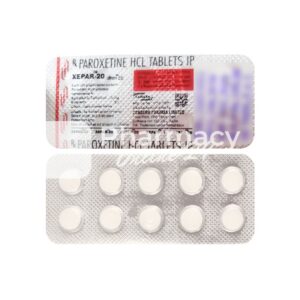
In brief
- In our pharmacy you can buy seroxat (paroxetine) without a prescription, with delivery in 5–14 days throughout the United Kingdom and discreet, anonymous packaging; note that seroxat is prescription‑only in most countries, so local regulations may differ.
- Seroxat is used to treat major depressive disorder, panic disorder, generalised anxiety disorder, social anxiety disorder, obsessive‑compulsive disorder (OCD), post‑traumatic stress disorder (PTSD) and premenstrual dysphoric disorder (PMDD). It is a selective serotonin reuptake inhibitor (SSRI) that increases serotonin levels by blocking the serotonin transporter (SERT).
- The usual dose for adults is 20 mg once daily for depression and many anxiety disorders (maintenance range 20–50 mg/day); panic disorder often starts at 10 mg and is titrated up to 40 mg; OCD commonly starts at 20 mg and may be increased to 40–60 mg/day; PMDD is often treated with 12.5 mg controlled‑release (CR) up to 25 mg CR; Brisdelle (for menopausal hot flushes) is 7.5 mg once daily. Elderly or those with hepatic/renal impairment typically start at 10 mg.
- Administered orally as immediate‑release tablets (10, 20, 30, 40 mg), controlled‑release tablets (12.5, 25, 37.5 mg), oral suspension (10 mg/5 ml) or capsules (Brisdelle 7.5 mg); usually taken once daily.
- Some patients notice initial symptom improvement within 1–2 weeks, but meaningful clinical benefit typically takes 4–6 weeks.
- Paroxetine has a plasma half‑life of about 21–24 hours, so its effect is maintained with once‑daily dosing (steady state reached in roughly one week); therapeutic benefit persists while treatment continues.
- Avoid or limit alcohol while taking seroxat — alcohol can increase drowsiness, impair coordination and worsen side effects or mood symptoms.
- The most common side effect is nausea.
- Would you like to try “seroxat” without a prescription?
Basic Seroxat Information
- INN (International Nonproprietary Name): Paroxetine
- Brand Names Available In United Kingdom: Seroxat (tablets, liquid oral solution)
- ATC Code: N06AB05
- Forms & Dosages: Immediate-release tablets 10 mg, 20 mg, 30 mg, 40 mg; Controlled-release tablets 12.5 mg, 25 mg, 37.5 mg; Oral suspension 10 mg/5 ml; Capsule (Brisdelle, US only) 7.5 mg
- Manufacturers In United Kingdom: GSK (original manufacturer; Paxil/Seroxat origin). Generics worldwide include Apotex, Sandoz, Teva, Hexal and Ratiopharm.
- Registration Status In United Kingdom: Not specified (brands listed include Seroxat for UK); check national regulator for current marketing authorisations.
- OTC / Rx Classification: Prescription only (Rx)
Market Realities & Availability In The UK
Snapshot Of Market
Patients commonly ask whether Seroxat is the same as paroxetine and how to find it in UK pharmacies.
Seroxat is the primary UK brand name for paroxetine and is sold in tablet and liquid forms.
GSK developed the original brand, and a wide range of generics are available internationally.
NHS Vs Private Supply
Access and cost depend on whether the prescription is NHS or private.
In Scotland, Wales and Northern Ireland prescriptions are free at the point of dispensing.
In England prescription charges apply unless the patient is exempt or holds a prepayment certificate.
NHS prescribing may favour certain first‑line choices on local formularies; that can affect whether Seroxat or an alternative is prescribed.
Online Pharmacies And Regulation
High‑street pharmacy chains such as Boots, LloydsPharmacy and Superdrug commonly stock antidepressants or can order them in for patients with a valid prescription.
Electronic prescription services and MHRA‑regulated online pharmacies are a growing route for dispensing prescription medicines to UK patients.
Pharmacists must follow legal dispensing requirements, provide counselling and ensure prescriptions are valid before supplying paroxetine.
Supply chain realities include occasional seasonal shortages and generic substitution that may change pack appearance from month to month.
Practical advice: check MHRA updates, consult the BNF for current entries, and sign up for pharmacy stock alerts for Seroxat or paroxetine tablets.
Practical Summary
| NHS Access | Private Prescription |
|---|---|
| Subject to local formulary and prescription charges in England. | May be prescribed by a private clinician; patient pays for the consultation and medication. |
| Free in Scotland, Wales and Northern Ireland. | Generics often reduce cost compared with branded Seroxat. |
Patient Experiences & Real‑World Outcomes
Typical Patient Journeys
Patients often report early side effects before mood improves.
Common early complaints include nausea and increased tiredness in the first one to two weeks.
Many notice benefit for low mood or anxiety after two to six weeks, although OCD can take longer.
Adherence And Tolerability
Adherence is driven by symptom relief balanced against side‑effect burden.
Sexual dysfunction and weight changes are frequent long‑term reasons for switching treatment.
Pharmacist reassurance and clear counselling about timelines can improve adherence and reduce unnecessary stops.
Real‑World Risks
Stopping paroxetine abruptly commonly leads to withdrawal symptoms for some patients.
At‑risk groups include elderly people who may develop hyponatraemia and patients on anticoagulants who have a higher bleeding risk with SSRIs.
Patients combining alcohol with paroxetine may experience increased sedation.
Patient Voices (Bulleted)
- “Started nausea for a few days, then mood improved around week three.”
- “Noticed low libido after months on treatment.”
- “Felt dizzy and strange after missing two doses when trying to stop suddenly.”
Withdrawal Vs Relapse
- Withdrawal: New physical or psychological symptoms that begin soon after dose reduction or stop.
- Relapse: Return of the original depressive or anxiety symptoms consistent with the condition being treated.
Any suspected safety signals should be reported via the Yellow Card scheme.
Product Basics: INN, Brands, Forms & Dosages
Core Identity
The INN for Seroxat is paroxetine.
It belongs to the SSRI class with ATC code N06AB05.
Formulations & Pack Sizes
Available pharmaceutical forms include immediate‑release tablets, controlled‑release tablets and an oral suspension.
Typical strengths for immediate‑release tablets are 10 mg, 20 mg, 30 mg and 40 mg.
Manufacturers
GSK is the original manufacturer associated with Seroxat.
Generics are supplied globally by companies such as Apotex, Sandoz, Teva, Hexal and Ratiopharm.
Form And Dosage Table
| Form | Dose Strengths | Packaging |
|---|---|---|
| Immediate‑Release Tablet | 10 mg, 20 mg, 30 mg, 40 mg | Blisters or bottles |
| Controlled‑Release Tablet | 12.5 mg, 25 mg, 37.5 mg | Blisters or bottles |
| Oral Suspension | 10 mg/5 ml | Bottles |
| Capsule (Brisdelle, US only) | 7.5 mg | Bottles |
Search Metadata Variations
- Seroxat 20 mg tablets (common pharmacy listing)
- Paroxetine 10 mg tablets (lower starting strength)
- Paroxetine oral suspension 10 mg/5 ml (for patients with swallowing difficulties)
Indications And Standard Dosing For Each Condition
Licensed Indications
Paroxetine is licensed for depression, panic disorder, generalized anxiety disorder, social anxiety, obsessive‑compulsive disorder and PTSD.
It is also used in a controlled‑release formulation for PMDD and a low‑dose capsule (Brisdelle) for menopausal vasomotor symptoms in other markets.
Starting And Maintenance Doses
| Indication | Typical Start Dose | Usual Maintenance/Max |
|---|---|---|
| Major Depressive Disorder | 20 mg once daily | 20–50 mg/day |
| Panic Disorder | 10 mg once daily, titrate | 40 mg/day (max) |
| Generalized Anxiety, Social Anxiety, PTSD | 20 mg once daily | Maintenance varies; follow prescriber |
| OCD | 20 mg once daily | 40–60 mg/day (max) |
| PMDD (CR) | 12.5 mg CR | 12.5–25 mg/day CR |
| Menopausal Vasomotor Symptoms (Brisdelle, US) | 7.5 mg once daily | As licensed in that market |
Off‑Label Notes
Treatment duration for depression and many anxiety disorders is typically a minimum of six to twelve months to reduce relapse risk.
OCD and panic disorder often require longer courses and careful review before dose reduction.
Children and adolescents are not routinely recommended to receive paroxetine due to increased suicidality risk.
Dosage Adjustments & Special Regimens
Elderly Considerations
Start elderly patients at a lower dose, often 10 mg once daily.
Up‑titrate slowly and consider lower maximum doses because of hyponatraemia and reduced clearance risks.
Hepatic/Renal Impairment
Begin at a low dose such as 10 mg/day and titrate cautiously.
Maximum doses are commonly capped at 40 mg/day in significant liver or kidney impairment.
Paediatrics & Titration
Use in children and adolescents is not routine; specialist supervision is required if considered.
When switching between SSRIs or from MAOIs ensure washout guidance is followed; allow a minimum two‑week gap after MAOI use.
Controlled‑release formulations can reduce early gastrointestinal side effects and may be considered when nausea is troublesome.
Pharmacist Monitoring Checklist
- Confirm age and baseline sodium in elderly if clinically indicated.
- Review current hepatic and renal function where available.
- Check for recent MAOI use and for interacting medications.
- Document dose changes and shared‑care agreements for long‑term prescriptions.
Contraindications & Cautions
Absolute Contraindications
Do not supply paroxetine with concurrent pimozide or thioridazine due to serious cardiac risks.
Avoid concomitant or recent MAOI therapy within 14 days.
Known hypersensitivity to paroxetine or excipients is an absolute contraindication.
Relative Cautions
Use caution in patients with epilepsy or a history of seizures.
Monitor patients with bipolar disorder for any switch to mania when on antidepressants.
Bleeding risk is increased when SSRIs are combined with NSAIDs or anticoagulants.
Elderly patients and those on diuretics have higher hyponatraemia risk.
Pregnancy and breastfeeding require an informed risk–benefit discussion with prescribers.
Practical Pharmacy Checks
- Ask about recent MAOI prescriptions or antimicrobial linezolid use.
- Check for co‑prescribed antipsychotics, anticoagulants or NSAIDs.
- Confirm pregnancy status in women of childbearing potential where appropriate.
- Refer back to the prescriber if any absolute contraindication is identified.
Drug Interactions, CYP Effects And Monitoring
Major Hazardous Interactions
Concurrent MAOI use risks serotonin syndrome and is contraindicated.
Combining paroxetine with pimozide or thioridazine risks QT prolongation and arrhythmia and must be avoided.
SSRIs increase bleeding risk when taken with NSAIDs, antiplatelets or anticoagulants.
CYP2D6 Inhibition And Implications
Paroxetine is a moderate inhibitor of CYP2D6.
This can raise levels of tricyclic antidepressants and certain antipsychotics.
Paroxetine reduces conversion of tamoxifen to its active metabolite and may affect tamoxifen efficacy.
Practical Monitoring & Alerts
| High‑Risk Co‑Med | Recommended Action |
|---|---|
| MAOI | Do not co‑prescribe; allow 14‑day washout |
| Warfarin / INR‑influencing drugs | Monitor INR more frequently after starting or stopping paroxetine |
| Tamoxifen | Discuss alternative antidepressant if clinically possible |
Use the pharmacy interaction checker for reconciliation and flag alerts on dispensing software.
Side Effects Profile And Practical Management
Common Mild/Moderate Effects
Typical adverse effects include nausea, drowsiness, dry mouth and sweating.
Patients also commonly report dizziness, insomnia or daytime somnolence.
Sexual dysfunction, appetite changes and weight fluctuation are frequent longer‑term effects.
Serious Adverse Events
Hyponatraemia may present in elderly patients and requires prompt assessment.
Severe bleeding, serotonin syndrome, manic switch or emergent suicidal ideation are serious events needing urgent review.
Pharmacy Management Tips
- Advise taking tablets with food if nausea occurs.
- Suggest slow titration and liaison with the prescriber for sexual side effects.
- Monitor elderly patients for signs of hyponatraemia such as confusion or unsteadiness.
- Encourage Yellow Card reporting for suspected adverse reactions.
Comparative Effectiveness & Alternatives
How Paroxetine Compares
Paroxetine is an established SSRI with evidence across depression, panic disorder and OCD.
It is associated with a higher risk of discontinuation and withdrawal symptoms compared with some other SSRIs.
Sexual side effects are relatively common and may influence choice of alternative treatment.
When To Choose Alternatives
Sertraline is often preferred on NHS formularies for its tolerability and is commonly first line.
Fluoxetine has a longer half‑life and may be easier to discontinue without withdrawal.
Citalopram and escitalopram have fewer clinically significant CYP interactions.
Cost & NHS Formulary Notes
Generic paroxetine reduces cost and is widely available; local formularies may recommend alternatives based on cost and tolerability.
Discuss individual patient history and previous response when considering switching agents.
How To Buy, Prescriptions & Pricing In The UK
NHS Prescription Rules
Paroxetine, including Seroxat, is prescription only and must be supplied against a valid prescription.
Prescription charges apply in England unless the patient is exempt or holds a prepayment certificate.
Private Prescriptions And Online Pharmacies
Private prescriptions can be issued by private clinicians and dispensed at community pharmacies or licensed online pharmacies.
Always verify General Pharmaceutical Council registration when using an online service.
In our online pharmacy, seroxat is available without a prescription, with discreet delivery to United Kingdom in 5-14 days.
Cost‑Saving Tips
- Ask the prescriber for a generic paroxetine prescription to lower costs.
- Consider prescription prepayment certificates in England for multiple items.
- Use repeat dispensing where appropriate to reduce dispensing fees and delays.
Storage, Transport And Packaging For Pharmacies & Patients
Storage Recommendations
Store paroxetine at normal room temperature around 20–25°C and protect from moisture and heat.
Keep medicines in their original packaging to preserve batch and expiry information.
Labelling & Packaging Notes
Label supplies with dose, frequency, missed‑dose advice and common side‑effect warnings.
For oral suspension ensure the bottle integrity and measuring device are supplied to the patient.
Returns & Disposal
Advise patients to return unused medicines to a pharmacy for safe disposal.
Do not advise flushing medicines down the toilet or sink.
Counselling Script & Checklist For Pharmacists
Essential Points To Cover
Explain the purpose: this medicine treats depression and certain anxiety disorders.
Set expectations: benefit often appears in two to six weeks for mood and anxiety symptoms.
Explain how to take the medicine: once daily, at a consistent time, with or without food.
Missed dose instructions: take as soon as possible the same day; skip if close to the next dose; do not double up.
Overdose advice: seek urgent medical help; supportive care is the mainstay.
Adherence Aids & Lifestyle Advice
- Offer blister packs, reminders or pharmacy SMS services to support adherence.
- Advise limiting alcohol and monitoring driving or machinery use until effects are known.
- Discuss contraception and pregnancy planning with the prescriber if relevant.
Emergency Red Flags To Advise
- New or worsening suicidal thoughts or behaviour — seek urgent review.
- Signs of serotonin syndrome (high temperature, agitation, rapid heart rate, muscle rigidity) — emergency care required.
- Severe allergic reaction, severe bleeding, or seizures — contact emergency services.
Special Populations: Pregnancy, Breastfeeding, Elderly, Adolescents
Pregnancy & Breastfeeding
Paroxetine has been associated with teratogenicity signals in some reports; an informed risk–benefit discussion with the prescriber and obstetric services is required.
Breastfeeding decisions should balance drug transfer into milk against maternal need for treatment.
Elderly Risks And Monitoring
Elderly patients have increased risk of hyponatraemia and falls.
Start at low doses (for example 10 mg daily), up‑titrate slowly and monitor sodium and clinical status.
Children/Adolescents
Not routinely recommended for children and adolescents because of increased suicidality risk.
If paroxetine is considered in this group, specialist oversight and close monitoring are mandatory.
FAQs, Quick Reference Charts & Printable Patient Materials
Common Questions Answered
How long until it works? Expect mood or anxiety improvement in two to six weeks for most patients.
Can I drink alcohol? It is best to limit alcohol while taking paroxetine because of additive sedation.
What if I miss a dose? Take it the same day if remembered; skip if close to the next dose and do not double up.
What are serious side effects? Seek urgent care for severe allergic reactions, signs of serotonin syndrome, seizures or significant bleeding.
Can I switch to/from another SSRI? Discuss with the prescriber; observe appropriate washout periods for MAOIs and follow switching guidance.
Quick Reference Tables
| Indication | Start Dose | Expected Onset |
|---|---|---|
| Depression | 20 mg once daily | 2–6 weeks |
| Panic Disorder | 10 mg once daily, titrate | 4–12 weeks |
| OCD | 20 mg once daily | Longer; may take several months |
Printable Materials
Provide a patient leaflet summarising dosing, common side effects, missed‑dose advice and red‑flag symptoms.
Offer a prescriber taper template for gradual discontinuation; advise specialist involvement for complex cases.
Report suspected adverse reactions via the Yellow Card scheme and consult the BNF or MHRA guidance for up‑to‑date information.
Delivery Across United Kingdom
| City | Region | Delivery time |
|---|---|---|
| London | England | 5-7 days |
| Birmingham | West Midlands | 5-7 days |
| Manchester | Greater Manchester | 5-7 days |
| Glasgow | Scotland | 5-7 days |
| Leeds | West Yorkshire | 5-7 days |
| Liverpool | Merseyside | 5-7 days |
| Sheffield | South Yorkshire | 5-7 days |
| Edinburgh | Scotland | 5-7 days |
| Bristol | South West England | 5-7 days |
| Newcastle Upon Tyne | North East England | 5-7 days |
| Belfast | Northern Ireland | 5-7 days |
| Cardiff | Wales | 5-7 days |
| Norwich | East of England | 5-9 days |
Final Practical Notes
Seroxat and paroxetine remain valuable treatment options when chosen to match the patient profile and tolerability needs.
Pharmacists play a pivotal role checking interactions, counselling about withdrawal risk and advising on safe storage and disposal.
Always follow the prescription, consult the BNF or national guidance for up‑to‑date details and report adverse events via Yellow Card if suspected.