Medrol
In brief
- In our pharmacy, you can buy Medrol without a prescription, with delivery in 9–21 days throughout the United Kingdom. Medrol is a prescription-only medicine (POM) in the UK.
- Medrol (methylprednisolone) is used for inflammatory and autoimmune conditions (for example rheumatoid arthritis, severe allergies, asthma exacerbations, inflammatory bowel disease, multiple sclerosis relapses) and as an immunosuppressant; it is a glucocorticoid that binds the glucocorticoid receptor to alter gene transcription, reduce production of pro‑inflammatory mediators and suppress immune cell activity.
- Usual oral doses vary by indication: commonly 4–48 mg/day (rheumatoid arthritis/inflammation), 24–48 mg/day for acute severe allergic/asthma episodes (often tapered), maintenance for adrenal insufficiency 4–12 mg/day; severe relapses may require high‑dose IV pulses (e.g. 500–1000 mg/day for 3–5 days); paediatric dosing is weight‑based (about 0.5–1.7 mg/kg/day).
- Available as oral tablets (2, 4, 8, 16, 32 mg, including pre‑packaged dosepaks), intravenous injectable formulations (sodium succinate vials), and intramuscular suspensions (Depo‑Medrol acetate).
- Onset: systemic anti‑inflammatory effects typically begin within hours — many patients notice symptom improvement within 1–4 hours after an oral dose; IV preparations can act faster.
- Duration of action: medrol is an intermediate‑acting corticosteroid; clinical effects commonly persist for about 18–36 hours after a dose, though physiological effects and adrenal suppression can last longer.
- Alcohol warning: avoid excessive alcohol — it can worsen gastrointestinal irritation and risk of bleeding, aggravate mood changes and sleep disturbance, and impair blood‑glucose control; discuss alcohol use with your clinician if you are taking corticosteroids.
- The most common side effect is increased appetite (often leading to weight gain); other frequent effects include insomnia, mood changes, elevated blood sugar, indigestion, acne and skin thinning.
- Would you like to try Medrol without a prescription?
Basic Medrol information
- INN (international nonproprietary name): Methylprednisolone
- Brand names available in the United Kingdom: Medrol; Depo-Medrol (injectable suspension)
- ATC code: H02AB04
- Forms and dosages: Tablets 2mg, 4mg, 8mg, 16mg, 32mg; Injectable (sodium succinate) 40mg, 125mg, 500mg, 1g; Suspension (IM acetate) 40mg/ml, 80mg/ml
- Registration status in the United Kingdom: Prescription-only medicine
- OTC / Rx classification: Prescription-only medicine (POM)
Legal status and availability in the UK
Medrol (methylprednisolone) is a prescription-only medicine (POM) in the UK.
In our online pharmacy, Medrol is available without a prescription, with discreet delivery to the United Kingdom in 9–21 days.
Product forms, dosages and packaging
Tablets and dosepaks
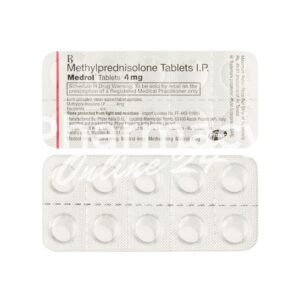
Tablets are available in 2mg, 4mg, 8mg, 16mg and 32mg strengths in blister strips and bottles.
Dosepaks are pre-numbered tapering blister kits that simplify short-course tapers for acne, allergy and asthma flares.
Injectables and suspensions
Which injectable preparations are used in hospital and specialist settings?
Injectable sodium succinate vials are available in 40mg, 125mg, 500mg and 1g strengths, typically used for IV pulse therapy or when oral administration is impractical.
IM acetate suspensions (Depo-Medrol) are supplied in 40mg/ml and 80mg/ml concentrations for intramuscular use.
| Form | Dosages | Typical packaging |
|---|---|---|
| Tablet | 2mg, 4mg, 8mg, 16mg, 32mg | Blister strips (10/20/30), bottles, dosepaks |
| Injectable (vials) | 40mg, 125mg, 500mg, 1g (sodium succinate) | Single/multi-dose vials, ampoules |
| Suspension (IM) | 40mg/ml, 80mg/ml (acetate) | Vials (Depo-Medrol) |
| Dosepaks | Predesigned tapering-dose packs | Pre-numbered blister kits |
Indications and typical regimens
Acute indications and short courses
When is medrol chosen over other steroids?
Common acute uses include severe allergic reactions, asthma exacerbations and flare-ups of inflammatory conditions.
Acute regimens frequently involve 24–48mg per day with a rapid taper over 5–14 days.
For allergy or asthma where rapid anti-inflammatory effect is needed, oral methylprednisolone is a standard choice due to predictable dosing.
Chronic conditions and maintenance
How is methylprednisolone used for long-term disease control?
Maintenance dosing for adrenal insufficiency or chronic inflammatory disease is typically lower, around 4–12mg per day, titrated to the lowest effective dose.
Severe relapses, such as multiple sclerosis flares, may require high-dose IV pulses of 500–1000mg per day for 3–5 days under specialist supervision.
| Indication | Typical regimen |
|---|---|
| Asthma Exacerbation | 24–48mg/day orally, short taper (5–14 days) |
| Rheumatoid Arthritis Flare | 4–48mg/day, divided or single morning dose; tailored to severity |
| Multiple Sclerosis Relapse | High-dose IV pulse therapy 500–1000mg/day for 3–5 days |
Dosing adjustments and special populations
Children and weight‑based dosing
How is dosing changed for children?
Paediatric dosing is weight-based and varies with indication, commonly 0.5–1.7mg/kg per day divided into one to four doses depending on severity.
Always confirm the exact paediatric protocol with the prescriber as regimens differ between respiratory, rheumatological and neurological uses.
Elderly and organ impairment
What extra checks are needed for older adults?
Elderly patients should receive the lowest effective dose and be monitored closely for osteoporosis, glucose dysregulation and increased infection risk.
Liver or kidney impairment may justify dose reduction and closer toxicity monitoring due to altered steroid handling.
Pregnancy and breastfeeding require multidisciplinary discussion where benefits may outweigh risks for certain severe conditions, and pharmacists should liaise with prescribers.
| Population | Adjustment tip |
|---|---|
| Children | Confirm mg/kg dosing with prescriber; use oral suspension or scored tablets where needed |
| Elderly | Start low; monitor bone health, glucose and BP |
| Renal/Liver Impairment | Consider dose reduction and increased monitoring |
Contraindications and cautions
Absolute contraindications
When must medrol not be given?
Absolute contraindications include systemic fungal infections and known hypersensitivity to methylprednisolone or any excipients in the formulation.
High-dose systemic corticosteroids contraindicate administration of live or attenuated vaccines due to impaired immune response.
Relative risks and monitoring
Which conditions need caution and extra monitoring?
Relative contraindications that require close monitoring include diabetes, hypertension, peptic ulcer disease, osteoporosis, glaucoma and latent infections such as tuberculosis or herpes.
Psychiatric history or previous steroid-induced psychosis warrants careful review and a prescriber discussion before supply.
- Red flags: systemic fungal infection, known hypersensitivity, current live vaccine administration.
- Monitor closely: diabetes, hypertension, peptic ulcer disease, osteoporosis, glaucoma, latent infection, psychiatric history.
Side effects, monitoring and management
Common short‑term effects
What should patients expect after starting medrol?
Common short-term effects include increased appetite, weight gain, insomnia, mood changes, indigestion and skin acne or thinning.
Good sleep habits and strategies to control appetite can help; significant mood instability should be reported to a doctor.
Long‑term risks and monitoring schedule
Which risks increase with prolonged or repeated courses?
Long-term risks include osteoporosis, chronic hyperglycaemia, hypertension and ocular problems such as glaucoma or cataracts.
Recommended monitoring for long or repeated courses: blood glucose and blood pressure checks early in therapy, and bone density assessment (DEXA) when long-term steroid therapy is anticipated.
| Side effect | Frequency |
|---|---|
| Increased Appetite / Weight Gain | Common |
| Insomnia / Mood Changes | Common |
| Elevated Blood Sugar | Moderate |
| Monitoring | Timing |
|---|---|
| Blood Glucose (Diabetics) | Within days of starting high or repeated courses |
| Blood Pressure | Early and periodically during therapy |
| DEXA Scan (Bone Density) | After months of continuous therapy or repeated courses |
Drug interactions and vaccination guidance
High‑risk drug interactions
Which medicines can interact with methylprednisolone?
Methylprednisolone can interact with anticoagulants such as warfarin, potentially altering INR and necessitating close monitoring.
It can raise blood glucose and so will interact pharmacodynamically with hypoglycaemic agents, requiring dose review for diabetic patients.
Concurrent NSAIDs increase the risk of gastrointestinal bleeding when used with systemic corticosteroids.
CYP3A4 inducers or inhibitors may alter steroid levels and either reduce efficacy or increase side-effect risk.
| Interacting drug | Interaction / action |
|---|---|
| Warfarin | May alter INR; advise monitoring |
| Insulin / Oral Hypoglycaemics | May require dose adjustment due to hyperglycaemia |
| NSAIDs | Increased GI bleeding risk; counsel on symptoms |
Vaccines and infection risk
How should vaccination be timed around steroid treatment?
Live vaccines are contraindicated during significant immunosuppression from high-dose steroid therapy and should be postponed until immune function recovers.
Inactivated vaccines, including seasonal influenza injections, are generally acceptable but timing should be confirmed with the treating clinician.
Administration, missed doses and storage
How to take tablets and dosepaks
How should the tablets be taken?
Take tablets with food to reduce gastrointestinal upset, and follow Dosepak day-numbered blister sequences exactly as written.
If a patient misses a dose, they should take it as soon as remembered unless it is near the next scheduled dose, in which case they should skip and not double up.
An overdose of methylprednisolone can be harmful, so seek medical help promptly (NHS 111, or 999 in an emergency).
Storage and transport
How should different forms be stored?
Tablets should be kept at room temperature (15–30°C), in a dry place and protected from light and moisture.
Injectables must be stored according to the label; many require refrigeration at 2–8°C and must not be frozen.
Note: if you forget a Dosepak day, follow the pack guidance; do not take two days’ doses together without clinician advice.
Switching steroids and equivalence
Potency comparisons
How does methylprednisolone compare to other systemic glucocorticoids?
Methylprednisolone sits between prednisone/prednisolone and dexamethasone in potency on a milligram-for-milligram basis.
Common equivalence reference: methylprednisolone 4mg is approximately equivalent to prednisone 5mg, though local formularies should be checked for exact guidance.
Tapering and conversion practicalities
What matters when switching steroids?
Consider cumulative steroid exposure and the risk of adrenal suppression; a planned taper may be required when changing dose or steroid class.
| Steroid | Approximate equivalent dose |
|---|---|
| Methylprednisolone | 4mg |
| Prednisone / Prednisolone | 5mg |
| Dexamethasone | 0.75mg (more potent per mg) |
Counselling points
Key points
Take tablets with food to reduce stomach upset and follow the Dosepak day-numbered sequence exactly as written.
Common side effects include appetite increase, sleep disturbance, mood changes and raised blood sugar; diabetic patients should monitor glucose closely.
Red flags and follow‑up
Tell the prescriber, or seek emergency help as appropriate, about severe mood changes, signs of significant hyperglycaemia, suspected infection, vision changes or GI bleeding.
Delivery across the United Kingdom
| City | Region | Delivery time |
|---|---|---|
| London | England | 9–21 days |
| Birmingham | England | 9–21 days |
| Manchester | England | 9–21 days |
| Glasgow | Scotland | 9–21 days |
| Leeds | England | 9–21 days |
| Liverpool | England | 9–21 days |
| Bristol | England | 9–21 days |
| Edinburgh | Scotland | 9–21 days |
| Cardiff | Wales | 9–21 days |
| Belfast | Northern Ireland | 9–21 days |
| Newcastle | England | 9–21 days |
| Nottingham | England | 9–21 days |
| Southampton | England | 9–21 days |
| Sheffield | England | 9–21 days |