Mestinon
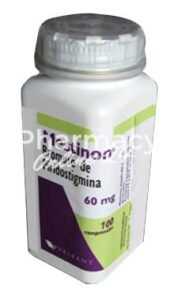
In stock
60mg
from 59,52 £
In brief
- Mestinon contains pyridostigmine bromide, which boosts nerve-to-muscle signalling and is chiefly prescribed for myasthenia gravis.
- The 60 mg tablet is the sole strength, sold as 30, 60, 90, 120, 180 or 240.
- It is a POM in the UK, where Mestinon 60 mg and generic pyridostigmine are both licensed; this page lists an imported product.
Mestinon and the acetylcholine signal
Mestinon owes its action to pyridostigmine bromide, which inhibits cholinesterase. Cholinesterase is the enzyme that clears acetylcholine, the messenger that makes a muscle fibre contract. In myasthenia gravis the receptors that receive the messenger are damaged, so the signal arrives weak. If acetylcholine lingers, more of it finds a working receptor. Patients commonly notice less drooping of the eyelids, fewer episodes of double vision, a stronger voice and easier chewing and swallowing. Because each dose works for a limited number of hours, regular timing matters. The tablets ease symptoms but do nothing to the immune process behind the illness.
What the SmPC lists
Three conditions appear in the SmPC: myasthenia gravis, paralytic ileus and retention of urine following surgery. For most patients the relevant use is myasthenia. Action begins about half an hour to an hour after a dose and lasts longer than neostigmine with gentler effects on the gut, which is why pyridostigmine is the usual long-term option. It is often combined with treatment that targets the immune system.
One strength, many schedules
A 60 mg tablet is the only option here, supplied as 30, 60, 90, 120, 180 or 240. Whether the imported tablets are scored is not stated; a pharmacist can advise before one is halved. In myasthenia, adults take between 30 and 120 mg per dose, timed to cover the worst spells of weakness: typically spaced three to four hours apart by day and about six hours apart through the night. Daily totals typically amount to 5 to 20 tablets; going higher is a matter for close supervision. Under-6s begin on 30 mg and children of 6 to 12 on 60 mg, with the daily total increased in steps of 15 to 30 mg. For paralytic ileus and urinary retention after surgery adults receive 60 to 240 mg a day and children 15 to 60 mg. A lower dose is needed in kidney impairment. Water is used to swallow the tablets.
Who must take care, and with what
Allergy to bromides, or any mechanical blockage of the bowel or urinary tract, rules pyridostigmine out. The SmPC advises caution in people with asthma or COPD, a slow heartbeat, a recent heart attack, low blood pressure, peptic ulcer, epilepsy, parkinsonism, an overactive thyroid or kidney disease. Lactose is among the ingredients. The dose needed can shift with corticosteroids, other immunosuppressants or removal of the thymus, and starting a steroid may briefly make weakness worse. Atropine and hyoscine work against it to some extent; anaesthetic muscle relaxants behave differently in someone on pyridostigmine; and weakness may increase with aminoglycoside antibiotics and some antiarrhythmics.
When there is too much acetylcholine
Nearly every unwanted effect comes from excess acetylcholine: cramping, loose stools, nausea, dribbling, sweating, a slow pulse and muscle twitching. A rash is a reason to stop, because bromide can trigger skin reactions. Too large a dose can lead to a cholinergic crisis, with weakness getting worse. The resulting weakness can pass for myasthenic weakness, yet the response is the reverse, so emergency help must be called. Blurred vision rules out driving. Before an operation, or when a new antibiotic is started, remind the team that Mestinon is being taken.
Licensing in Britain
A prescription is needed in Britain for Mestinon 60 mg tablets, which are licensed, and for generic pyridostigmine bromide 60 mg tablets. The pack described here is imported and not UK-licensed. Dosing is highly individual and changes over months, so the neurologist or other prescriber managing the condition decides how Mestinon is used.