Isotretinoin
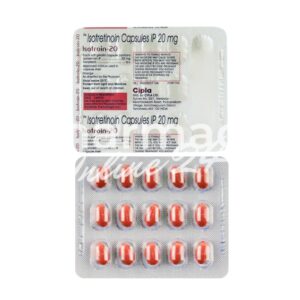
In stock
10mg · 20mg
from 40,92 £
In brief
- Isotretinoin capsules from Pharmacy Online 24 come in 10mg and 20mg, with 30, 60, 90, 120 or 180 capsules per pack, and UK delivery in 9–21 days.
- This vitamin A derivative reduces sebum production and is reserved for severe acne, particularly nodular or scarring forms that antibiotics and topical treatments have not controlled; 10mg and 20mg are both licensed strengths in the UK.
- The daily amount depends on body weight, and a typical course aims for a cumulative total of about 120–150 mg per kg, with liver and cholesterol blood tests before and during treatment.
- The risk of birth defects is serious, so women who could become pregnant need to follow the pregnancy prevention programme; avoid vitamin A supplements and do not take tetracyclines at the same time.
- Chapped lips, dry eyes, nosebleeds and muscle or joint aches are frequent, and any change in mood or thoughts of self-harm should be raised with a clinician at once. Capsules must never be shared. It is a POM.
Basic isotretinoin information
- INN (international nonproprietary name): Isotretinoin
- Brand names available in the United Kingdom: Roaccutane; generic isotretinoin capsules.
- ATC code: D10BA01
- Forms and dosages: Capsules in 5 mg, 10 mg, 20 mg and 40 mg strengths
- Manufacturers in the United Kingdom: Roche (Roaccutane) and generic manufacturers
- Registration status in the United Kingdom: authorised by the MHRA; prescription-only medicine (POM)
- OTC / Rx classification: Prescription-only medicine (POM)
Brands and strengths
In the UK, isotretinoin is available as Roaccutane and as generic isotretinoin capsules. Common strengths are 5 mg, 10 mg, 20 mg and 40 mg.
What isotretinoin is and who it is prescribed for
Is this just another acne cream in tablet form?
No, and that distinction matters.
Isotretinoin is a systemic retinoid, ATC code D10BA01, used as an acne treatment for severe recalcitrant nodular or cystic acne when other treatments have failed.
It is a prescription-only medicine, not a cosmetic skin product, and it is not suitable for mild acne or spot treatment.
Simple definition of a systemic retinoid
A systemic retinoid is a retinoid taken by mouth and carried through the body in the bloodstream.
That is different from topical retinoids such as tretinoin or adapalene, which are applied to the skin.
Because isotretinoin works systemically, it can help severe acne that has not responded to standard acne treatment.
Severe acne, not routine spot treatment
People usually reach isotretinoin after antibiotics, topical retinoids, benzoyl peroxide, or other measures have not been enough.
It is particularly used when acne is nodular, cystic, scarring, or causing a high daily burden.
- Systemic retinoid
- An oral retinoid that acts throughout the body.
- Prescription-only medicine
- A medicine that must be prescribed and monitored by a clinician.
- Severe nodular acne
- Deep, inflamed acne lumps that may scar.
- Cystic acne
- More severe acne with painful, fluid-filled lesions.
How isotretinoin works in the body
Why does one acne medicine make such a difference when others have barely helped?
The answer is that isotretinoin targets several parts of acne at once.
It reduces oil gland activity, helps normalise skin cell shedding so pores are less likely to clog, and calms inflammation.
That is why it can transform stubborn acne, but it also explains the dryness that many patients notice early on.
Oil gland suppression and pore unclogging
Oil production goes down.
Pores are less likely to block.
Inflammation settles over time.
For many people, the first visible change is dry lips rather than clear skin.
Pharmacists often suggest lip balm and a gentle moisturiser from the start, because dryness is part of the expected response.
Why results can take weeks rather than days
Acne does not switch off overnight.
Some patients even notice a temporary flare before improvement begins.
That delay can be frustrating, but adherence matters because the medicine works best over weeks and months.
Setting expectations early helps people stay on track and avoid stopping too soon.
Typical UK dosing and course length
How much isotretinoin is usually given, and for how long?
Dosing is weight-based, so two patients on the same strength may not be taking the same daily amount.
The usual starting dose is 0.5 mg/kg/day, with increases up to 1 mg/kg/day depending on response and tolerability.
Most courses run for 16 to 24 weeks, and the total cumulative target is often 120 to 150 mg/kg.
Starting low, then adjusting by weight and tolerance
Clinicians may begin conservatively if side effects are a concern.
The dose can then be increased if blood tests are acceptable and the patient is coping well.
Children and adolescents over 12 years may be treated using weight-based dosing, while older patients are monitored mainly for tolerability.
Cumulative dose and standard treatment duration
| Stage | Typical range | What it means in practice |
|---|---|---|
| Starting dose | 0.5 mg/kg/day | Often used to reduce early side effects |
| Higher dose | Up to 1 mg/kg/day | Used if tolerated and clinically needed |
| Course length | 16–24 weeks | Measured over months, not days |
| Cumulative target | 120–150 mg/kg | Helps guide the total amount given |
Some people need a repeat course after relapse, usually after a gap of around two months.
In pharmacy practice, the supply may be dispensed in stages if the prescription and monitoring schedule call for it.
Legal status and availability in the UK
Isotretinoin is a prescription-only medicine (POM) in the UK.
In our online pharmacy, isotretinoin is available without a prescription, with discreet delivery to the United Kingdom in 9–21 days.
Safety checks before starting isotretinoin
Is this safe for everyone?
No, and the checks before supply are there for a good reason.
Clinicians and pharmacists usually review pregnancy status, blood tests, current medicines, liver function, lipids, and relevant medical history.
Those checks help reduce the risk of harm from a medicine that can affect triglycerides and liver enzymes.
Blood tests, medical history and medication review
Typical baseline review includes liver function, lipids, and a medication check for anything that might interact with treatment or raise risk.
People with depression or psychiatric illness, diabetes, lipid disorders, or chronic alcoholism may need extra caution.
Children under 12 years are also a caution group.
Absolute and relative contraindications
- Pregnancy or planning pregnancy
- Absolute contraindication because of severe teratogenicity risk.
- Breastfeeding
- Not suitable.
- Severe hepatic or renal impairment
- Not suitable.
- Hypervitaminosis A
- Not suitable.
- Very high blood lipid values
- Not suitable until reviewed.
- Hypersensitivity
- Do not use if allergy to isotretinoin or excipients is known.
Pregnancy prevention and teratogenic risk
Isotretinoin must never be used in pregnancy.
The medicine is highly teratogenic, so contraception rules are strict before, during, and for at least one month after therapy.
In the UK, practice is regulated through MHRA oversight and specialist monitoring, with pregnancy testing and contraception counselling built into the pathway.
Why contraception rules are strict
Even a short exposure during pregnancy can cause serious harm to an unborn baby.
That is why pharmacies may pause supply if paperwork, testing, or monitoring is incomplete.
What needs to be checked
Before each repeat supply, the pharmacist may check that the pregnancy prevention advice is still current and that the patient understands the ongoing rules.
This is not a formality; it is a core safety step.
If anything is unclear, supply should wait until the prescriber or pharmacist is satisfied.
Common side effects and everyday coping tips
What does day-to-day life on isotretinoin actually feel like?
For many patients, the first few days bring dry lips, then dry skin, and sometimes dry eyes.
That often means the medicine is active, but it also means routine self-care becomes part of treatment.
Dry lips, skin and eyes: the most common experience
Dryness of the skin, lips, and eyes is very common.
Peeling, rash, and general irritation can follow.
UK pharmacists usually suggest a fragrance-free emollient, a good lip balm, and gentle cleansing rather than harsh scrubs.
Muscle aches, nosebleeds and sun sensitivity
- Joint or muscle pain.
- Nosebleeds.
- Headache.
- Mild photosensitivity.
- Reduced night vision.
- Increased serum triglycerides.
- Mild liver enzyme elevation.
Practical self-care helps.
Use SPF, avoid harsh exfoliants, keep the lips protected, and consider eye drops if dryness is troublesome.
Seek advice urgently if there is a severe headache, vision change, or persistent mood symptoms.
Monitoring during treatment
Why all the follow-up if the medicine is already helping?
Because isotretinoin is effective but still needs safety monitoring.
Blood tests, symptom checks, and dose changes are part of standard UK practice.
Blood tests, review appointments and dose changes
| Monitoring item | Why it matters | Possible action |
|---|---|---|
| Liver function | Can be affected during treatment | Dose review or pause if needed |
| Lipids | Triglycerides may rise | Dose reduction or specialist review |
| Symptoms | Tracks tolerability and mood | Supportive advice or clinical review |
| Treatment response | Shows whether acne is improving | Continue, adjust, or extend course |
What happens if values go out of range
If blood tests drift the wrong way, the dose may be reduced, the course may be paused, or the prescriber may look again at the overall plan.
Pharmacists often help patients stay on track with appointments so treatment does not stall unnecessarily.
Missed doses, overdose and what to do next
What if a capsule is forgotten?
Do not double-dose.
Take the missed dose as soon as remembered unless it is close to the next one.
Missed dose advice
- Take it when remembered if there is enough time before the next dose.
- Skip it if the next dose is nearly due.
- Never take two capsules together to catch up.
Overdose and vitamin A toxicity risk
Acute overdose is rare, but it can cause vitamin A toxicity.
Urgent medical attention is required if too much has been taken.
Broad symptoms can include feeling unwell, headache, or other toxicity signs.
Storage and handling of capsules
How should isotretinoin be kept at home?
It is best stored at 15–25°C, protected from light and moisture.
Bathrooms, sunny windowsills, and hot cars are poor places for medication storage.
Temperature range and protection from moisture
- Keep in the original carton.
- Avoid high heat and freezing.
- Protect from light and damp.
- Do not leave packs in the car.
Travelling with isotretinoin in original packaging
When travelling, keep the medicine in its original packaging so it can be identified easily.
That also helps with prescription checks if security staff or a clinician asks what it is.
Isotretinoin compared with other acne treatments
Why does a dermatologist choose isotretinoin instead of another acne medicine?
Usually because the acne is severe, resistant, or at risk of scarring.
Other options are often tried first, especially in routine acne treatment.
When antibiotics, hormones or topicals are tried first
| Treatment class | Common examples | Usual place in therapy |
|---|---|---|
| Tetracyclines | Doxycycline, minocycline | Often used before isotretinoin |
| Hormonal treatments | Oral contraceptives | Used in suitable patients with acne |
| Topical retinoids | Tretinoin, adapalene | Common first-line skin treatment |
| Other topicals | Benzoyl peroxide, azelaic acid, clindamycin gels, dapsone | Used for milder disease or combination therapy |
Why isotretinoin is reserved for severe or resistant acne
Because it is a systemic retinoid with significant monitoring needs and clear pregnancy restrictions.
That does not make it a last resort in every case, but it does mean the prescriber weighs benefit against risk carefully.
When acne is scarring or deeply inflamed, isotretinoin may offer the most effective route to lasting control.
Delivery across the United Kingdom
| City | Region | Delivery time |
|---|---|---|
| London | England | 9–21 days |
| Birmingham | England | 9–21 days |
| Manchester | England | 9–21 days |
| Leeds | England | 9–21 days |
| Liverpool | England | 9–21 days |
| Bristol | England | 9–21 days |
| Sheffield | England | 9–21 days |
| Newcastle upon Tyne | England | 9–21 days |
| Edinburgh | Scotland | 9–21 days |
| Glasgow | Scotland | 9–21 days |
| Cardiff | Wales | 9–21 days |
| Belfast | Northern Ireland | 9–21 days |
| Norwich | England | 9–21 days |
| Aberdeen | Scotland | 9–21 days |