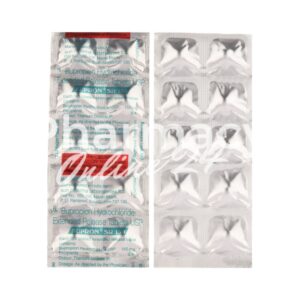
Amitriptyline

In brief
- Amitriptyline from Pharmacy Online 24 is available in 10mg, 25mg and 50mg strengths with 30 to 360 tablets per pack, and 75mg with 30 to 180; UK delivery takes 9–21 days.
- A tricyclic antidepressant by licence, it is more often prescribed in low bedtime doses for neuropathic pain and migraine prevention, which together make up the majority of current use.
- UK licences cover 10mg, 25mg and 50mg but not 75mg; pain benefit may need two to four weeks to appear, so keep going through the sleepy early nights.
- Do not take it with MAOI antidepressants or soon after a heart attack, and use care with arrhythmias, tramadol and other serotonergic drugs.
- A dry mouth and morning grogginess are common at first; abrupt withdrawal can bring nausea, agitation and disturbed sleep, so doses are tapered slowly. It is a POM.
Basic amitriptyline information
- INN (international nonproprietary name): Amitriptyline
- Brand names available in the United Kingdom: generic amitriptyline
- ATC code: N06AA09
- Classification: first-generation tricyclic antidepressant
- Forms and dosages: tablets 10 mg, 25 mg, 50 mg; oral solution 25 mg/5 mL and 50 mg/5 mL
- Registration status in the United Kingdom: authorised by the MHRA; prescription-only medicine (POM)
- OTC / Rx classification: Prescription-only medicine (POM)
What amitriptyline is and how it’s commonly used
Amitriptyline is a tricyclic antidepressant (ATC N06AA09, psychoanaleptics). It is used for depression, and it is also widely used at lower doses for neuropathic pain, migraine prevention and sleep-related pain support, especially when simpler treatments have not helped enough.
The sedating effect is often part of the appeal, especially for evening dosing. The same effect can be the downside, with dry mouth, morning grogginess and weight gain being the most common concerns.
Amitriptyline is available in the UK as generic tablets and oral solution, and the manufacturer or the look of the tablets can change between prescriptions while the dose stays the same.
Legal status and availability in the UK
Amitriptyline is a prescription-only medicine (POM) in the UK.
In our online pharmacy, amitriptyline is available without a prescription, with discreet delivery to the United Kingdom in 9–21 days.
How amitriptyline works
Mechanism in plain English
Amitriptyline is a tricyclic antidepressant that affects noradrenaline and serotonin reuptake.
That means it helps increase the availability of those chemical messengers in the nervous system.
Its ATC classification is N06AA09, placing it under psychoanaleptics and tricyclic antidepressants.
Why it helps pain and sleep more than some other antidepressants
The sedative and anticholinergic effects are the reason many clinicians use it at night.
For pain, that can mean better comfort and less waking through the night.
For sleep, it may help continuity rather than acting as a sleeping tablet in the usual sense.
Lower doses are often used for pain than for depression because the aim is symptom relief with fewer side effects, not full antidepressant dosing.
Who amitriptyline is prescribed for
Main uses
| Use | Typical starting dose | Typical patient profile |
|---|---|---|
| Major depression | 25–50mg/day | Adults needing antidepressant treatment |
| Neuropathic pain / chronic pain | 10–25mg at bedtime | People with nerve pain or persistent pain |
| Migraine prophylaxis | 10–25mg at bedtime | Patients with repeated migraine attacks |
| Fibromyalgia and other off-label uses | 10–25mg at bedtime | Patients with pain and poor sleep |
Licensed use is for major depression (and nocturnal enuresis in children). Neuropathic pain, migraine prophylaxis, fibromyalgia, other chronic pain conditions and sometimes insomnia-linked symptoms are off-label uses.
In UK practice, prescribers often choose amitriptyline when a patient wants evening sedation or has not done well with an SSRI.
Dosage by condition
Depression dosing
For major depression, the usual starting dose is 25–50mg per day.
Maintenance is often 75–150mg per day, titrated as tolerated.
It is commonly taken at bedtime, although divided doses may be used in some cases.
Pain, migraine and off-label use
| Indication | Starting dose | Usual range |
|---|---|---|
| Neuropathic pain / chronic pain | 10–25mg at bedtime | 25–75mg/day |
| Migraine prophylaxis | 10–25mg at bedtime | Up to 75mg/day |
| Fibromyalgia and other off-label use | 10–25mg at bedtime | 25–75mg/day |
Neuropathic pain, chronic pain and migraine prevention often start lower because the patient is usually more sensitive to side effects.
A brief trial of 2–4 weeks is often used for pain-related conditions, while depression may need 4–8 weeks for full effect.
Do not self-adjust the dose. Changes should be made with prescriber guidance, especially if you are already taking other sedating medicines.
Dose adjustments for older adults, children and liver or kidney problems
Older adults and fall risk
- Older adults
- Start at 10–25mg at night, titrate slowly, and the dose is often capped around 75mg/day because of side effects and falls.
- Children
- Rarely used, and only under close specialist supervision.
- Liver impairment
- Reduce the dose or avoid it, because amitriptyline is extensively metabolised in the liver.
- Renal impairment
- Usually no dose adjustment is needed, but monitoring is still sensible.
Children and organ impairment
Children are only treated occasionally, such as for enuresis or migraine, and that should stay in specialist hands.
Older patients need caution because confusion, constipation, postural hypotension and falls are more likely.
Warning: if there is liver disease, a history of fainting, or significant mobility problems, the prescriber may choose a lower dose or a different medicine entirely.
How to take amitriptyline safely day to day
Timing, food and routine
- Take it at bedtime if drowsiness is an issue.
- Take it at the same time each day.
- Avoid alcohol because it can increase sedation.
- Stand up slowly to reduce dizziness.
- Keep tablets in their original pack until use.
Missed doses and tapering
If a dose is missed, take it when remembered unless it is nearly time for the next one.
Never double up.
If treatment is stopping, the dose should be tapered slowly to reduce withdrawal effects.
That advice matters most for people who have taken amitriptyline for weeks or months, not just a few days.
Side effects people notice first: what is common and what needs action
Very common and expected effects
| Common effects | When they show up |
|---|---|
| Drowsiness and sedation | Often early, especially after the first few doses |
| Dry mouth | Very common in routine use |
| Constipation | Can build up over days |
| Weight gain and increased appetite | May develop with ongoing use |
| Blurred vision and dizziness | Often noticed soon after starting |
| Orthostatic hypotension | May show as light-headedness on standing |
Dry mouth and morning grogginess are the complaints patients mention most often.
That is not surprising with a first-generation tricyclic, because the anticholinergic burden is higher than with many newer medicines.
When side effects should prompt a pharmacist or GP review
Palpitations, tremor, sweating, sexual dysfunction, urinary retention and severe constipation need review.
If symptoms feel more than mild, a pharmacist can help judge whether the medicine is settling or whether the dose needs checking.
Red flags: chest symptoms, fainting, severe confusion, inability to pass urine, or constipation that is becoming painful.
Contraindications, cautions and medicine interactions
Absolute contraindications
| Do not use if there is | Why it matters |
|---|---|
| Hypersensitivity to amitriptyline or related compounds | Risk of allergic reaction |
| Recent myocardial infarction | Cardiac risk in the recovery phase |
| Use with MAOIs | Must separate by at least 14 days |
Do not combine: amitriptyline with a monoamine oxidase inhibitor, and do not ignore a recent heart attack.
Important cautions and interactions
Extra caution is needed with seizure history, angle-closure glaucoma, urinary retention, prostate enlargement, cardiac disease and high suicide risk.
Alcohol and other sedatives can increase drowsiness, while serotonergic medicines can complicate treatment.
Patients with conduction defects or arrhythmias need particular care because tricyclic antidepressants can affect the heart.
Overdose risk, emergency response and safe storage at home
Why overdose is treated as an emergency
Overdose can cause severe cardiac arrhythmias, seizures and central nervous system depression.
That is why it is treated as a medical emergency and needs urgent care.
In the UK, this is especially important where medicines safety and mental health risk overlap.
Storage and transport
- Store at 15–30°C.
- Keep tablets dry and away from light.
- Protect blisters or bottles from heat and moisture.
- Keep medicine out of sight and reach of children.
If you are travelling, keep the pack sealed and avoid leaving it in a hot car or damp bag.
Emergency alert: if too much amitriptyline has been taken, seek urgent medical help straight away (NHS 111, or 999 in an emergency).
Alternatives when amitriptyline is not suitable
Comparable medicines
| Medicine group | Examples | Typical reason to consider it |
|---|---|---|
| Other tricyclic antidepressants | Imipramine, nortriptyline | Similar class, sometimes different tolerability |
| SSRIs | Fluoxetine, sertraline | Less sedation and fewer anticholinergic effects |
| SNRIs | Duloxetine, venlafaxine | Useful where pain and mood symptoms overlap |
| Other pain modulators | Gabapentin, pregabalin | Neuropathic pain options |
Choosing between them in practice
Alternatives may be preferred when less sedation is needed, anticholinergic effects are a problem, or cardiac risk is a concern.
For some pain profiles, gabapentin or pregabalin may suit better, while SSRIs or SNRIs are often chosen when the main aim is mood treatment rather than night-time calming.
That is why pharmacists often focus on tolerability, not just the name on the prescription.
Delivery across the United Kingdom
| City | Region | Delivery Time |
|---|---|---|
| London | Greater London | 9–21 days |
| Birmingham | West Midlands | 9–21 days |
| Manchester | North West England | 9–21 days |
| Glasgow | Scotland | 9–21 days |
| Edinburgh | Scotland | 9–21 days |
| Liverpool | North West England | 9–21 days |
| Leeds | West Yorkshire | 9–21 days |
| Newcastle upon Tyne | North East England | 9–21 days |
| Cardiff | Wales | 9–21 days |
| Belfast | Northern Ireland | 9–21 days |
| Sheffield | South Yorkshire | 9–21 days |
| Nottingham | East Midlands | 9–21 days |
| Leicester | East Midlands | 9–21 days |
| Aberdeen | Scotland | 9–21 days |
| Plymouth | South West England | 9–21 days |