Depakote
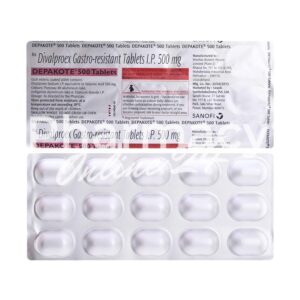
In brief
- Depakote (valproate semisodium) is a prescription-only medicine (POM) in the UK.
- Depakote (divalproex sodium) is licensed in the UK for manic episodes in bipolar disorder (valproate medicines are also used in epilepsy); it increases GABAergic activity and modulates voltage-gated sodium and T-type calcium channels to stabilise neuronal excitability.
- Usual dosages (adults): epilepsy — start 10–15 mg/kg/day and titrate, up to about 60 mg/kg/day; bipolar disorder — typical starting around 750 mg/day (divided) and titrate as needed; doses should be individualised and guided by therapeutic monitoring.
- Administered orally as gastro-resistant tablets (250 mg and 500 mg).
- Onset: peak plasma levels are reached within hours of a dose; clinical anticonvulsant effects may begin within hours but full therapeutic/mood effects can take days to weeks.
- Duration of action depends on formulation and individual metabolism — typical half-life is roughly 9–16 hours (shorter with rapid metabolism) ; dosing is commonly two or three times daily.
- Do not consume alcohol while taking Depakote — alcohol increases sedation, may exacerbate central nervous system depression and increases risk of liver toxicity.
- The most common side effect is nausea (other frequent effects include tremor, drowsiness/sedation, weight gain and hair loss).
- Would you like to try Depakote without a prescription?
Legal status and availability in the UK
Depakote is a prescription-only medicine (POM) in the UK.
In our online pharmacy, Depakote is available without a prescription, with discreet delivery to the United Kingdom in 9–21 days.
Basic Depakote information
- INN (international nonproprietary name): valproate semisodium (divalproex sodium)
- Brand names available in the United Kingdom: Depakote; Convulex (valproic acid); generic valproate products
- ATC code: N03AG01
- Forms and dosages: gastro-resistant tablets 250 mg and 500 mg
- Manufacturers in the United Kingdom: Sanofi
- Registration status in the United Kingdom: Licensed by the MHRA; prescription-only medicine
- OTC / Rx classification: Prescription-only medicine (POM)
Product forms, strengths and packaging
Available forms
In the UK, Depakote is supplied as gastro-resistant tablets in 250 mg and 500 mg strengths.
Other valproate medicines (for example Convulex, valproic acid) and generic valproate are also available.
| Form | Strengths |
|---|---|
| Gastro-resistant tablets | 250 mg, 500 mg |
Indications and typical dosing regimens
Bipolar mania and epilepsy
In the UK, Depakote is licensed for the treatment of manic episodes in bipolar disorder; other valproate medicines are used for epilepsy.
Doses must always be individualised and, in children, weight‑based calculations are essential.
Epilepsy dosing usually starts at 10–15 mg/kg/day with titration up to 60 mg/kg/day where needed.
Bipolar mania dosing is commonly started around 750 mg/day in divided doses, adjusted by clinical response and levels.
| Indication | Typical starting dose | Typical max dose |
|---|---|---|
| Epilepsy (adults) | 10–15 mg/kg/day | Up to 60 mg/kg/day |
| Bipolar disorder (mania) | ~750 mg/day (divided) | Up to 60 mg/kg/day |
- Weight-based dosing
- Use for children and for precise titration in adults where required.
- Titration
- Increase gradually guided by clinical response and therapeutic drug monitoring.
Population-specific dosing and monitoring
Children, elderly, hepatic/renal impairment
Children generally start at 10–15 mg/kg/day and require careful titration and monitoring.
There is higher hepatic risk in children under two years of age and caution is mandatory.
Elderly patients often need lower starting doses and slower titration due to decreased metabolic clearance and greater sensitivity to sedation and falls.
Severe hepatic impairment is a contraindication and mild to moderate liver disease usually prompts dose reduction or discontinuation.
Renal impairment requires caution and monitoring for accumulation, though primary elimination is hepatic.
Suggested monitoring timeline:
- Baseline: LFTs, full blood count (platelets), serum therapeutic level where indicated.
- First month: LFTs and platelets at 2–4 weeks after initiation or dose change.
- Ongoing: LFTs and FBC every 3–6 months or as clinically indicated.
Age‑specific cautions:
- Children under 2: increased hepatic risk.
- Elderly: start low, go slow; monitor for falls.
- Liver impairment: avoid in severe disease; reduce dose in mild/moderate cases.
Contraindications and clinical cautions
Absolute and relative exclusions
There are several absolute contraindications to divalproex sodium that must be checked before supply.
- Known hypersensitivity
- Allergic reaction to divalproex sodium or related compounds precludes use.
- Severe liver disease
- Significant hepatic impairment is an absolute contraindication due to risk of liver failure.
- Urea cycle disorders
- These metabolic disorders raise risk of hyperammonaemia and severe adverse events.
- Known mitochondrial disorders
- Conditions such as Alpers‑Huttenlocher syndrome increase risk of liver failure and neurodegeneration.
- Pregnancy
- Valproate carries a high teratogenic risk and should not be used in pregnancy for migraine or bipolar disorder.
Relative cautions include coagulopathy, prior pancreatitis, renal impairment, and treatment in women of childbearing potential without reliable contraception.
Side effects, lab monitoring and risk management
Common AEs and serious risks
Common adverse effects include nausea, vomiting, abdominal pain, dizziness, headache, tremor and sedation.
Weight gain and hair loss are frequently reported and can affect long‑term adherence.
Laboratory abnormalities can include mild thrombocytopenia and raised liver enzymes, hence routine monitoring is recommended.
Serious but rare risks include hepatic failure, pancreatitis, severe thrombocytopenia and major teratogenicity.
| Common | Serious (action/monitoring) |
|---|---|
| Nausea, tremor, sedation, weight gain, hair loss | Hepatic failure, pancreatitis, severe thrombocytopenia — baseline LFTs, FBC/platelets and urgent review if symptoms occur |
Counselling and safety-netting points:
- Request baseline LFTs, FBC/platelets and serum drug level where advised.
- Warn patients to seek urgent care for abdominal pain, jaundice, persistent vomiting or bleeding.
- Advise on signs of severe allergy and when to stop medication and contact emergency services.
Drug interactions and co-prescribing notes
Enzyme effects and critical interactions
Divalproex sodium interacts with several central nervous system and hepatic enzyme‑affected drugs.
It can alter levels of lamotrigine, increasing the risk of rash, and affects levels of anticoagulants such as warfarin, increasing bleeding risk.
Interactions with carbamazepine and other antiepileptics are clinically important and may require dose adjustment.
Therapeutic drug monitoring is commonly used to guide adjustments when starting or stopping interacting medicines.
| Drug | Effect | Monitoring/advice |
|---|---|---|
| Lamotrigine | Increased lamotrigine levels → higher rash risk | Consider lower lamotrigine dose; monitor for rash |
| Warfarin | Altered anticoagulant effect | Check INR frequently after starting/stopping |
| Carbamazepine | Mutual interactions altering levels | Titrate carefully; monitor levels and clinical response |
Practical dosing guidance, missed doses and switching
Administration tips and brand switches
Follow the prescriber’s instructions for dose and formulation.
Depakote gastro-resistant tablets are usually taken in divided doses as directed by the prescriber.
If a dose is missed, take it as soon as remembered unless it is close to the next scheduled dose; never double up doses.
When switching between brands or formulations, consult the prescriber and consider checking therapeutic levels after the change.
Quick action chart for patients:
- How to take: as directed by the prescriber, usually in divided doses.
- Missed dose: take unless near next dose; do not double.
- Switching: inform prescriber, consider level check and monitor symptoms.
Small FAQ:
Q: Can I crush tablets?
A: No. Depakote tablets are gastro-resistant and should be swallowed whole.
Storage
Storage conditions
Tablets and capsules should be stored at room temperature, typically 20–25°C (68–77°F), and protected from moisture.
No refrigeration is required.
Overdose recognition and emergency advice
Signs, immediate steps and escalation
Overdose can present with somnolence, respiratory depression and coma and requires immediate emergency care.
Patients or carers should call emergency services (999) without delay if a large overdose is suspected.
Provide emergency responders with medication name, dose taken and the time of ingestion.
Hospital management is supportive and may include airway, breathing and circulation support and laboratory monitoring.
Call 999 if the person is unconscious, has very slow breathing or cannot be roused.
What to tell responders: Depakote (valproate), amount taken, time taken, other medicines present.
Alternatives and switching rationale
When divalproex may not be preferred
Alternatives to divalproex include carbamazepine, lamotrigine, levetiracetam and topiramate among others.
Choice is guided by seizure type, psychiatric comorbidity, pregnancy considerations and side‑effect profiles.
| Active ingredient | Main indications | Pregnancy risk | Common AEs |
|---|---|---|---|
| Carbamazepine | Epilepsy, bipolar | Lower teratogenicity than valproate but not risk‑free | Dizziness, hyponatraemia, rash |
| Lamotrigine | Epilepsy, bipolar | Preferred in pregnancy for some women | Rash, GI upset |
| Levetiracetam | Epilepsy | Relatively favourable pregnancy data | Somnolence, behavioural change |
Switching considerations:
- Assess seizure control and side effects.
- Consider pregnancy planning and contraception status.
- Discuss alternative with prescriber and plan gradual switch with monitoring.
Regulatory, prescribing safeguards and UK guidance
MHRA, pregnancy risk mitigation and monitoring pathways
Valproate is a prescription-only medicine in the UK, with strong regulatory precautions relating to pregnancy.
Label warnings emphasise teratogenic risk, and the MHRA requires a pregnancy prevention programme for women and girls who could become pregnant.
Therapies require baseline and ongoing monitoring including LFTs, platelets and drug levels as clinically appropriate.
- MHRA guidance
- Pregnancy prevention and documentation requirements apply where applicable.
- Monitoring requirements
- Baseline LFTs, FBC, therapeutic levels and ongoing periodic reviews.
- Documentation
- Keep records of counselling and contraception checks in line with data protection rules.
Delivery across the United Kingdom
| City | Region | Delivery time |
|---|---|---|
| London | England | 9–21 days |
| Birmingham | England | 9–21 days |
| Manchester | England | 9–21 days |
| Glasgow | Scotland | 9–21 days |
| Leeds | England | 9–21 days |
| Liverpool | England | 9–21 days |
| Edinburgh | Scotland | 9–21 days |
| Bristol | England | 9–21 days |
| Cardiff | Wales | 9–21 days |
| Belfast | Northern Ireland | 9–21 days |
| Newcastle | England | 9–21 days |
| Nottingham | England | 9–21 days |
| Southampton | England | 9–21 days |
| Leicester | England | 9–21 days |