Cefixime
In brief
- In our pharmacy, you can buy cefixime without a prescription, with delivery throughout the United Kingdom. Discreet and anonymous packaging.
- Cefixime is an oral third‑generation cephalosporin antibiotic used to treat bacterial infections such as respiratory tract infections, urinary tract infections, otitis media and uncomplicated gonorrhoea; it works by binding to penicillin‑binding proteins (PBPs) and inhibiting bacterial cell‑wall synthesis, causing cell lysis.
- The usual adult dose is 400 mg once daily or 200 mg twice daily; in children the typical dose is about 8 mg/kg per day (given once daily or divided) up to a maximum of 400 mg daily — follow product instructions or a prescriber’s advice for specific infections.
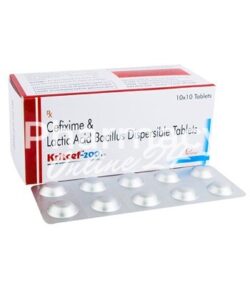
- The form of administration is oral: tablets and oral suspension (liquid), commonly supplied as 200 mg tablets and as a 100 mg/5 ml suspension.
- The effect typically begins within 24–48 hours, with some symptomatic improvement often noticeable after the first day of therapy.
- The duration of action is approximately 24 hours (supporting once‑daily dosing); the elimination half‑life is roughly 3–4 hours in adults.
- Avoid excessive alcohol while taking cefixime — alcohol can increase the risk of gastrointestinal side effects and may impair recovery from infection.
- The most common side effect is diarrhoea; other frequent effects include nausea, abdominal pain and skin rash.
- Would you like to try cefixime without a prescription?
Basic cefixime information
- INN (international nonproprietary name): Cefixime
- Brand names available in the United Kingdom: Suprax; generic cefixime
- ATC code: J01DD08
- Forms and dosages: film-coated tablets 200 mg; oral suspension 100 mg/5 ml
- Manufacturers in the United Kingdom: generic manufacturers
- Registration status in the United Kingdom: Licensed by the MHRA; prescription-only medicine
- OTC / Rx classification: Prescription-only medicine (POM)
Cefixime is a niche but essential oral third‑generation cephalosporin used when first‑line agents are unsuitable.
Legal status and availability in the UK
Cefixime is a prescription-only medicine (POM) in the UK.
In our online pharmacy, cefixime is available without a prescription, with discreet delivery to the United Kingdom in 9–21 days.
Common uses of cefixime
In practice cefixime is most commonly used for urinary tract infections when first‑line therapies are not suitable.
It is also used for some ENT infections and for resistant community infections where third‑generation coverage is required.
Once‑daily dosing for common formulations supports good adherence in many patients.
Common tolerability complaints are gastrointestinal upset and a metallic taste.
Typical patient pathways include prior antibiotic courses, urine or throat culture where available, and follow‑up if symptoms do not resolve.
Typical presenting scenarios (UTI, ENT)
What do patients typically present with before cefixime is chosen?
For urinary tract infection cases a patient may have dysuria, frequency and suprapubic discomfort despite intolerance or resistance to nitrofurantoin.
For ENT infections cefixime is occasionally prescribed where wider Gram‑negative coverage is required.
Clinicians often wait for culture results when possible, or start empirical therapy if the patient is unwell or allergic to penicillins.
Symptom resolution timelines commonly seen are improvement within 48–72 hours for many UTIs when the pathogen is susceptible.
Adherence and tolerability
Adherence is generally good because many formulations are once‑daily.
Gastrointestinal side effects are the most frequently reported nuisance effect.
Allergic reactions are less common but must be documented and acted on if they occur.
Product basics: INN, ATC and common formulations
Cefixime is the International Nonproprietary Name (INN) for this third‑generation cephalosporin.
The ATC classification commonly used for cefixime is J01DD08, which places it among systemic third‑generation cephalosporins.
In the UK cefixime is available as 200 mg film-coated tablets and as an oral suspension (100 mg/5 ml).
Check the SmPC for formulation-specific advice on administration with or without food.
Licensed indications and regulatory status
Licence details can vary by product, so always verify the SmPC and MHRA records for each brand.
Cefixime is licensed for several indications including some urinary tract infections and certain respiratory tract infections, and in some licences for gonorrhoea.
Exact licensed indications depend on the product licence.
Off‑label use may be clinically appropriate in allergy‑sparing empirical therapy but should be justified and documented by the prescriber.
MHRA approval
Check the MHRA product licence for current approvals and any recent regulatory updates.
Off‑label use and prescribing cautions
Prescribers commonly use cefixime off‑label in allergy cases while awaiting culture results.
Document the rationale for off‑label prescriptions and advise patients clearly about expected benefits and risks.
Brands, manufacturers and packaging variants
The UK market is predominantly supplied by generic manufacturers with fewer branded products compared with some other drug classes.
Packaging varies from blister packs for tablets to bottles for suspensions and occasional sachets for dispersible doses.
Major brand names and generics in the UK
Branded cefixime options are less common than generics in the UK.
Dosage guidance by indication and patient group
Patients and prescribers need clear dosing guidance grouped by indication and patient characteristics.
Adults commonly receive 200–400 mg once daily or 400 mg twice daily depending on the indication and formulation.
Gonorrhoea regimens differ and rely on current public health guidance rather than standard UTI dosing.
Paediatric doses are weight‑based and commonly around 6–12 mg/kg per day depending on the SmPC and formulation used.
Renal impairment requires dose reductions or extended dosing intervals for creatinine clearance below recommended thresholds.
| Indication | Age/weight | Typical dose | Max daily dose |
|---|---|---|---|
| Uncomplicated UTI | Adult | 200–400 mg once daily | 400–800 mg depending on regimen |
| Paediatric infections | Children (weight‑based) | Approx. 6–12 mg/kg/day in divided doses or as SmPC advises | Per SmPC |
Adult regimens for common infections
For most adults a once‑daily regimen is convenient and supports adherence.
Use local guidance for regionally recommended doses, particularly for community gonorrhoea management.
Paediatric and renal/hepatic adjustments
Renal dose adjustments are required for reduced creatinine clearance and should reference the SmPC.
Contraindications, cautions and drug interactions
People commonly ask whether cefixime is safe if they have penicillin allergy or take other medicines.
Absolute contraindication is known hypersensitivity to cefixime or other cephalosporins.
Caution is advised in patients with a history of severe immediate hypersensitivity to beta‑lactams due to cross‑reactivity risk.
Severe renal impairment and previous C. difficile infection are important cautions.
- Absolute contraindications: Known hypersensitivity to cefixime or cephalosporins.
- Cautions: Severe penicillin allergy history, severe renal impairment.
Absolute contraindications
Document any previous anaphylaxis to beta‑lactams and avoid cefixime in those cases.
Notable interactions to highlight
Probenecid can raise plasma cefixime concentrations and should be considered when co‑prescribed.
Concurrent aminoglycosides increase the risk of nephrotoxicity and require monitoring.
Advise women of childbearing potential that some antibiotics may reduce contraceptive reliability and discuss barrier methods if concerned.
Side‑effect profile, adverse events and monitoring
Patients commonly want to know what side effects are likely and when to seek help.
Common side effects include diarrhoea, nausea, abdominal pain and rash.
Less common but serious reactions include severe hypersensitivity, Stevens‑Johnson syndrome and cholestatic jaundice.
Clostridioides difficile colitis is a recognised risk with broad‑spectrum antibiotics and must be considered if diarrhoea persists.
Advise patients to stop the medicine and seek immediate care for breathing difficulties, facial swelling or severe skin reactions.
Pharmacists should consider baseline renal function for long or repeated courses in at‑risk patients.
Common and less common adverse effects
For persistent gastrointestinal symptoms advise medical review and consider C. difficile testing.
When to seek urgent care and reporting
Severe allergic signs or jaundice require urgent assessment and withdrawal of the drug.
Encourage patients and clinicians to report adverse events via the Yellow Card scheme and provide instructions on how to do so.
Pharmacology and mechanism of action (clinical data)
Clinicians ask why cefixime is chosen over other agents from a microbiology perspective.
Cefixime is bactericidal and acts by inhibiting bacterial cell wall synthesis through binding penicillin‑binding proteins.
It has useful Gram‑negative activity including many Enterobacteriaceae and limited Gram‑positive coverage.
Rising resistance among E. coli and other Enterobacterales affects empirical UTI therapy decisions and underlines the need for local susceptibility data.
Stewardship principles recommend reserving cefixime for confirmed or strongly suspected pathogens unsuitable for narrower agents.
Antibacterial spectrum and clinical relevance
The spectrum leans to Gram‑negative coverage which makes it useful in certain community infections when other options are inappropriate.
Always match the antibiotic spectrum to culture and sensitivity results when available.
Resistance patterns and stewardship considerations
Avoid prolonging courses beyond recommended durations to limit resistance selection pressure.
Pharmacokinetics and adjustments (clinical dosing nuances)
Pharmacists often ask about bioavailability and how organ dysfunction affects dosing.
Oral cefixime has moderate bioavailability with variable absorption between formulations and with food.
It has a relatively long half‑life that allows once‑ or twice‑daily dosing depending on the regimen.
The drug is primarily renally excreted, so dose reductions or extended intervals are required in renal impairment.
Hepatic metabolism is limited so hepatic impairment less commonly needs adjustment, but monitor LFTs if indicated.
| Parameter | Typical value |
|---|---|
| Bioavailability | Moderate; formulation dependent |
| Half‑life | Relatively long — supports once‑daily dosing |
| Elimination | Primarily renal |
Absorption, distribution and elimination
Advise patients about possible variation in absorption with food for certain formulations.
Storage, handling and stability
Patients frequently ask how to store suspensions and what to do with leftovers.
Follow the SmPC for product‑specific storage recommendations, commonly below 25°C and protected from moisture and light.
Unopened tablets are typically stable at ambient pharmacy temperatures.
Reconstituted suspensions commonly require refrigeration and have limited shelf‑life, often 7–14 days, depending on the product.
Advise patients to shake suspensions well, to measure doses using the provided device and to dispose of leftovers safely.
Patient handling for oral suspensions
Stress use of supplied measuring devices to avoid dosing errors in children.
Counselling points
Patients want clear, practical advice on taking their medicine and recognising problems.
Key messages include completing the course unless advised otherwise and expectations for symptom improvement within 48–72 hours for many susceptible UTIs.
Advise on taking the medicine with or without food according to the SmPC and on likely GI side effects.
For women of childbearing potential discuss contraception reliability if relevant and advise to check with the prescriber about pregnancy and lactation safety.
Key messages for patients
Tell patients to stop and seek urgent care for breathing difficulties or severe rash.
Remind patients that completing the full course reduces resistance risk.
Alternatives to cefixime
Alternatives for lower UTIs include nitrofurantoin and pivmecillinam where appropriate and susceptible.
For broader respiratory coverage amoxicillin/clavulanate may be considered, and for atypical pathogens azithromycin or doxycycline are options.
Cefixime is often a second‑line or allergy‑sparing option and should be used where narrower spectrum therapy is unsuitable.
| Agent | Spectrum | Note |
|---|---|---|
| Nitrofurantoin | Lower UTI Gram‑negative | First‑line for uncomplicated lower UTI where susceptible |
| Cefixime | Broader Gram‑negative | Second‑line or allergy option |
Comparative agents and when to switch
Switch to narrower agents once culture and sensitivity results allow de‑escalation.
Delivery across the United Kingdom
| City | Region | Delivery Time |
|---|---|---|
| London | Greater London | 9–21 days |
| Birmingham | West Midlands | 9–21 days |
| Glasgow | Scotland | 9–21 days |
| Manchester | North West | 9–21 days |
| Leeds | Yorkshire | 9–21 days |
| Cardiff | Wales | 9–21 days |
| Belfast | Northern Ireland | 9–21 days |
| Bristol | South West | 9–21 days |
| Newcastle | North East | 9–21 days |
| Southampton | South East | 9–21 days |
| Nottingham | East Midlands | 9–21 days |
| Aberdeen | Scotland | 9–21 days |
| Brighton | South East | 9–21 days |
Where values in the product‑info are missing, mark them as not specified and advise users to contact the pharmacy for live availability.