Venlafaxine
In stock
37,5mg · 75mg
from 17,98 £
In brief
- Venlafaxine is an SNRI antidepressant, a medicine that raises serotonin and noradrenaline activity, used to treat depression and to stop it coming back.
- Tablets of 37.5 mg are sold in packs from 30 to 360, and tablets of 75 mg in packs from 10 to 360.
- In the UK venlafaxine is a POM, available as plain tablets and as prolonged-release products like Efexor XL.
Venlafaxine and the two neurotransmitters it protects
Venlafaxine interferes with the recapture that normally follows the release of serotonin and noradrenaline by nerve cells, so both messengers go on working for longer, which is what separates an SNRI from an SSRI. Plain venlafaxine tablets are licensed in the UK for major depressive episodes and for preventing a relapse. Some prolonged-release products also hold licences for generalised anxiety disorder, social anxiety disorder and panic disorder, but those belong to the particular product and should not be assumed for any other tablet.
Which kind of tablet is it?
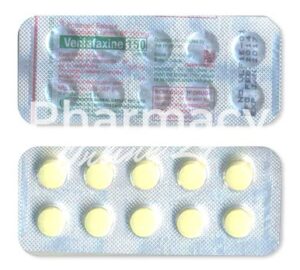
Pack sizes are 30, 60, 90, 120, 180, 240 and 360 for the 37.5 mg tablet; the 75 mg tablet has those plus a pack of 10. Whether imported tablets are immediate-release or prolonged-release can be read only from the strip. The distinction is practical: a prolonged-release tablet goes down whole once daily and is never crushed or chewed, while plain tablets are shared across the day. When a prescriber changes from one form to the other, the total daily dose is kept equivalent and only the frequency changes, though individual adjustment can be required. Labelling on imported stock may follow another country’s habits.
How plain tablets are titrated
In the SmPC the opening dose of plain tablets is 75 mg a day, divided in two and taken with food. A rise is usually held back for two weeks at least, although four days is acceptable if the clinical picture justifies it, and the total may climb to 375 mg daily. When mood has recovered, treatment typically continues for six months or more. Mild or moderate liver impairment, a glomerular filtration rate under 30 ml/min and haemodialysis each call for half the dose. Under-18s are not advised to take it.
Stopping the tablets
A sudden stop can bring dizziness, pins and needles or electric-shock sensations in the skin, anxiety, broken sleep and nausea. Tapering for at least one to two weeks is advised, and some people need months. When discontinuation symptoms are hard to bear, the prescriber may go back to the earlier dose and come down again in smaller steps.
Blood pressure and combinations to avoid
Blood pressure can rise on venlafaxine, so a reading is taken at the start and repeated as treatment continues. An irreversible MAOI and venlafaxine must be separated: two weeks must pass after the MAOI ends, and one week after the last venlafaxine dose before an MAOI begins. Combining it with moclobemide, linezolid, triptans, lithium, tramadol or St John’s wort risks an excess of serotonin. Before starting, declare heart disease, epilepsy, angle-closure glaucoma, past mania, any bleeding disorder and anticoagulant treatment. Low blood sodium is a particular concern in the elderly. Suicidal thoughts may strengthen during the first weeks, especially in people under 25, and alcohol is not advisable.
What people report
Nausea, a dry mouth, headache, sweating, dizziness, constipation, restless sleep and raised blood pressure come up most often. If mood deteriorates, or the idea of ending your life appears, see a doctor immediately or call 111. Whether Venlafaxine is appropriate, and at what dose, is something only the prescriber can settle.
For the first appointment
Benefit takes weeks to appear, so agree what to watch for and when progress will be looked at again. Raise any history of hypertension, rhythm trouble, epilepsy, glaucoma or bipolar disorder, and bring a list of every medicine and supplement in use. Ask what to do if a dose is missed, and whether plain tablets should go with a meal.