Cymbalta
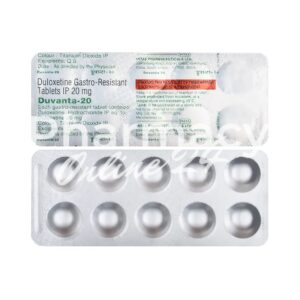
In brief
- In our pharmacy, you can buy Cymbalta without a prescription, with discreet delivery across the UK. Cymbalta is a prescription-only medicine (POM) in the UK.
- Cymbalta (duloxetine) is used to treat major depressive disorder, generalised anxiety disorder, diabetic peripheral neuropathic pain. It is an SNRI, meaning it increases the levels of serotonin and noradrenaline in the brain to help improve mood and reduce pain signals.
- The usual dose of Cymbalta is 30–60 mg once daily, depending on the condition. In some cases the dose may be increased up to 120 mg daily, but many conditions are maintained at 60 mg per day.
- The form of administration is delayed-release capsules taken orally.
- Cymbalta usually starts to work within 1–2 weeks for anxiety or mood symptoms, although full benefit may take 4–6 weeks. Pain relief may begin earlier in some patients.
- The duration of action is about 24 hours, so it is generally taken once daily.
- Alcohol should be avoided or kept to a minimum, as it may increase drowsiness and the risk of liver-related side effects.
- The most common side effects are nausea, dry mouth, fatigue, drowsiness, dizziness, constipation, sweating, reduced appetite, headache, and insomnia.
- Would you like to try Cymbalta without a prescription?
Basic Cymbalta information
- INN (international nonproprietary name): Duloxetine
- Brand names available in the United Kingdom: Cymbalta; Yentreve
- ATC code: N06AX21
- Forms and dosages: Delayed-release (gastro-resistant) capsules 30 mg, 60 mg, oral route
- Manufacturers in the United Kingdom: Eli Lilly and Company; Sun Pharma; Teva; Sandoz; multiple generic suppliers
- Registration status in the United Kingdom: Authorised in the UK; prescription-only medicine (POM)
- OTC / Rx classification: Prescription-only medicine (POM)
Cymbalta at a glance
Cymbalta is the brand name for duloxetine capsules, a prescription antidepressant that is also used for nerve pain. Common strengths are 30 mg and 60 mg.
Legal status and availability in the UK
Cymbalta (duloxetine) is a prescription-only medicine (POM) in the UK.
In our online pharmacy, Cymbalta is available without a prescription, with discreet delivery to the United Kingdom in 9–21 days.
What Cymbalta is and how it is classified
Duloxetine as an SNRI and prescription-only medicine
Cymbalta is the brand name for duloxetine, a serotonin and noradrenaline reuptake inhibitor, or SNRI medicine.
That class matters because it is used in both mental health and pain settings, which is why one patient may know it as an anxiety medicine while another knows it as duloxetine for depression or duloxetine for pain.
Because it can affect serotonin pathways, it is not something to treat as an over-the-counter option.
ATC classification
| Level | Code | Meaning |
|---|---|---|
| Main group | N06 | Psychoanaleptics |
| Therapeutic subgroup | N06A | Antidepressants |
| Chemical subgroup | N06AX | Other antidepressants |
| Specific substance | N06AX21 | Duloxetine |
Brand names
| Brand | Typical use or packaging |
|---|---|
| Cymbalta | Delayed-release capsules in 30 mg and 60 mg |
| Yentreve | Primarily for stress urinary incontinence |
Who Cymbalta is typically prescribed for in practice
Uses in the UK
Cymbalta is licensed in the UK for major depressive disorder, generalised anxiety disorder, and diabetic peripheral neuropathic pain.
That broad profile explains why it is used in both mood and nerve pain settings.
Pain-related use
People with nerve pain or long-term pain often need a medicine that works on both discomfort and mood.
Duloxetine is among the first-line treatments for neuropathic pain, so it is used when ordinary painkillers have not been enough.
When brand continuity matters
Some patients do better when the brand and pack stay the same, particularly after a stable response on a specific duloxetine product.
That continuity can matter when someone has already been started on Yentreve for incontinence, or when a patient is used to one manufacturer and notices a different box at the pharmacy.
| Licensed condition | Pharmacy conversation point |
|---|---|
| Major depressive disorder | Check dose, effect, and tolerability |
| Generalised anxiety disorder | Discuss gradual titration and side effects |
| Diabetic neuropathic pain | Confirm pain pattern and other medicines |
Available forms, strengths, and delayed-release capsule details
Delayed-release capsules: what that means for use and swallowing
Cymbalta is supplied as delayed-release capsules, which means the medicine is designed to release after swallowing rather than immediately in the stomach.
For that reason, duloxetine capsules should be swallowed whole and taken orally.
The delayed-release format is central to how the medicine works and should not be changed by opening or crushing the capsule.
Strength selection in real-world dispensing
Dispensing usually centres on 30 mg or 60 mg capsule strengths.
The chosen strength depends on the indication, the patient’s age, and the titration plan set by the prescriber.
In daily practice, duloxetine 60 mg is a common maintenance strength, while 30 mg is often used at the start of treatment or for cautious titration.
Packaging and substitution
Packaging can vary by manufacturer and country, so a patient may receive a different box even when the active ingredient is the same.
That is why pharmacists should always check the brand, strength, and manufacturer before substitution.
Store the product in its original blister or bottle until use, and keep an eye on pack integrity during delivery or collection.
Safety note: Do not crush, chew, or open delayed-release capsules unless a prescriber or pharmacist has given specific advice.
| Form | Strengths | Route |
|---|---|---|
| Capsule DR | 30 mg, 60 mg | Oral |
How Cymbalta is used for depression and anxiety in adults
Typical starting doses and titration approach
Adults with major depressive disorder are usually given 60 mg once daily.
For generalised anxiety disorder, the initial dose is often 30 mg daily, increased to 60 mg, with titration up to 120 mg daily if needed.
The medicine may be taken once daily or divided twice daily depending on the treatment plan and tolerability.
How clinicians balance symptom relief and side effects
Dose titration matters because duloxetine can help symptoms while still causing early side effects such as nausea or drowsiness.
Clinicians often start lower when the patient is sensitive to medicines, then review whether the dose should be increased after a short period.
That balance is especially important for patients who are starting Cymbalta for anxiety after trying other antidepressants before.
Counselling points
- Take the capsule exactly as prescribed, even if mood or anxiety symptoms improve slowly.
- Expect the first few days to feel different before the medicine settles.
- Do not stop suddenly, because stopping antidepressants too fast can trigger withdrawal symptoms.
- Tell the pharmacist about any other antidepressant, migraine treatment, or blood thinner.
- Report new insomnia, agitation, or unusual mood changes promptly.
| Condition | Starting dose | Maximum dose |
|---|---|---|
| Major depressive disorder | 60 mg/day | 60 mg/day |
| Generalised anxiety disorder | 30 mg/day | 120 mg/day |
Pain indication: diabetic peripheral neuropathic pain
Why Cymbalta is used in pain management
Cymbalta is often chosen when pain is linked with nerve signalling rather than inflammation alone.
Dosing for neuropathic pain
For diabetic peripheral neuropathic pain, the standard adult dose is 60 mg daily.
When patients notice benefit and what to monitor
People do not usually feel a full effect overnight, so realistic expectations matter.
Monitor pain response, sleep, appetite, dizziness, and how the patient is functioning day to day.
| Pain indication | Standard dose | Key point |
|---|---|---|
| Diabetic peripheral neuropathic pain | 60 mg/day | Common nerve pain treatment |
Special populations and dose adjustments
Children and adolescents
Duloxetine is not recommended for children and adolescents under 18 years for its UK-licensed indications.
Elderly patients and fall risk
Older adults should generally receive the lowest effective dose.
There is an increased risk of side effects, especially hyponatraemia and falls, so counselling should be clear and practical.
If a frail patient already feels unsteady, dizziness should be taken seriously rather than brushed off.
Renal and hepatic impairment considerations
Duloxetine is extensively metabolised in the liver, so substantial hepatic dysfunction is a major problem.
It should also be avoided if creatinine clearance is below 30 mL/min because exposure rises.
| Population | Use | Monitor or avoid |
|---|---|---|
| Children and adolescents under 18 | Not recommended | Licensed indications are for adults |
| Elderly | Use lowest effective dose | Monitor falls and hyponatraemia |
| Severe hepatic impairment | Avoid | Contraindicated |
| CrCl below 30 mL/min | Avoid | Higher plasma exposure |
- Children
- Not recommended under 18 years.
- Elderly
- Need the lowest effective dose because falls and hyponatraemia matter more.
- Hepatic impairment
- Usually means duloxetine is not suitable.
- Renal impairment
- May make duloxetine unsuitable if kidney function is poor.
How to take Cymbalta correctly for best results
Daily routine, food, and swallowing advice
Take Cymbalta exactly as prescribed and try to do it at the same time each day.
Some patients prefer morning dosing, while others take it later if they feel sleepy.
Swallow the capsule whole with water, and keep it in the original blister or bottle until you need it.
- Do not alter the capsule.
- Protect it from moisture and heat.
- Keep the storage temperature at 20 to 25°C.
- Use a routine that is easy to remember.
What to do if a dose is missed
If a dose is forgotten, take it as soon as it is remembered unless the next dose is nearly due.
Do not double dose.
For anyone unsure after a late dose, a pharmacist can usually help with practical missed dose advice.
Missed dose and overdose summary: Take the dose when remembered unless it is close to the next one, and never double up. Overdose can cause somnolence, serotonin syndrome, or seizures, so urgent medical attention is needed.
Storage and transport at home or when travelling
Keep the capsules at room temperature, away from moisture and direct heat.
When travelling, leave them in their original packaging so the strength and identity stay clear.
Stopping Cymbalta safely and understanding withdrawal risk
Why gradual tapering matters
Duloxetine should be reduced gradually before stopping.
That tapering step lowers the risk of withdrawal symptoms and makes the change easier to tolerate.
A patient who feels better after a few weeks should still avoid stopping on their own without advice.
How long treatment usually lasts
Acute treatment is often 8 to 12 weeks.
After that, many patients continue for several months or longer, with regular review of benefit and side effects.
Length of treatment depends on the indication, how well symptoms are controlled, and whether relapse risk is high.
When to speak to a pharmacist or prescriber
- If doses are being missed often.
- If withdrawal symptoms appear during a taper.
- If the medicine has been taken for several months and the patient wants to stop.
- If another antidepressant or interacting medicine is being started.
Tapering reminder: Lower the dose slowly before discontinuation, rather than stopping abruptly.
Common side effects
Common mild to moderate side effects
Nausea is reported first, followed by dry mouth, fatigue, drowsiness, dizziness, constipation, increased sweating, loss of appetite, headache, and insomnia.
These Cymbalta side effects are usually mild to moderate, but they can still affect adherence.
Timing matters too, because some effects are most noticeable when treatment begins or after a dose increase.
Practical coping tips for day-to-day use
- Take the capsule at the same time each day.
- If nausea is bothersome, ask a pharmacist whether the timing can be adjusted.
- Drink enough fluids if dry mouth is a problem.
- Stand up slowly if dizziness appears.
- Keep an eye on sleep, especially if insomnia starts after a dose change.
When side effects need clinical review
| Side effect | Likely timing | Suggested action |
|---|---|---|
| Nausea | Often early | Monitor and ask for advice if persistent |
| Drowsiness | Early or after dose increase | Review daily activities and safety |
| Dizziness | Early | Rise slowly and monitor falls risk |
| Insomnia | Can appear at any stage | Speak to a pharmacist or prescriber |
Key warnings, contraindications, and who should avoid Cymbalta
Absolute contraindications
Some situations mean Cymbalta should not be used.
These include current or recent use of MAO inhibitors within 5 to 14 days, severe liver impairment or cirrhosis, uncontrolled narrow-angle glaucoma, and hypersensitivity to duloxetine or any capsule component.
Relative contraindications needing caution
Other situations need a careful risk-benefit review rather than an automatic no.
These include bipolar disorder, a history of seizures, bleeding disorders or anticoagulant therapy, uncontrolled hypertension, moderate renal impairment, hyponatraemia risk, and frail older age.
| Absolute | Relative |
|---|---|
| MAOI use within 5 to 14 days | Bipolar disorder or mania history |
| Severe liver impairment or cirrhosis | Seizure history |
| Uncontrolled narrow-angle glaucoma | Anticoagulants or bleeding disorders |
| Hypersensitivity to duloxetine | Uncontrolled hypertension |
Red-flag symptoms for urgent advice
Seek urgent help if: there are signs of serotonin syndrome, seizures, severe confusion, marked agitation, or sudden eye pain with blurred vision. These symptoms need immediate clinical review rather than routine pharmacy advice.
That is especially important when duloxetine is taken with other serotonergic medicines or when the patient has multiple long-term conditions.
Cymbalta versus common SNRI alternatives
Venlafaxine comparison
Venlafaxine is the best-known comparator.
Both are SNRIs, but they are not identical in dosing habits, side-effect profiles, or how prescribers choose between them.
Switching antidepressants
Switching antidepressants is not a casual swap.
It should be planned, especially when the patient is stable, vulnerable to withdrawal, or taking several interacting medicines, and guided by a pharmacist or prescriber so that timing and dose changes stay safe.
Manufacturers
Original Cymbalta came from Eli Lilly and Company, while generic duloxetine is now supplied by firms such as Sun Pharma, Teva and Sandoz.
Two packs may contain the same active ingredient but look different, so the strength, manufacturer and capsule type should be checked.
Delivery across the United Kingdom
| City | Region | Delivery time |
|---|---|---|
| London | England | 9–21 days |
| Birmingham | England | 9–21 days |
| Manchester | England | 9–21 days |
| Leeds | England | 9–21 days |
| Liverpool | England | 9–21 days |
| Sheffield | England | 9–21 days |
| Edinburgh | Scotland | 9–21 days |
| Glasgow | Scotland | 9–21 days |
| Cardiff | Wales | 9–21 days |
| Belfast | Northern Ireland | 9–21 days |
| Newcastle upon Tyne | England | 9–21 days |
| Nottingham | England | 9–21 days |
| Leicester | England | 9–21 days |
| Aberdeen | Scotland | 9–21 days |