Tolvaptan
In brief
- Tolvaptan is a prescription-only medicine (POM) in the UK and should be supplied only against a valid prescription.
- Tolvaptan is used to treat euvolaemic or hypervolaemic hyponatraemia (eg SIADH, heart failure, cirrhosis) and to slow kidney‑function decline in adults with autosomal dominant polycystic kidney disease (ADPKD); it is a selective vasopressin V2‑receptor antagonist that increases free water excretion (aquaresis).
- Usual dosing: for hyponatraemia start 15 mg once daily and titrate as needed up to 60 mg/day; for ADPKD typical initiation is 45 mg in the morning plus 15 mg in the afternoon with titration up to 90/30 mg daily as tolerated, under specialist supervision.
- Administration is by oral tablet (15 mg, 30 mg, 45 mg, 60 mg and 90 mg strengths).
- The aquaretic effect commonly begins within 2–4 hours and changes in serum sodium can be observed within about 6–8 hours after dosing.
- The clinical effect generally lasts through the day with once‑daily dosing (duration around 24 hours); the terminal half‑life is approximately 12 hours but effects may persist longer.
- Avoid excessive alcohol while taking tolvaptan because alcohol can worsen dehydration and orthostatic symptoms; ensure adequate monitoring and fluid advice from your prescriber.
- The most common side effect is thirst (often with dry mouth and increased urination); other frequent adverse effects include nausea, diarrhoea, fatigue and polyuria.
- Would you like to try tolvaptan without a prescription?
Basic tolvaptan information
- INN (international nonproprietary name): Tolvaptan.
- Brand names available in the United Kingdom: Jinarc (ADPKD); Samsca (hyponatraemia); Tolvaptan Accord
- ATC code: C03XA01
- Forms and dosages: Oral tablets 15 mg, 30 mg, 45 mg, 60 mg, 90 mg (Jinarc); 15 mg, 30 mg (Samsca)
- Manufacturers in the United Kingdom: Otsuka Pharmaceutical; Accord Healthcare (generic)
- Registration status in the United Kingdom: Licensed by the MHRA
- OTC / Rx classification: Prescription-only medicine (POM)
Legal status and availability in the UK
Tolvaptan is a prescription-only medicine (POM) in the UK.
In our online pharmacy, tolvaptan is available without a prescription, with discreet delivery to the United Kingdom in 9–21 days.
Who should consider tolvaptan — indications and selection criteria
Primary licensed uses (practical criteria)
Which conditions are licensed indications for tolvaptan?
Tolvaptan is licensed for adults with autosomal dominant polycystic kidney disease (ADPKD) to slow kidney volume increase and eGFR decline when selected by a specialist.
It is also used to correct clinically significant hyponatraemia due to SIADH, heart failure or cirrhosis where fluid restriction and standard measures have failed.
The drug is for adult use only; paediatric safety has not been established.
ATC classification is C03XA01, a vasopressin V2 receptor antagonist with aquaretic action.
Checks before starting treatment
What needs to be checked before starting tolvaptan?
- Indication: Confirm whether the prescription is for ADPKD or hyponatraemia.
- Baseline liver tests: Ensure recent LFTs are available and documented prior to initiation.
- Volume status: Check for signs of hypovolaemia and ensure fluid status is stable.
- Concomitant diuretics: Note other diuretics and plan counselling about additive aquaretic effects.
- Pregnancy and contraception: Verify pregnancy status in women of childbearing potential and discuss reliable contraception.
- Age and renal function: Confirm adult status and review renal function for dose suitability.
Dosing burden, monitoring and daily life
Daily routines and side-effect management
How will tolvaptan change daily life?
ADPKD dosing commonly uses split dosing with a larger morning tablet and a smaller afternoon tablet to reduce night-time urination.
Increased urine output and persistent thirst are the most commonly reported daily burdens.
Simple strategies—carrying a water bottle, identifying accessible toilets and timed dosing—help many people remain active at work and socially.
Avoiding hypovolaemia is crucial, so patients should not aggressively restrict fluids unless advised for hyponatraemia management.
Monitoring schedule and adherence support
What monitoring should patients expect in the first months?
Liver function tests are required before starting and at regular intervals thereafter, with increased frequency in the first 18 months.
For hyponatraemia, serum sodium is checked during titration and within the first week to guard against rapid correction.
Pharmacies can support adherence with reminders for blood tests, medication pick-ups and shared-care coordination with nephrology clinics.
Timeline: First Week — baseline LFTs and sodium; Week 1–4 — early sodium and LFT checks during titration; Month 1–3 — monthly LFTs; Month 3–18 — periodic LFTs as per specialist protocol.
Formulations, strengths and packaging
Tablet strengths and packaging
Which strengths and pack sizes are used in the UK?
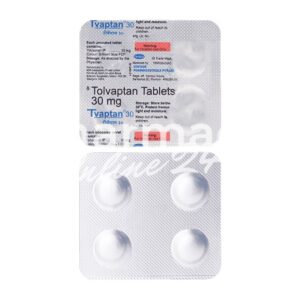
Tolvaptan tablets are supplied in strengths of 15 mg, 30 mg, 45 mg, 60 mg and 90 mg (Jinarc) and 15 mg and 30 mg (Samsca).
Typical UK packs come as blisters of 10–30 tablets per carton.
Manufacturers include Otsuka as the originator and Accord Healthcare as a supplier of generic tolvaptan.
Standard dosing and titration for ADPKD
Typical titration schedule and goals
How is dosing for ADPKD started and escalated?
Typical initiation uses a split-dose approach such as 45mg in the morning and 15mg in the afternoon (45/15mg).
The usual titration aim is to increase as tolerated up to a maximum commonly used of 90mg morning and 30mg afternoon (90/30mg) to balance aquaresis and tolerability.
Adjustments are guided by specialist assessment of symptoms, urine output and biochemical monitoring.
Monitoring during titration
What should be monitored during ADPKD titration?
Pharmacists should check urine output changes, patient-reported thirst and any signs of hypotension or dizziness.
Monitoring of blood pressure, weight and LFTs is essential and pharmacists should ensure the patient has appointments and results forwarded to the prescribing clinic.
Counselling should explain staged dose increases, when to expect side effects and when to contact the clinic for review.
Dosing for hyponatraemia
Starting doses and escalation
What are the common starting regimens for hyponatraemia?
Typical initiation for symptomatic hyponatraemia starts at 15mg once daily, and may be titrated up to a maximum of 60mg per day depending on response.
Duration is usually short-term, often days to a few weeks, with close sodium monitoring to avoid overly rapid correction.
Practical inpatient vs outpatient use
When should tolvaptan be started in hospital?
Inpatient initiation is recommended for moderate to severe symptomatic hyponatraemia to monitor rapid shifts in serum sodium and volume status.
Outpatient use is possible for selected stable patients with strict follow-up, clear safety-netting and rapid access to blood tests.
| Setting | Monitoring frequency | Typical actions |
|---|---|---|
| Inpatient | Hourly to 6-hourly sodium checks initially | Immediate adjustment or stop if sodium rises too rapidly; IV support as needed |
| Outpatient | Daily to twice-weekly sodium checks during titration | Close clinic contact, clear instructions to stop if symptoms of rapid correction appear |
Contraindications and key precautions
Absolute contraindications
When must the pharmacist refuse supply without specialist clearance?
- Severe liver impairment: Contraindicated; do not supply without specialist clearance.
- Hypovolaemia or anuria: Do not initiate until corrected; withhold supply and refer.
- Hypersensitivity: Known allergy to tolvaptan or excipients is an absolute contraindication.
Relative risks
What patient features require extra caution and clinician contact?
- Moderate hepatic or renal impairment: Flag and seek specialist input; consider withholding until reviewed.
- Pregnancy: Avoid; obtain specialist advice and verify contraception status before supply.
- Elderly patients: Start low and monitor closely for dehydration and sodium shifts.
- CYP3A4 inhibitors: Concurrent strong inhibitors increase exposure; consult prescriber before supply.
Drug interactions and polypharmacy management
Major interaction mechanisms
How does tolvaptan interact with other medicines?
Tolvaptan is metabolised primarily via CYP3A4, so strong CYP3A4 inhibitors (such as some azole antifungals and certain macrolide antibiotics) can markedly increase tolvaptan levels.
CYP3A4 inducers may lower exposure and reduce effectiveness.
Other diuretics can have additive aquaretic or hypotensive effects when used with tolvaptan.
Practical management
What actions are needed when interacting drugs are present?
| Interacting drug | Interaction type | Recommended action |
|---|---|---|
| Ketoconazole (azole antifungal) | Strong CYP3A4 inhibitor | Do not supply tolvaptan without prescriber review; consider temporary withholding |
| Clarithromycin (macrolide) | Moderate to strong CYP3A4 inhibitor | Consult prescriber; monitor for toxicity and adjust dose if advised |
| Carbamazepine (anticonvulsant) | CYP3A4 inducer | May reduce tolvaptan effect; prescriber review required |
| Loop diuretics (e.g. furosemide) | Additive aquaresis / volume depletion risk | Counsel on dehydration risk; monitor weight and BP; liaise with prescriber |
Side-effect profile and management
Common, tolerable adverse effects
What side effects should patients expect and how can they be managed?
Thirst and dry mouth are common and can be managed by carrying water and sipping regularly.
Increased urination and polyuria are typical; patients should plan dosing times and access to toilets accordingly.
Nausea, diarrhoea and fatigue can occur; simple strategies such as small meals and timing doses with daily routines often help.
Workplace planning advice, bladder access strategies and hydration tips reduce the day-to-day burden for many people.
Serious adverse events to escalate
Which events require immediate action?
Any signs suggestive of liver injury — new jaundice, dark urine, pale stools, persistent abdominal pain or marked fatigue — require immediate discontinuation and urgent medical assessment.
Neurological symptoms such as confusion, seizures or severe headache during sodium correction necessitate urgent hospital referral due to risk of osmotic demyelination or rapid sodium shifts.
Monitoring requirements and blood-test schedules
Baseline and ongoing tests
What blood tests are mandatory before and during treatment?
Baseline testing should include liver function tests, serum sodium and renal function prior to starting tolvaptan.
For ADPKD, regular LFT monitoring is required, with more frequent checks in the first 18 months of therapy.
When initiating for hyponatraemia, sodium must be checked frequently during the first days of treatment and whenever dose changes occur.
Monitoring support
How can the monitoring process be supported?
Community pharmacies can coordinate timely blood tests by arranging phlebotomy referrals or appointment bookings with local services.
Pharmacies can provide SMS or phone reminders for scheduled blood tests and medication reviews, and maintain documentation for shared-care agreements.
Providing a printed monitoring checklist to the patient improves adherence to the required schedule.
Storage, handling, missed doses and overdose guidance
Practical storage and dispensing advice
How should tolvaptan be stored?
Store below 25°C in the original container away from moisture and heat.
Dispense with the patient information leaflet and advise patients to keep the tablets in the original blister until taken.
Missed dose and overdose actions
What should patients do if they miss doses or take too much?
If a dose is missed, the patient should take it the same day if they remember, otherwise skip and take the next scheduled dose; they must not double up.
In the event of overdose, seek immediate medical attention as there is a risk of dehydration and hypernatraemia and supportive care may be required.
- Can I drive? — Most patients can drive but advise stopping if dizzy from hypotension.
- Can I drink alcohol? — Moderate intake may be permitted but discuss with the prescriber due to liver monitoring.
- What to do on test days? — Continue medication unless instructed otherwise; bring test results to clinic.
Mechanism of action and pharmacology
How tolvaptan works
What is the pharmacological effect behind tolvaptan?
Tolvaptan is a selective vasopressin V2 receptor antagonist that causes aquaresis, promoting free water excretion without major direct electrolyte loss.
In ADPKD, reduced vasopressin signalling lowers intracellular cAMP in renal tubular cells, which is thought to slow cyst growth and kidney enlargement.
Pharmacokinetics
What pharmacokinetic points matter?
Tolvaptan is given orally with onset of aquaretic effect within hours of dosing.
It is extensively metabolised by the liver via CYP3A4, so hepatic impairment alters clearance and increases risk.
Elimination is primarily hepatic, and dose adjustment or avoidance is required in significant liver disease.
Alternatives and switching
Other options
What other options exist besides tolvaptan?
Standard care measures, including fluid restriction and conventional diuretics, remain core options for hyponatraemia and volume management but do not replicate tolvaptan’s ADPKD benefits.
Switching brands
What should be considered when switching brands?
When switching brands, verify tablet strength and counsel on any packaging and pill appearance changes so the patient is not alarmed by differences.
Tolvaptan for ADPKD is started and supplied through NHS specialist pathways.
Common questions include pregnancy safety, effects on driving and managing work; refer to the prescriber when necessary.
Delivery across the United Kingdom
| City | Region | Delivery time |
|---|---|---|
| London | Greater London | 9–21 days |
| Birmingham | West Midlands | 9–21 days |
| Manchester | Greater Manchester | 9–21 days |
| Glasgow | Scotland | 9–21 days |
| Leeds | West Yorkshire | 9–21 days |
| Bristol | South West England | 9–21 days |
| Liverpool | Merseyside | 9–21 days |
| Sheffield | South Yorkshire | 9–21 days |
| Edinburgh | Scotland | 9–21 days |
| Belfast | Northern Ireland | 9–21 days |
| Cardiff | Wales | 9–21 days |
| Newcastle Upon Tyne | North East England | 9–21 days |
| Nottingham | East Midlands | 9–21 days |
| Leicester | East Midlands | 9–21 days |
| Coventry | West Midlands | 9–21 days |