Tegretol
In brief
- Tegretol (carbamazepine) is a prescription-only medicine (POM) in the UK.
- Tegretol is used to treat epilepsy (partial and generalised tonic–clonic seizures), trigeminal neuralgia and, in selected cases, bipolar disorder; it works mainly by blocking voltage-gated sodium channels to stabilise hyperexcitable neuronal membranes and reduce repetitive firing.
- Usual adult dosages vary by indication: epilepsy often starts at 200 mg once or twice daily with maintenance commonly 800–1,200 mg/day; trigeminal neuralgia often starts 100 mg once or twice daily with maintenance 400–800 mg/day; bipolar regimens commonly 400–600 mg/day initially (maintenance 400–1,200 mg/day); children typically start at 10–20 mg/kg/day in divided doses.
- Administered orally as tablets (100 mg, 200 mg, 400 mg immediate and controlled‑release), chewable tablets (100 mg) and liquid suspension (e.g. 100 mg/5 mL); there are no standard injectable formulations for routine use.
- Onset of effect for immediate‑release tablets is usually within 1–4 hours (plasma concentrations peak later for controlled‑release formulations); clinical seizure control may require gradual titration over days to weeks.
- Duration of action depends on formulation and individual metabolism: immediate‑release dosing typically covers around 8–12 hours, while sustained/controlled‑release formulations aim for 12–24 hours; note carbamazepine induces its own metabolism over time which alters levels.
- Do not drink alcohol while taking Tegretol — alcohol increases sedation and dizziness, worsens cognitive and motor side effects and may interact with carbamazepine metabolism.
- The most common side effects include dizziness, drowsiness and fatigue (other frequent effects are nausea, blurred vision and mild skin rash; serious reactions such as blood dyscrasias or severe skin reactions are rare but require immediate medical attention).
- Would you like to try Tegretol without a prescription?
Basic Tegretol information
- INN (international nonproprietary name): Carbamazepine
- Brand names available in the United Kingdom: Tegretol; Tegretol Retard (“retard” indicates prolonged release)
- ATC code: N03AF01
- Forms and dosages: Tablets 100mg, 200mg and 400mg; chewable tablets 100mg and 200mg; prolonged‑release (Retard) tablets 200mg and 400mg; liquid 100mg/5mL
- Manufacturers in the United Kingdom: Novartis (Tegretol); generics from Teva, Sandoz, Mylan, Zentiva and others
- Registration status in the United Kingdom: Licensed by the MHRA; prescription‑only medicine
- OTC / Rx classification: Prescription-only medicine (POM)
Legal status and availability in the UK
Tegretol is a prescription-only medicine (POM) in the UK.
In our online pharmacy, Tegretol is available without a prescription, with discreet delivery to the United Kingdom in 9–21 days.
What Tegretol is
Active ingredient, ATC code and regulatory footprint
Tegretol is the branded product name for the active ingredient carbamazepine.
The ATC classification is N03AF01 (anticonvulsants, carboxamide derivatives).
Carbamazepine is a prescription‑only medicine licensed by the MHRA in the United Kingdom.
Why this matters: carbamazepine has an established long‑term safety dataset but a narrow therapeutic index, so monitoring and prescription control are essential.
Available formulations, doses and packaging
Forms and strengths
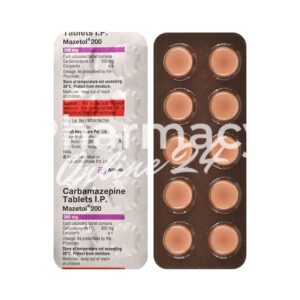
Carbamazepine is available as immediate‑release tablets typically in 100mg, 200mg and 400mg strengths and as sustained/controlled‑release tablets labelled Retard, CR or LP in 200mg and 400mg.
Chewable tablets (100mg and 200mg) and a 100mg/5mL liquid are also available.
Practical tip: choose Retard/CR sustained‑release for twice‑daily dosing where appropriate, and never split, crush or chew sustained‑release tablets.
Indications and treatment contexts
When clinicians prescribe tegretol and usual goals
- Epilepsy — Partial seizures, generalised tonic–clonic seizures and mixed seizure types; goal is long‑term reduction in seizure frequency and severity.
- Neuropathic pain — Trigeminal neuralgia and some other neuralgias; goal is rapid reduction in paroxysmal pain attacks (days for pain relief once titration is effective).
- Bipolar disorder — Used in selected maintenance situations; timeline for mood stabilisation is typically weeks to months.
- Prescribing nuance: bipolar use should follow the SPC and psychiatry guidance.
Standard dosages, titration and regimens
Practical dosing tables and titration advice
| Indication | Typical start | Maintenance range |
|---|---|---|
| Adult epilepsy | 200mg once or twice daily | 800–1,200mg/day |
| Trigeminal neuralgia | 100mg once or twice daily | 400–800mg/day |
| Bipolar disorder | 400–600mg/day | 400–1,200mg/day |
| Children | 10–20mg/kg/day divided in 2–3 doses | Titrate to lowest effective dose |
Missed‑dose rule: take as soon as possible unless close to the next dose; do not double dose.
Practical pharmacy notes: ensure suspensions are measured with the provided device, check tablet scoring (200mg immediate‑release may be split), and advise patients that sustained‑release tablets must not be crushed or split.
In elderly patients start low and titrate slowly because of increased sensitivity to neurocognitive side effects and risk of hyponatraemia.
Contraindications and baseline screening
Absolute vs relative contraindications and checks
Absolute contraindications include known hypersensitivity to carbamazepine or tricyclic compounds, a history of bone marrow depression, prior Stevens–Johnson syndrome or toxic epidermal necrolysis related to carbamazepine, and concomitant use of MAO inhibitors.
Relative cautions include significant hepatic or renal impairment, cardiac conduction disorders, pregnancy (teratogenic risk), history of blood dyscrasias and older age where hyponatraemia is more likely.
Baseline screening checklist:
- Full blood count (FBC) — baseline and at intervals.
- Liver function tests (LFTs) — baseline and periodic monitoring.
- Sodium level — baseline and if symptoms suggest hyponatraemia, especially in the elderly.
- ECG — in older patients or those with cardiac disease.
- HLA‑B*1502 genotyping — recommended in at‑risk ethnic groups as part of pharmacovigilance for severe cutaneous reactions.
Side effects, monitoring and red flags
Common reactions, serious risks, what to monitor
Common side effects include dizziness, drowsiness, fatigue, nausea, vomiting, dry mouth, blurred vision and unsteadiness.
Moderate risks include leucopenia, mild skin rash, mild liver enzyme elevations and hyponatraemia.
Serious adverse events include agranulocytosis, aplastic anaemia, Stevens–Johnson syndrome/toxic epidermal necrolysis, severe hepatic injury and clinically important cardiac conduction changes; these require immediate medical review.
Monitoring schedule (example):
| Test | Baseline | Frequency |
|---|---|---|
| Full blood count | Yes | Within first few months, then periodically |
| Liver function tests | Yes | Early months and periodically |
| Sodium | Yes | If symptomatic or in elderly patients |
Red flags — stop the medicine and seek urgent care if the patient develops a widespread skin rash, unexplained fever, sore throat, bruising or severe malaise.
Drug interactions and metabolism
CYP interactions, enzyme induction, and prescribing cautions
Carbamazepine is a strong inducer of CYP3A4 and other hepatic enzymes and is itself metabolised in the liver, creating many clinically significant interactions.
| Drug class | Effect | Pharmacy action |
|---|---|---|
| Hormonal contraceptives | Reduced efficacy | Counsel women of childbearing potential; recommend additional/alternative contraception |
| Warfarin | Altered INR (reduced effect) | Advise prescriber; monitor INR closely |
| Other antiepileptics (for example lamotrigine, valproate) | Variable interactions affecting levels | Check regimens and consider therapeutic drug monitoring |
| CYP inhibitors (for example some antibiotics, antifungals) | Increased carbamazepine levels and toxicity | Warn prescriber and monitor for toxicity |
Dispensing checklist: review the full medication list for interactions, flag reduced contraceptive efficacy, and advise prescribers about possible dose adjustments or alternative agents.
Pregnancy, breastfeeding and reproductive advice
Risks and practical counselling for women and families
Carbamazepine carries teratogenic risk, including an association with neural tube and other congenital anomalies; it should be used in pregnancy only if benefits outweigh risks and after specialist obstetric and neurology discussion.
Preconception counselling should include advice on folic acid supplementation and referral to specialist services where appropriate.
Breastfeeding: carbamazepine is excreted in small amounts in breastmilk; breastfeeding may be continued in many cases but the infant should be monitored for sedation or feeding problems.
Contraception: enzyme induction by carbamazepine reduces hormonal contraceptive effectiveness; recommend additional or non‑hormonal methods such as a copper IUD or barrier methods and liaison with GP or sexual health clinic.
Patient Q&A: If planning pregnancy ask for preconception review with your neurologist and obstetric team; if breastfeeding monitor the baby for sedation and discuss alternatives if concerns arise.
Storage, handling, transport and dispensing instructions
Pharmacy storage, patient storage and travel advice
Store tablets at room temperature, ideally 15–30°C, in a dry place and in the original packaging to keep batch and expiry information.
During transport protect cartons and blister packs from excessive heat and humidity and advise patients to carry medication in original packaging when travelling.
Dispensing notes: label clearly whether the product is sustained‑release or immediate‑release and add a visible “Do Not Split” warning for Retard/CR forms.
Provide a measuring device with any suspension dispensed and include written dosing instructions.
- Patient travel tip: carry a prescription copy and the original packaging.
- Pharmacy checklist: verify batch traceability, include patient information leaflet and counsel on not crushing/splitting slow‑release tablets.
Overdose, emergency response and poison information
Symptoms to expect and immediate actions
Overdose presentation can include nausea, vomiting, severe drowsiness, ataxia, respiratory depression, cardiac conduction abnormalities and seizures.
There is no specific antidote; management is supportive and may include airway support, cardiac monitoring and seizure control.
- If overdose is suspected advise immediate emergency attendance or call NHS 111 for urgent advice.
- Early activated charcoal may be considered in hospital if presentation is recent and airway protected.
- Hospital management focuses on supportive care, ventilation if needed, cardiac monitoring and symptomatic treatment for arrhythmias or seizures.
- Pharmacy action: record batch details, preserve packaging and notify pharmacovigilance/clinical toxicology as required.
UK Poisons information: contact the local poisons centre or NHS 111 for immediate advice.
Switching brands, equivalence and clinical switching guidance
When to switch and how to counsel patients
Avoid switching between carbamazepine brands or formulations during unstable therapy where possible.
If a switch is unavoidable document the batch and brand dispensed and counsel the patient about any visual differences in tablets or packaging.
When switching between sustained‑release and immediate‑release products do not substitute on a mg‑for‑mg basis without clinician guidance; dosing frequency and release profile differ.
Consider plasma concentration checks if seizure control changes or side effects emerge after a brand change.
- Pharmacy checklist: record brand and batch, inform the patient, flag the prescriber if clinical concerns arise, and consider advising therapeutic drug monitoring.
Patient counselling, adherence and lifestyle advice
Clear counselling points for safe and effective use
Take tegretol at the same times each day to maintain steady blood levels.
Do not double doses if one is missed; take the dose as soon as remembered unless it is close to the next scheduled dose.
Avoid alcohol until you know how tegretol affects you because sedation and dizziness can be additive.
Report any new rash, fever, sore throat, bruising or persistent sore throat immediately.
Do not drive or operate machinery until you know how the medicine affects alertness, as dizziness and drowsiness are common early effects.
Adherence aids: suggest blister packs, EPS repeat prescriptions, pharmacy reminder services and consider sustained‑release formulations to simplify twice‑daily dosing.
Practical tips: carry a medicines alert card with drug name and emergency contacts and advise about common over‑the‑counter and herbal interactions.
FAQ (short): What if I feel dizzy? Pause activities requiring concentration and contact the dispensing pharmacist; what about contraception? Use additional or non‑hormonal methods and consult a clinician.
Delivery across the United Kingdom
| City | Region | Delivery Time |
|---|---|---|
| London | Greater London | 9–21 days |
| Birmingham | West Midlands | 9–21 days |
| Manchester | Greater Manchester | 9–21 days |
| Glasgow | Scotland | 9–21 days |
| Leeds | West Yorkshire | 9–21 days |
| Liverpool | Merseyside | 9–21 days |
| Bristol | South West England | 9–21 days |
| Edinburgh | Scotland | 9–21 days |
| Cardiff | Wales | 9–21 days |
| Belfast | Northern Ireland | 9–21 days |
| Sheffield | South Yorkshire | 9–21 days |
| Newcastle Upon Tyne | North East England | 9–21 days |
| Southampton | South East England | 9–21 days |