Estradiol
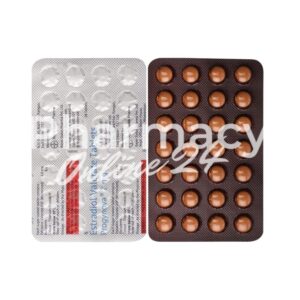
In brief
- In our pharmacy, you can buy estradiol without a prescription, with discreet delivery throughout the United Kingdom.
- Estradiol is used for hormone replacement therapy, relief of menopausal symptoms, treatment of vaginal atrophy, hypogonadism, and prevention of osteoporosis in selected patients. It is a natural oestrogen that works by replacing or supplementing the body’s own oestrogen and binding to oestrogen receptors to regulate hormone-dependent processes.
- The usual dose of estradiol depends on the indication and form: 1–2 mg orally daily, 25–100 micrograms via patch daily, or gel applied once daily. Vaginal tablets are 10 micrograms.
- The form of administration includes tablets, transdermal patches, gels, vaginal tablets and vaginal rings.
- Estradiol usually starts working within a few hours to a few days, although relief of menopausal symptoms may take 1–2 weeks and the full benefit can take longer.
- The duration of action depends on the formulation: tablets and gels are generally taken daily, patches may last about 1–7 days depending on the product, and vaginal rings can last weeks to months.
- Alcohol is best limited or avoided, as it may worsen side effects such as dizziness, headache, or stomach upset and may increase risks in long-term hormonal treatment.
- The most common side effects are nausea, headache, breast tenderness, bloating, vaginal bleeding, fluid retention, and mood changes.
- Would you like to try estradiol without a prescription?
Basic estradiol information
- INN (international nonproprietary name): Estradiol; oestradiol is the former BAN spelling still used in the UK.
- Brand names available in the United Kingdom: Elleste Solo, Progynova, Evorel, Oestrogel, Sandrena, Vagifem; generic estradiol.
- ATC code: G03CA03.
- Forms and dosages: tablets 1mg, 2mg; transdermal patches 25mcg, 50mcg, 75mcg, 100mcg; gels; vaginal tablets 10mcg; vaginal ring.
- Manufacturers in the United Kingdom: Mylan, Sandoz.
- Registration status in the United Kingdom: Licensed by the MHRA.
- OTC / Rx classification: Prescription-only medicine (POM).
Estradiol at a glance
Estradiol is a key menopause treatment and one of the most familiar HRT medicines in UK pharmacy.
In UK pharmacy practice, the active ingredient matters more than the label. Patients often ask: “Is this the same as oestrogen?” and “What’s the difference between gel, patch and tablets?”.
The same prescription may be dispensed as a different brand depending on stock or supply, which is acceptable when the active ingredient, dose and route are the same.
What estradiol is and why it is used in practice
What exactly are you taking when you are handed estradiol?
In simple terms, it is a natural oestrogen medicine used to replace or supplement hormone levels.
It is the most potent natural oestrogen and a core medicine in hormone replacement therapy.
For patients, that usually means symptom control for menopause or local treatment for vaginal dryness and atrophy.
For prescribers, the choice of dose and route matters because oral, transdermal, and vaginal products behave differently in the body.
Estradiol is used where oestrogen replacement is needed and where a lower-dose HRT approach may suit the indication.
- What it is: A hormonal therapy in the oestrogens group, classified under oestrogens and oestrogenic hormones.
- What it replaces: Oestrogen activity that falls during menopause or is absent in certain endocrine conditions.
- Why dose and route matter: Oral tablets, a transdermal patch, or a vaginal preparation do not feel the same to use and do not carry the same whole-body exposure.
In practice, low-dose HRT for menopausal symptoms may involve oral tablets, a gel or a 50–100mcg patch.
Vaginal dryness and vaginal atrophy are often managed with 10mcg vaginal tablets or a ring.
Specialist use also includes hypogonadism support and bone protection where appropriate.
UK product forms and how each one feels to use
Estradiol is available in several forms, and the choice of form affects how it is used.
| Form | Typical strengths | How it feels to use | Common preference |
|---|---|---|---|
| Oral tablets | 1mg, 2mg | Simple to take, but easy to forget | People who prefer a daily tablet routine |
| Transdermal patch | 25mcg, 50mcg, 75mcg, 100mcg | Changed on a schedule, but adhesion can matter | People who want lower day-to-day effort |
| Topical gel | Varies by product | Useful, though some dislike sticky residue | Those comfortable with applying a measured dose |
| Vaginal tablets or ring | 10mcg tablets; ring | Local therapy with fewer whole-body effects | People with vaginal atrophy or dryness |
Oral tablets can be easier for routine adherence, while a transdermal estradiol patch suits people who want to avoid remembering a daily pill.
Gel users often value flexibility, although the applicator and drying time matter in real life.
Vaginal oestrogen is often chosen when the problem is local dryness rather than whole-body menopause symptoms.
Route choice is usually about convenience, tolerance, and whether the treatment needs to be local or systemic.
Brand names and generics
Why do patients ask for a brand name when the prescription says estradiol?
Because the name on the last box is often easier to remember than the active ingredient.
That is common with HRT brand switches, especially after a repeat prescription has been issued.
In the UK, brands include Elleste Solo, Progynova, Evorel, Oestrogel, Sandrena and Vagifem, and generic estradiol is also available. Manufacturers include Mylan and Sandoz.
Stock changes and substitute brands may be dispensed. That can be reassuring when the medicine is equivalent, but it can be frustrating if the pack looks different.
Patients remember brand names; pharmacists focus on the same active ingredient, dose, and route.
Who estradiol is for and what patients should expect
Most people do not start with a diagnosis.
They start with symptoms such as hot flushes, night sweats, vaginal discomfort, sleep disruption, or worry about bone health.
Those lived symptoms map to the main uses of estradiol in pharmacy and clinical care.
- Menopausal symptoms: Hot flushes, night sweats, sleep disturbance, and menopausal discomfort are commonly treated with oral tablets, a gel or a 50–100mcg patch.
- Vaginal atrophy treatment: Vaginal dryness and soreness are often managed with 10mcg vaginal tablets or a ring.
- Bone health: Osteoporosis prevention may use oral tablets or a patch.
- Hypogonadism support: Specialist hormone replacement may be used under specialist supervision.
For menopause relief, the goal is usually symptom control with the lowest effective dose.
For vaginal atrophy, the aim is local comfort and improved tissue health, not a heavy whole-body effect.
Some patients also hear about palliative hormone therapy in breast cancer settings, where the dosing and goals are very different.
What to expect depends on the indication, the route, and whether treatment is meant to be local or systemic.
Legal status and availability in the UK
Estradiol is a prescription-only medicine (POM) in the UK.
In our online pharmacy, estradiol is available without a prescription, with discreet delivery to the United Kingdom in 9–21 days.
How estradiol is dosed in real life, not just in leaflets
Leaflets list ranges, but pharmacy counselling has to translate them into ordinary routines.
That means starting low, choosing a route that fits the indication, and adjusting under clinical supervision.
| Situation | Typical starting approach | Practical note |
|---|---|---|
| Menopause | 1–2mg oral, gel, or 50–100mcg patch | Often chosen for daily, cyclic, or continuous use |
| Hypogonadism | 1–2mg oral | Under specialist supervision |
| Osteoporosis prevention | Oral tablets or 50–100mcg patch | Usually paired with calcium and vitamin D |
| Vaginal atrophy | 10mcg vaginal tablet or ring | Local use; follow the pack instructions |
| Elderly patients | Lowest effective dose | Monitor thromboembolic risk carefully |
Daily tablet routines suit people who like a simple habit, while patch strengths are often chosen for ease and steadier delivery.
Gel application needs a little routine discipline, especially when the applicator and drying time are part of daily life.
Children are not usually treated with estradiol unless there is a specialist endocrine indication.
Liver impairment is a good example of why route selection matters, because oral forms are usually avoided in favour of transdermal or vaginal options.
How to use estradiol safely
People usually want the straightforward part: how do you actually use it?
- Take tablets by mouth exactly as directed.
- Apply patches to clean, dry skin and change them on schedule.
- Use gel or cream at the prescribed amount and let it dry before dressing.
- Use vaginal products locally, following the pack instructions.
- Keep the timing consistent if you are on a regular HRT regimen.
If a dose is missed, take it as soon as remembered.
If the next dose is due soon, skip the missed one rather than doubling up.
Overdose symptoms can include nausea, vomiting, breast tenderness, and vaginal bleeding.
There is no specific antidote, so medical help should be sought if too much has been taken.
Pharmacist counselling is useful here because a missed patch change or a forgotten tablet is usually easy to fix when caught early.
Consistency matters more than perfection, but red-flag symptoms should always be taken seriously.
Storage
Estradiol is easy to store badly, which is particularly relevant when travelling with HRT or receiving it by post.
- Tablets: Store at 15–30°C and protect from moisture.
- Gels: Store as directed on the pack.
- Patches: Keep at room temperature and avoid heat or humidity.
Summer postal delays, a hot hallway, or a bathroom cabinet can all affect product quality.
Patches are especially worth checking on arrival, because heat exposure can be a problem during delivery.
If a parcel has been left in direct sun or the pack looks damaged, it is sensible to check with the pharmacy before use.
Common and rare side effects
What do people actually complain about first?
Usually not the rare stuff.
It is the day-to-day tolerability issues that decide whether someone stays on treatment.
| Type | Examples | What patients often notice |
|---|---|---|
| Mild | Nausea, headache, breast tenderness, bloating | Often settles, but can be bothersome at the start |
| Moderate | Vaginal bleeding, fluid retention, mood changes, weight gain | More likely to prompt a review or dose change |
| Rare | Thromboembolism, stroke, endometrial hyperplasia | Needs prompt medical attention if suspected |
Breast tenderness and headache are common reasons for early dissatisfaction, especially when starting estradiol tablets or a new patch strength.
Breakthrough bleeding can happen and should be discussed, particularly if it is new, persistent, or heavy.
Route matters because transdermal forms reduce thromboembolic risk compared with oral forms.
Any signs of a clot, stroke, or unusual bleeding pattern need prompt medical review.
Who needs extra caution before starting treatment
Who should not use estradiol?
That is one of the most important counselling questions in pharmacy.
- Absolute no-use situations
- Known hypersensitivity, oestrogen-dependent malignancy, active thromboembolic disorders, undiagnosed vaginal bleeding, and pregnancy unless a specialist indication applies.
- History of clotting problems
- A previous thromboembolism needs careful review because the risk profile is different from a straightforward menopause prescription.
- Severe liver disease
- Oral estradiol is usually avoided, with transdermal or vaginal routes preferred under supervision.
- Migraine with aura or cardiovascular disease
- These need a more cautious benefit-risk discussion and monitoring.
- Gallbladder disease or diabetes
- These conditions do not always rule treatment out, but they do justify closer review.
Checking the full history matters more than reading a label in isolation.
That is why a pharmacy consultation should always include risk-factor review, not just product supply.
Monitoring, follow-up, and how UK clinicians usually review treatment
Is the medicine working, and is it still the right option?
That is what follow-up should answer.
Typical monitoring looks at symptom response, bleeding pattern, blood pressure, breast screening, and any relevant endometrial checks.
Pharmacists also help by reinforcing adherence, reminding patients about review appointments, and spotting when a prescription pattern suggests a problem.
Regular monitoring may include mammography and endometrial biopsy where indicated.
For menopause, treatment is often reviewed over 3–5 years, while osteoporosis may need 5–10 years if it remains appropriate.
Hypogonadism may require lifelong treatment if it is clearly indicated.
The principle is simple: use the lowest effective dose for the shortest duration that still meets the clinical goal.
Estradiol versus common alternatives and competitors
Patients often hear several hormone names and assume they are interchangeable.
They are not identical, even if the pharmacy discussion sounds similar.
| Medicine | How it compares | Common use context |
|---|---|---|
| Estradiol | Natural oestrogen profile with flexible routes | Common in HRT, vaginal atrophy treatment, and bone protection |
| Estradiol valerate | Different ester form with its own product range | Seen in brands such as Progynova |
| Conjugated oestrogens | Alternative oestrogen mixture | Seen in Premarin and selected HRT settings |
| Ethinyl estradiol | Used mainly in contraceptives rather than standard HRT | Different clinical purpose |
When brand availability changes, prescriber preference and patient tolerance can drive the switch.
That is one reason estradiol tablets, a transdermal estradiol patch, or vaginal oestrogen may be discussed alongside alternative HRT medicines.
The key question is not just which oestrogen is available, but which route and product match the patient’s treatment goal.
Delivery across the United Kingdom
| City | Region | Delivery time |
|---|---|---|
| London | Greater London | 9–21 days |
| Birmingham | West Midlands | 9–21 days |
| Manchester | North West England | 9–21 days |
| Glasgow | Scotland | 9–21 days |
| Edinburgh | Scotland | 9–21 days |
| Leeds | West Yorkshire | 9–21 days |
| Liverpool | Merseyside | 9–21 days |
| Newcastle upon Tyne | North East England | 9–21 days |
| Bristol | South West England | 9–21 days |
| Cardiff | Wales | 9–21 days |
| Belfast | Northern Ireland | 9–21 days |
| Nottingham | East Midlands | 9–21 days |
| Sheffield | South Yorkshire | 9–21 days |
| Leicester | East Midlands | 9–21 days |
| Aberdeen | Scotland | 9–21 days |