Amantadine
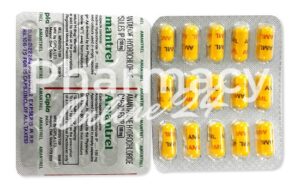
In stock
100mg
from 33,47 £
In brief
- Amantadine treats Parkinson’s disease symptoms by increasing dopamine activity and blocking NMDA receptors, though it started life as an antiviral medicine.
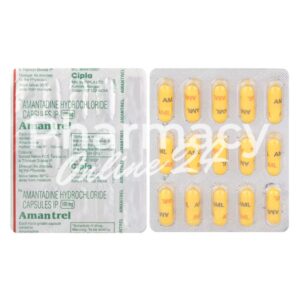
- Only a 100 mg strength is listed, sold as 30, 60, 90, 120, 180 or 360 per pack.
- A prescription is needed to obtain it in Britain, and licensed products come as capsules and as a liquid.
Amantadine and how it came to be used in Parkinson’s
Amantadine was originally a drug against viruses, and the UK SmPC still lists herpes zoster for some products alongside Parkinson’s disease. Its action in the brain is twofold: it encourages dopamine release and it blocks NMDA receptors. Doctors prescribe it by itself or with levodopa to reduce stiffness, slowness and tremor. It does not slow the disease; it only helps the symptoms.
What this listing offers
The 100 mg strength is the only one, in the pack sizes given. Capsules and an oral solution are the UK dose forms, so the form of the imported stock has to be confirmed from the packaging. Look at the strip to see how much active substance each unit holds, and bear in mind that imported generics may come with a leaflet written for another country.
Building up the dose
Treatment starts with 100 mg once a day for a week. From then on the usual dose is 100 mg twice a day, and any further increase waits at least seven days. No more than 400 mg may be taken in a day, and the SmPC points out that anything over 200 mg is more likely to be toxic. Older patients start lower. The kidneys clear amantadine, so a creatinine clearance of 15 to 35 ml/min means one 100 mg dose every two or three days at most; below 15 ml/min the medicine is not for use. Stopping should be gradual, for instance halving the dose each week, as a sudden halt can bring symptoms back or provoke a syndrome like neuroleptic malignant syndrome.
Exclusions and cautions
Seizures in the past, a previous stomach ulcer, severe kidney disease, pregnancy, breastfeeding, glaucoma of the angle-closure type that is not under treatment, and allergy to any ingredient are each a reason to leave it alone. Care is needed with psychiatric illness and with heart, liver or kidney trouble, and patients with heart failure may notice ankle swelling after about four weeks. Overdose is dangerous according to the SmPC, which is why a patient at risk of suicide should receive only a small quantity at a time.
Other drugs, and reactions to expect
Anticholinergic drugs and levodopa can each make the other’s side effects worse when taken with amantadine. Psychotic symptoms may deepen if antipsychotics are used. Alcohol and other brain-acting medicines add to toxicity in the central nervous system, and a thiazide diuretic given with a potassium-sparing one may slow the clearance of amantadine. A lacy, purplish mottling of the skin called livedo reticularis is the hallmark. More general complaints include dry mouth, nausea, poor appetite, constipation, dizziness when standing, a pounding heart, headache, disturbed sleep, anxiety, low mood and sweating. Corneal swelling may blur vision, and urges such as compulsive gambling have been recorded. If drowsiness or confusion appears, driving should stop.
Legal status in the UK
British law permits supply of amantadine only against a prescription, as 100 mg capsules or as an oral solution containing 50 mg in 5 ml. A neurologist, a Parkinson’s nurse or a GP is the person to start, adjust or end this medicine.
Useful things to take along to appointments
Insomnia is a recognised effect, so what time of day each dose is taken can matter, and a dose late in the evening may not suit everyone. Report any new confusion, hallucinations, unusual urges, ankle swelling or altered eyesight soon after it appears. Running out and stopping abruptly is a mistake; ask first how to come off the tablets in steps. Noting down each dose and its time gives the clinic something concrete to work from.