Aciclovir
In brief
- Aciclovir tablets are prescription-only medicines (POM) in the UK, while aciclovir 5% cold sore cream is available from pharmacies without a prescription.
- Aciclovir is used to treat herpes simplex infections, genital herpes, cold sores, shingles (herpes zoster), and chickenpox, and it may also be used for prevention in some immunocompromised patients. It works by inhibiting viral DNA replication, helping to stop the herpes virus from multiplying.
- The usual oral dose in adults is 200 mg five times daily for herpes simplex or initial genital herpes, 400 mg twice daily or 200 mg three to five times daily for suppression, and 800 mg five times daily for shingles. Doses are adjusted in children, older adults, and people with kidney problems.
- Aciclovir is available as tablets, cream, ointment, oral suspension, and intravenous infusion. The most common strengths are tablets 200 mg, 400 mg, and 800 mg, cream 5%, suspension 200 mg/5 ml, and IV vials for hospital use.
- Aciclovir usually starts working within a few hours, but noticeable improvement in symptoms may take 1 to 2 days after starting treatment.
- The duration of action is several hours, which is why oral aciclovir is taken multiple times a day. Treatment courses usually last 4 to 10 days, depending on the condition, while suppressive therapy may continue for months.
- Alcohol is not strictly contraindicated, but it is best to avoid or limit it during treatment, especially if you are dehydrated, unwell, or have kidney problems, as both alcohol and aciclovir can contribute to dizziness or nausea.
- The most common side effects are nausea, vomiting, diarrhoea, abdominal pain, headache, dizziness, and mild skin irritation with the cream. Less commonly, especially in older adults or people with renal impairment, confusion or kidney-related problems can occur.
- Would you like to try aciclovir without a prescription?
Aciclovir at a glance
- INN: Aciclovir
- UK brands: Zovirax and generic aciclovir.
- Rx status: aciclovir tablets and larger tubes of cream are prescription-only medicines (POM); aciclovir 5% cold sore cream is available from pharmacies without a prescription (P).
- Common forms: 200mg, 400mg and 800mg tablets, 5% cream, and 200mg/5ml suspension.
- Typical use: Cold sore treatment, shingles medicine, genital herpes tablets and other herpes virus infections.
Brand versus generic
In the UK, the best-known branded product is Zovirax, while generic aciclovir is widely supplied too. The active ingredient is the same, so one box may look different from another even when the medicine is the same.
Typical use for cold sores, shingles and genital herpes
Cold sores are usually treated with aciclovir cream at the tingling or burning stage. Shingles and genital herpes more often need antiviral tablets, because the infection is treated systemically. Some patients take tablets for suppression rather than an outbreak, particularly when recurrences are frequent.
Legal status and availability in the UK
Aciclovir tablets are prescription-only medicines (POM) in the UK; aciclovir 5% cold sore cream is available from pharmacies without a prescription.
In our online pharmacy, aciclovir is available without a prescription, with discreet delivery to the United Kingdom in 9–21 days.
How aciclovir works and where it fits in antiviral treatment
- Definition
- Aciclovir is a systemic antiviral medicine in ATC group J05AB01, with topical dermatological formulations classified under D06BB.
- Mechanism
- It targets herpes viruses by interfering with viral replication, which is why it is used for herpes simplex treatment, shingles medicine and related infections.
- Topical use
- When the infection is localised, a topical cream may make more sense than oral treatment, especially for early cold sores.
Definition — what aciclovir is and how it targets herpes viruses
Aciclovir is a direct acting antiviral used against herpes viruses.
It is best known for herpes simplex virus, but it also has an established role in varicella zoster infection.
That includes cold sores, genital herpes, shingles and chickenpox in appropriate patients.
Why it’s used for HSV, shingles and chickenpox
For herpes simplex treatment, aciclovir is chosen because it is familiar, well studied and available in several oral and topical forms.
For shingles medicine, it is used orally at higher strength to reduce viral activity during an acute episode.
In chickenpox, timing matters, with treatment started early after the rash appears.
When topical forms make more sense than oral treatment
A topical cream is often reasonable when the problem is local, such as a single cold sore on the lip.
It will not replace oral treatment for deeper or more widespread infection.
Simple local lesions can be treated with cream, while other cases need antiviral tablets or a doctor’s review.
Product forms available in the UK and what each one is for
| Form | Common strengths | Usual use | Availability |
|---|---|---|---|
| Tablets | 200mg, 400mg, 800mg | Systemic treatment and suppression | Widespread, branded and generic |
| Cream | 5% | Cold sores and local lesions | Common in tubes of 2g to 5g |
| Suspension | 200mg/5ml | Children and those needing liquid dosing | Paediatric use |
| IV vials | 250mg, 500mg, 1000mg | Hospital antiviral treatment | Severe infection only |
Tablets for systemic infection and suppression
Aciclovir tablets are the main option for systemic infection and longer-term suppression.
They are used for herpes simplex, genital herpes recurrence, shingles and chickenpox according to clinical need.
Aciclovir 400mg tablets are used when suppression is being considered, and 800mg tablets for shingles.
Cream for cold sores and local lesions
Aciclovir cream is the familiar cold sore cream people reach for when the lip starts to tingle.
The main aim is early use, before the sore fully breaks down.
It is also used for local lesions in some genital presentations, depending on the prescription.
Suspension and IV use in children or severe infection
Oral suspension is helpful when a child cannot swallow tablets or when weight-based dosing is easier.
Intravenous treatment belongs in hospital care for severe infection, where supervision is closer and the clinical picture is more complex.
Who aciclovir is for: main conditions and symptoms
- Herpes labialis: Cold sores, especially at the tingling or blister stage.
- Genital herpes: First episodes, recurrences or suppressive treatment.
- Herpes zoster: Shingles, when started promptly.
- Varicella: Chickenpox in selected patients.
- Prophylaxis: Prevention in immunocompromised people.
Cold sores and early tingling-stage treatment
For cold sores, the earliest sign is often tingling, itching or a tight feeling on the lip.
That is when aciclovir cream is most useful.
First episodes versus recurring genital herpes
Genital herpes tablets may be used differently for a first episode than for recurrence.
People with repeated outbreaks may receive suppressive therapy when recurrence is frequent or particularly disruptive.
In that setting, the goal is reducing future episodes rather than only treating the current flare.
Shingles and chickenpox use timing
Shingles antiviral treatment is most useful when started early in the outbreak.
Chickenpox treatment is also time-sensitive, and the benefit is greatest when started within the recommended window after rash onset.
Prevention in high-risk patients
In immunocompromised people, aciclovir may be used to prevent outbreaks or complications.
That is a very different use from a simple cold sore cream and needs careful clinical judgement.
Packaging differences between brands and generics
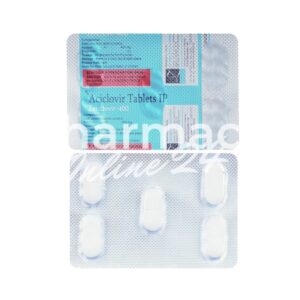
Branded Zovirax products may look very different from a generic pack, even though both contain aciclovir. Different manufacturers use different tablet shapes, blisters, leaflets and carton designs, and the pack may change from one supply to the next. That difference is about manufacturer presentation, not effectiveness.
Dosage by condition: what adults and children are commonly prescribed
| Condition | Adult oral regimen | Paediatric regimen | Usual duration |
|---|---|---|---|
| HSV skin and mucosa | 200mg 5 times daily | 20mg/kg 4 times daily | 5 to 10 days |
| Genital herpes, initial | 200mg 5 times daily | 20mg/kg 4 times daily | 5 to 10 days |
| Genital herpes, recurrence or suppression | 400mg twice daily or 200mg 3 to 5 times daily | Specialist reference needed | Up to 6 to 12 months |
| Herpes zoster | 800mg 5 times daily | 20mg/kg 4 times daily | 7 to 10 days |
| Varicella | 800mg 4 times daily | 20mg/kg 4 times daily | 5 days |
HSV skin and mucosa dosing
For herpes simplex on the skin or mucosa, the standard adult regimen is 200mg five times daily.
Children are usually dosed by weight, which is why a suspension may be more practical than tablets.
Genital herpes treatment versus suppression
Genital herpes treatment is not the same as suppression.
The treatment course is usually shorter, while suppression can continue for months if recurrence remains a problem.
That is where suppressive therapy and careful review of recurrence pattern become important.
Shingles and chickenpox dosing windows
Shingles is generally treated at a higher oral dose than cold sores or recurrent genital herpes.
Chickenpox dosing is also weight based in children and time sensitive in adults.
Cream and eye ointment frequency
Topical cream is normally applied five times daily for four to five days, with a maximum of ten days.
Ophthalmic ointment uses a 1 cm ribbon into the affected eye, five times daily, until three days after healing.
That eye route should be handled with extra care and proper hygiene.
Dose adjustments: children, older adults and renal impairment
- Children
- Dosing is weight based, with lower strengths and suspension used more often in infants and small children.
- Older adults
- Standard dosing may be used, but renal function should be monitored closely because the risk of neurotoxicity is higher.
- Renal impairment
- Dose reduction is required; for severe impairment with creatinine clearance below 10 ml/min, oral dosing frequency is commonly halved.
- Hepatic impairment
- No major adjustment is usually needed, although severe hepatic dysfunction still needs monitoring, especially with intravenous treatment.
Caution: Dehydration, kidney problems and interacting nephrotoxic medicines increase the chance of harm, so keep well hydrated and tell the prescriber or pharmacist about all other medicines.
Weight-based paediatric dosing and suspension use
Paediatric dosing is usually based on body weight rather than a fixed adult schedule.
Suspension is particularly helpful when the child is too young for reliable tablet swallowing.
Why older adults need extra monitoring
Older adults may clear the medicine more slowly, especially if kidney function has declined.
Renal impairment and hydration advice
Kidney function affects aciclovir handling, so dehydration can quickly become an issue.
Plenty of fluid intake is sensible unless a clinician has told the patient otherwise.
When IV treatment needs closer supervision
IV treatment belongs in a setting where the patient can be monitored closely.
That is especially important when renal impairment or severe infection is present.
How to use aciclovir correctly: tablets, cream and eye ointment
- Take oral aciclovir with or without food, as directed on the prescription.
- Use the cream at the first sign of a cold sore, with clean hands and minimal rubbing.
- Apply the ophthalmic ribbon carefully, then avoid touching the tip to the eye.
- If a dose is missed, take it as soon as remembered if only a few hours late.
- If the next dose is nearly due, skip the missed dose and continue the normal schedule.
- Never double up to make up for a missed dose.
Oral administration with or without food
Tablets may be taken with or without food, which makes them simple to fit into a normal day.
Sticking to the prescribed frequency matters more than the exact mealtime.
Correct cream application technique and hygiene
Cold sore cream works best when the skin is clean and the application is gentle.
Hands should be washed before and after use so the infection is not spread to other areas.
Eye ointment use and contact lens precautions
Eye ointment is not the same as skin cream, so the correct product must be used.
Contact lens wearers should be careful and follow professional advice if the eye is affected.
What to do if a dose is missed
Missed dose advice is simple: take it soon if there is time, or skip it if the next dose is close.
It is better to keep to the schedule than to take two doses at once.
Side effects and warnings
| Type | Examples | Practical note |
|---|---|---|
| Gastrointestinal | Nausea, vomiting, diarrhoea, abdominal pain | Usually mild |
| CNS | Headache, dizziness, confusion | More likely in older adults or renal impairment |
| Skin | Local irritation, itching, mild rash | Seen mainly with cream |
| General | Fatigue, malaise | Often self-limiting |
| Renal | Crystalluria, increased creatinine | Higher concern with dehydration or IV use |
Warning: Stop and seek medical advice urgently if there is confusion, very low urine output, a worsening rash or signs of allergy.
Most common mild side effects and what patients report
Most people who report side effects describe stomach upset, headache or a bit of fatigue.
With the cream, local irritation and mild itching are the commonest complaints.
Red flags: confusion, low urine output, worsening rash
Confusion is uncommon, but it matters, particularly in older people or those with kidney problems.
Low urine output and worsening rash deserve prompt medical review rather than waiting it out.
Caution in dehydration, neurological disorders and pregnancy/breastfeeding
Extra care is sensible if the patient is dehydrated, has a neurological disorder or is pregnant or breastfeeding.
Those situations are not automatic reasons to avoid treatment, but they do justify pharmacist counselling.
Interactions with nephrotoxic drugs
Nephrotoxic drugs can increase the risk of kidney-related problems when taken with aciclovir.
Overdose, missed doses and what to do in an urgent situation
- Missed dose: Take it soon if remembered within a few hours.
- Near next dose: Skip the forgotten dose and continue the schedule.
- Never do this: Double the dose to catch up.
- Overdose symptoms: Agitation, confusion, lethargy and renal dysfunction.
- Serious cases: Haemodialysis may be considered in hospital.
Signs that need urgent medical review
Any sudden confusion, marked drowsiness, severe vomiting or signs of kidney trouble needs urgent attention.
That is especially true if a child, an older adult or someone with existing renal impairment is involved.
When to contact NHS 111, GP or emergency care
NHS 111 is a sensible first contact for urgent but not immediately life-threatening concerns.
A GP should review recurring infections, persistent symptoms or treatment questions that go beyond simple pharmacy advice.
Emergency care is needed if the patient is severely unwell, very drowsy or showing serious renal symptoms.
Storage and shelf life
Storage is usually simple, but it still matters for medicine quality.
Tablets and cream should be kept at room temperature, usually under 25°C.
Cream should not be frozen, and the tube should be closed tightly after use.
Protect the medicine from light and moisture, especially if it is kept in a bathroom cabinet.
Home storage for tablets, cream and suspension
At home, a cool dry cupboard is better than a warm windowsill.
Suspension should also be kept according to the pack instructions and checked for expiry before use.
Heat exposure during transport
Do not leave any medicine in direct sun or in a hot car.
Tube hygiene and closure after use
The tube tip should stay clean and the cap should be replaced straight away after use.
That helps protect the product and reduces the chance of contamination.
Aciclovir versus valaciclovir, famciclovir and topical alternatives
| Medicine | Type | Main practical difference |
|---|---|---|
| Aciclovir | Oral and topical antiviral | Established option with several strengths |
| Valaciclovir | Oral antiviral | Prodrug with improved oral bioavailability |
| Famciclovir | Oral antiviral | Similar indications, different regimen |
| Penciclovir | Topical antiviral | Used locally for cold sores |
Oral alternatives and why some patients switch
Valaciclovir is a common alternative because some patients prefer a different dosing schedule.
Famciclovir is another oral option with similar antiviral indications but a separate regimen.
Topical cold sore products compared with aciclovir cream
Topical cold sore products vary in how they are used and how quickly patients expect results.
Aciclovir cream remains a familiar choice when the aim is early local treatment.
When pharmacists may recommend a different option
Pharmacists may suggest a different option when the pattern of outbreaks, dosing needs or medical history makes it more suitable.
That can happen if a patient needs a different oral schedule or if another product better matches the presentation.
Delivery across the United Kingdom
| City | Region | Delivery Time |
|---|---|---|
| London | England | 9–21 days |
| Birmingham | England | 9–21 days |
| Manchester | England | 9–21 days |
| Leeds | England | 9–21 days |
| Glasgow | Scotland | 9–21 days |
| Edinburgh | Scotland | 9–21 days |
| Liverpool | England | 9–21 days |
| Bristol | England | 9–21 days |
| Cardiff | Wales | 9–21 days |
| Belfast | Northern Ireland | 9–21 days |
| Sheffield | England | 9–21 days |
| Newcastle upon Tyne | England | 9–21 days |
| Nottingham | England | 9–21 days |
| Southampton | England | 9–21 days |
| Aberdeen | Scotland | 9–21 days |