Atomoxetine
In stock
10mg · 18mg · 25mg
from 30,50 £
In brief
- Atomoxetine offers ADHD control without being a stimulant; in Britain it is licensed from the age of six and includes adults.
- Strengths of 10, 18 and 25 mg are listed, with 30 to 360 units per pack (30 to 180 for 25 mg).
- Atomoxetine is prescription-only in the UK; an experienced ADHD clinician starts it and sets the dose.
Atomoxetine as an alternative to stimulant ADHD drugs
Atomoxetine is a selective noradrenaline reuptake inhibitor, which means it keeps more noradrenaline available in the brain circuits that govern attention and impulse control. It is not a stimulant, it is not a controlled drug in the UK, and it works gradually rather than within hours. The UK SmPC covers ADHD in children of six and over, in adolescents, and in adults whose symptoms began in childhood, as part of a wider programme that usually includes psychological and educational support. Strattera, the original brand, has been discontinued in the UK, but atomoxetine generics are available.
Strengths and counts in this listing
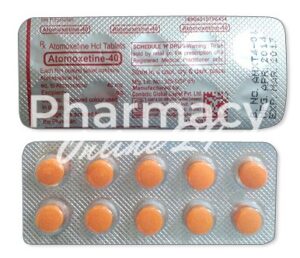
The listing carries three strengths. Packs of 30, 60, 90, 120, 180 or 360 are offered for 10 mg and 18 mg, and 30 to 180 for 25 mg. In the UK atomoxetine is supplied as hard capsules and as an oral solution, and stock imported from abroad may be labelled for another market, so read the strength on the strip. The contents of a capsule irritate the eyes, so capsules should never be opened; if the powder does reach the eyes, rinse with plenty of water and seek advice.
Starting treatment and dosing
Starting it is the job of a paediatrician, a child and adolescent psychiatrist or an adult psychiatrist. For children and teenagers up to 70 kg, the SmPC begins with 0.5 mg per kilogram daily for at least a week and then raises it to about 1.2 mg/kg a day. For those above 70 kg, and for adults, the first dose is 40 mg daily, raised to a usual 80 mg, with 100 mg as the highest. If the liver is damaged, the doses are halved or quartered according to severity. Because the SmPC dose depends on body weight and is changed in steps, the exact strength is the clinician’s decision.
Heart, blood pressure and liver monitoring
A heart and blood pressure assessment comes first, since the medicine can raise the pulse and blood pressure. Both are measured again after each dose change and at least every six months, and the need to continue is looked at once a year. Growth is followed in younger patients. Seek help promptly for yellow skin or eyes, dark urine or unexplained stomach pain, which can signal liver injury, and for any thoughts of self-harm, which have been reported more often in young patients early in treatment.
Who should not take it, and interactions
The SmPC excludes people who have taken a monoamine oxidase inhibitor in the last two weeks, and those with narrow-angle glaucoma, phaeochromocytoma, or severe heart or blood vessel disease. Medicines that block CYP2D6, including paroxetine, fluoxetine and quinidine, raise atomoxetine levels and may need a lower dose. Salbutamol and other drugs that lift blood pressure or pulse deserve care, and so do medicines that prolong the QT interval.
Everyday effects
Reduced appetite, nausea, dry mouth, headache, stomach ache, tiredness, dizziness, trouble sleeping and a fast pulse are among the usual reactions. Adults may notice sexual problems, difficulty passing urine or painful periods. Taking the dose with food can ease nausea. It does not need to be taken exactly on the clock, but a regular routine helps. A clinician decides whether it suits the person concerned, and any dose change or stopping should follow that advice.