
Bempedoic Acid
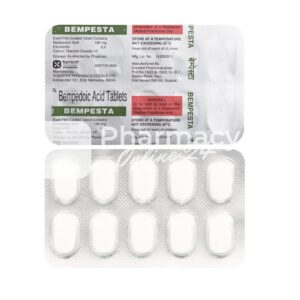
In brief
- In most countries bempedoic acid (sold as Nexletol, Nilemdo or in combination as Nustendi/Nexlizet) is prescription only and should be obtained from a pharmacy with a valid prescription or via licensed distributors; it is not intended for over‑the‑counter purchase and buying from unverified sources is not recommended.
- Bempedoic acid is used to lower LDL‑cholesterol in primary hypercholesterolaemia and mixed dyslipidaemia, as an adjunct to diet and maximally tolerated statin therapy or for statin‑intolerant patients; it works as an ATP citrate lyase (ACL) inhibitor, reducing cholesterol synthesis upstream of HMG‑CoA reductase.
- The usual dose for adults is 180 mg orally once daily; the fixed‑dose combination with ezetimibe is 180 mg/10 mg once daily.
- The form of administration is a film‑coated oral tablet, taken once daily with or without food.
- LDL‑C lowering can begin within 2–4 weeks, with reassessment typically at 4–12 weeks; larger trial effects are commonly reported by 12 weeks.
- Duration of action is maintained with once‑daily dosing — LDL‑C reductions persist while treatment is continued, with steady‑state pharmacodynamic effects reached within days to weeks and maximal clinical effect by around 12 weeks.
- Avoid excessive alcohol while being treated; there is no specific alcohol contraindication but alcohol may worsen liver function or interact with comorbidities — bempedoic acid is contraindicated in pregnancy and breastfeeding.
- The most common side effects include increased uric acid/hyperuricaemia (and gout risk), muscle spasms, back and limb pain, upper respiratory tract infections, abdominal pain, diarrhoea, fatigue and elevations in liver enzymes.
- Would you like to try bempedoic acid without a prescription?
Basic Bempedoic Acid Information
- INN (International Nonproprietary Name): Bempedoic acid
- Brand Names Available In United Kingdom: Nilemdo (Europe/UK), Nustendi (fixed combination in Europe), Nexletol/Nexlizet (marketed in other regions)
- ATC Code: C10AX21
- Forms & Dosages: Film-coated tablet 180 mg (monotherapy); film-coated tablet 180 mg/10 mg (fixed combination with ezetimibe)
- Manufacturers In United Kingdom: Daiichi Sankyo Europe (Europe/UK supply); Esperion Therapeutics noted as originator and global supplier
- Registration Status In United Kingdom: Approved in Europe (EMA/European Commission) April 2020 as Nilemdo and Nustendi (fixed combination); marketed in Europe including the UK per product licensing
- OTC / Rx Classification: Prescription only (Rx) in major markets
Market Realities And UK Availability
Where Patients Find Bempedoic Acid Today
Where can I legally get bempedoic acid if my GP recommends it?
Bempedoic acid is licensed and sold under several brand names internationally, with Nilemdo used in Europe and the UK.
Expect the drug to be prescription only across major markets according to product authorisations.
Typical UK distribution channels include NHS prescriptions issued by a GP or hospital clinician, private prescriptions dispensed at retail chains, and licensed online pharmacies.
Regional prescribing and availability can depend on local formulary decisions and commissioning criteria.
Pharmacies and online suppliers will verify prescriptions, check patient details and confirm authenticity of packaging on receipt.
Packaging to expect is a film-coated tablet of 180 mg for monotherapy and 180 mg/10 mg for fixed combination tablets.
- Supply channels: NHS GP via EPS, hospital outpatient clinics, private prescription at community chains, licensed online pharmacy dispensing.
| Brand | Territory |
|---|---|
| Nilemdo | Europe (EU/EEA, Switzerland, UK) |
| Nexletol / Nexlizet | USA, Australia, New Zealand |
| Nustendi | Europe (fixed combination) |
Prescription Pathways
GP Issues NHS Prescription → Dispensed At Community Pharmacy Or Via EPS.
Private Prescription Issued → Patient Pays Dispensing Fee At Retail Or Online Pharmacy.
Hospital Specialist Initiates → Shared Care Or Hospital Supply Arranged.
Patient Experiences And Real‑World Considerations
Practical Expectations, Adherence And Side‑Effect Signals
What do patients typically notice after starting bempedoic acid?
Many patients report no immediate symptomatic change because treatment works on cholesterol levels rather than symptoms.
Common journeys include adults intolerant to statins, people needing extra LDL‑C lowering despite statins, and those started on combination therapy with ezetimibe.
The usual dose is 180 mg once daily for adults, whether alone or as part of a fixed‑dose tablet with ezetimibe.
Common adverse effects to watch for include increased uric acid, muscle spasms, back or limb pain, upper respiratory symptoms, abdominal upset and elevated liver enzymes.
People with gout history should be counselled on hyperuricaemia risk and advised to report new joint pain promptly.
Report severe muscle weakness or tendon pain urgently for clinician review.
Practical advice: tablets may be taken with or without food, missed doses should not be doubled, and adherence improves with simple daily routines.
- Checklist For What To Tell Your Pharmacist: current medicines, statin intolerance history, gout history, pregnancy/breastfeeding status, recent blood tests.
Patient Voices (Anonymised)
“My GP added this after I complained about muscle aches with high‑dose statins.”
“I had mild back cramps for a few days but my blood tests were fine at review.”
Mechanism Of Action Explained For Patients And Pharmacists
Acl Inhibition Vs Statins — Simple Diagram Preferred
How does bempedoic acid lower cholesterol compared with statins and ezetimibe?
Bempedoic acid inhibits ATP citrate lyase (ACL), an enzyme upstream of HMG‑CoA reductase in the hepatic cholesterol synthesis pathway.
This reduces hepatic cholesterol production and upregulates LDL receptors to clear LDL‑C from the blood.
Statins inhibit HMG‑CoA reductase directly, one step downstream from ACL inhibition.
Ezetimibe reduces intestinal cholesterol absorption, acting at a different site entirely.
Mechanism Flowchart
Dietary/Endogenous Citrate → ACL (inhibited by bempedoic acid) → ↓ Acetyl‑CoA for cholesterol synthesis → ↓ Hepatic cholesterol → ↑ LDL Receptor Expression → ↓ LDL‑C.
HMG‑CoA Reductase (inhibited by statins) → Direct reduction in cholesterol synthesis.
NPC1L1 Transporter (inhibited by ezetimibe) → ↓ Intestinal cholesterol absorption.
Key Term Definitions
- ACL: ATP citrate lyase, an enzyme in hepatic cholesterol synthesis.
- LDL‑C: Low‑density lipoprotein cholesterol, the primary target for reduction.
Because bempedoic acid is activated in the liver and remains inactive in skeletal muscle, it may have lower direct muscle exposure than statins, which helps explain its role for many statin‑intolerant patients.
Licensed Indications And Clinical Positioning
Who Is Suitable And When To Prescribe
Who should be considered for bempedoic acid in primary care?
Licensed indications include adult patients with primary hypercholesterolaemia or mixed dyslipidaemia as an adjunct to diet and maximally tolerated statin therapy.
It is also indicated for adults who are statin‑intolerant and require LDL‑C reduction.
The standard adult dose is 180 mg orally once daily, with a fixed combination available at 180 mg/10 mg for added effect from ezetimibe.
Treatment is intended to be chronic, with LDL‑C reassessment usually at 4–12 weeks after starting therapy.
Positioning versus other agents: ezetimibe is often the first oral add‑on for modest additional LDL‑C lowering, while PCSK9 inhibitors are injectable options reserved for greater reduction or when oral therapy is insufficient or unsuitable.
| Indication | Place In Therapy |
|---|---|
| Adjunct to maximally tolerated statin | Add‑on oral option before injectables |
| Statin intolerance | Oral alternative to try for LDL‑C lowering |
Treatment Pathway
Maximally Tolerated Statin → Add Ezetimibe → Add Bempedoic Acid (or switch to combination) → Consider PCSK9 Inhibitor If Target Not Met.
Formulations, Strengths, Brand Packaging And Labelling
What A Pharmacist Should Check On Receipt
Which products and packaging will appear on the shelf or product page?
Monotherapy is supplied as a film‑coated tablet 180 mg, and the fixed combination is 180 mg/10 mg film‑coated tablet.
Brand mapping from supplied data: Nilemdo for Europe/UK, Nustendi for the fixed combination in Europe, Nexletol and Nexlizet in other territories.
Common packaging is blister packs containing film‑coated tablets; packaging details can vary by market and pack size.
| Brand / SKU | Strength / Pack | Manufacturer |
|---|---|---|
| Nilemdo | 180 mg tablet, blister | Daiichi Sankyo Europe |
| Nustendi | 180 mg/10 mg tablet, blister | Daiichi Sankyo Europe |
| Nexletol / Nexlizet | 180 mg / 180 mg/10 mg, blister | Esperion Therapeutics / CSL Seqirus |
- Checklist For Pharmacists On Receipt: correct brand and strength, batch number, expiry, patient leaflet included, intact blister and tamper evidence.
Stay alert for counterfeit packaging and verify manufacturer details if packaging looks altered.
How To Buy In The UK — NHS, Private And Online Routes
Practical Steps, Prescriptions And Expected Costs
How do patients obtain bempedoic acid and what will it cost?
NHS access usually requires a GP or specialist prescription processed via the Electronic Prescription Service (EPS) or paper prescription for dispensing at a community pharmacy.
Private prescriptions can be supplied by community chains such as Boots, LloydsPharmacy and Superdrug or by registered online pharmacies subject to verification.
Prescription charges differ by region: Scotland, Wales and Northern Ireland offer free prescriptions, while patients in England usually pay per prescription unless exempt.
Local formularies and commissioning rules can affect whether NHS clinicians prescribe bempedoic acid routinely or require prior authorisation.
For online orders, always check the pharmacy’s MHRA/GPhC registration and inspect brand and packaging on arrival.
In our online pharmacy, bempedoic acid is available without a prescription, with discreet delivery to United Kingdom in 5-14 days.
| Route | Pros | Cons |
|---|---|---|
| NHS Prescription | Potentially no cost in devolved nations; continuity with GP | Subject to local formulary limits |
| Private Prescription | Faster access if NHS not available locally | Patient pays dispensing fees |
| Online Pharmacy | Convenience and home delivery | Must verify registration and packaging authenticity |
Dosing, Administration, Missed Dose And Overdose
Clear Directions For Patient Leaflets And Product Pages
What should be written on the patient label and information pages?
Adult dosing: take one 180 mg tablet orally once daily for monotherapy; fixed combination tablets are 180 mg/10 mg once daily.
Tablets may be taken with or without food according to the product information.
If a dose is missed, take it as soon as remembered unless the next dose is due soon; do not double the next dose.
In case of overdose, provide supportive care and monitor for adverse effects, especially muscle symptoms; there is no specific antidote.
Recommended labelling language: “Take one tablet once daily”, storage instructions, missed dose advice and key warnings about pregnancy and gout risk.
| Product | Dosage |
|---|---|
| Monotherapy | 180 mg once daily |
| Fixed Combination | 180 mg/10 mg once daily |
Provide a small dosing sticker or card with dispensed packs to support adherence.
Safety Profile, Monitoring And Counselling Points
What To Monitor And When To Refer
Which tests and checks should be routine when supplying bempedoic acid?
Common safety signals include hyperuricaemia, muscle spasms, back and limb pain, upper respiratory symptoms, gastrointestinal upset, fatigue and raised hepatic enzymes.
Absolute contraindications comprise known hypersensitivity and pregnancy or breastfeeding.
Baseline tests recommended: lipid panel and liver function tests, with serum uric acid if there is a history of gout.
Repeat assessment of LDL‑C and safety monitoring should occur around 4–12 weeks after starting treatment.
Refer urgently for severe muscle weakness, signs of tendon rupture, or marked liver enzyme elevations.
- Counselling Checklist For Pharmacists: advise on gout risk, hydration, report joint pain, avoid in pregnancy, and seek urgent review for severe muscle or tendon symptoms.
Contraindications, Cautions And Drug Interactions
Who Needs Extra Care And What To Avoid
Which patients require caution or are contraindicated?
Absolute contraindications from the product data are hypersensitivity to bempedoic acid or its excipients, and pregnancy or breastfeeding.
Cautions include severe renal impairment, significant hepatic impairment, a history of gout or hyperuricaemia, and prior tendon disorders.
Drug interactions should be checked against up‑to‑date local resources such as the BNF and MHRA advisories.
When combining with other lipid‑lowering agents, monitor for additive effects and ensure prescribers are aware of the full regimen.
| Risk Area | Action |
|---|---|
| Gout / Hyperuricaemia | Check uric acid baseline; advise hydration; inform prescriber if levels rise |
| Renal / Hepatic Impairment | Use caution; consider specialist advice for severe impairment |
Document counselling and notify the prescriber if relevant risk factors are present or if additional monitoring is required.
Clinical Efficacy — Trial Context And Real‑World Outcomes
What Pharmacists Should Know For Evidence‑Based Counselling
How effective is bempedoic acid in lowering LDL‑C in practice?
Regulatory reviews and clinical trials supported approval for LDL‑C lowering as an adjunct or alternative therapy in adults with hypercholesterolaemia or mixed dyslipidaemia.
The fixed combination with ezetimibe provides greater LDL‑C lowering than monotherapy based on product data and regulatory assessment.
Position bempedoic acid as an oral option that typically offers modest additional LDL‑C reduction compared with ezetimibe and less reduction than PCSK9 biologics, which are injectable.
For detailed numerical efficacy data, pharmacists should consult the product SPC, MHRA and EMA assessment reports for primary study figures.
| Oral Option | Typical Role |
|---|---|
| Ezetimibe | First oral add‑on for modest LDL‑C lowering |
| Bempedoic Acid | Oral adjunct or alternative for statin intolerance |
| PCSK9 Inhibitors | Greater LDL‑C reduction; injectable and costlier |
Monitoring, Follow‑Up And Switching Strategies In Practice
Timelines, Labs And How To Escalate Therapy
What is a practical follow‑up schedule after starting bempedoic acid?
Baseline tests should include a lipid profile, liver function tests and renal function, with serum uric acid if the patient has gout history.
Reassess LDL‑C and enquire about side effects at 4–12 weeks after initiation or dose change.
If LDL‑C targets are not met, first check adherence, drug interactions and correct dosing.
Consider adding ezetimibe or switching to the fixed‑dose combination before escalation to PCSK9 inhibitors, subject to local commissioning rules.
For statin‑intolerant patients, document intolerance and discuss re‑challenge where clinically appropriate.
- Pharmacy Follow‑Up Checklist: symptoms review, adherence check, recent labs, side‑effect screening and action plan for prescriber contact.
Special Populations: Elderly, Renal/Hepatic Impairment, Pregnancy
Dosing Guidance And Contraindications
Are dose adjustments required for special populations?
Bempedoic acid is not approved for use in children due to lack of established safety and efficacy data.
Elderly patients generally require no dose adjustment and receive the same adult dose unless comorbidities dictate otherwise.
No dose adjustment is needed for mild to moderate renal impairment (eGFR ≥30 mL/min/1.73 m²), but caution is advised in severe impairment where data are limited.
For hepatic impairment, use caution and monitor in moderate disease and avoid use in severe hepatic impairment.
Pregnancy and breastfeeding are contraindicated due to insufficient safety data.
| Population | Recommendation |
|---|---|
| Children | Not approved |
| Elderly | No routine adjustment |
| Renal Impairment | No adjustment for mild/moderate; caution if severe |
| Pregnancy / Breastfeeding | Contraindicated |
Document risk/benefit discussions and recommend effective contraception for women of childbearing potential where appropriate.
Storage, Dispensing, Labelling And Pharmacy Stock Management
Best Practice For Safe Supply And Patient Information
How should pharmacies store and manage bempedoic acid stock?
Store at room temperature between 15–30°C and protect from moisture in original packaging.
Perform routine stock rotation, batch and expiry checks, and confirm manufacturer details on arrival to avoid mix‑ups.
Labels should include dose, frequency (“Take one tablet once daily”), missed dose advice, storage instructions and key warnings such as pregnancy and gout risk.
Include a printed patient information leaflet or scanned PIL with online orders and ensure tamper‑proof packing for delivery.
- Dispensing Checklist: verify prescription, check contraindications (pregnancy, gout), counsel on side effects, supply PIL and document counselling.
Maintain an SOP for screening prescriptions and book pharmacist counselling slots for new starts to improve adherence and safety monitoring.
Pricing, Reimbursement, Competitive Landscape And SEO For Product Pages
Pricing Options, Reimbursement Tips And Optimised Web Copy
How should pharmacies present bempedoic acid on product pages and handle pricing/reimbursement questions?
Position bempedoic acid as an oral adjunct for LDL‑C lowering and an option for patients with statin intolerance alongside established competitors such as statins, ezetimibe and PCSK9 inhibitors.
Be clear that the medicine is prescription only and explain differences between NHS and private costs, noting free prescriptions in Scotland, Wales and Northern Ireland and likely private charges in England.
Signpost manufacturer patient support programmes and link to the SPC and MHRA/EMA summaries for credibility and detailed data.
Optimise on‑page copy around natural search terms such as “Buy Bempedoic Acid Tablets 180 mg”, “Nilemdo UK” and “cholesterol lowering bempedoic acid”, while avoiding clinical overclaiming.
| Channel | Commercial Note |
|---|---|
| NHS | Subject to local formulary; may be commissioned with restrictions |
| Private | Patient pays; faster if NHS not available |
| Online | Convenient home delivery; verify GPhC/MHRA registration |
Suggested Meta Title And Short Description
Meta Title: Bempedoic Acid (Nilemdo) 180 mg Tablets — Prescription Cholesterol Treatment
Short Description: Prescription LDL‑cholesterol lowering tablet for adults; available as 180 mg monotherapy or 180 mg/10 mg fixed combination with ezetimibe.
FAQ Block
Q: Is bempedoic acid available over the counter?
A: No, it is a prescription only medicine in major markets; check with your prescriber or pharmacy for access options.
Q: What should I tell the pharmacist before starting?
A: Mention pregnancy status, liver or kidney disease, gout history, and all current medicines.
Delivery Across United Kingdom
| City | Region | Delivery time |
|---|---|---|
| London | Greater London | 5-7 days |
| Birmingham | West Midlands | 5-7 days |
| Manchester | Greater Manchester | 5-7 days |
| Glasgow | Scotland | 5-7 days |
| Leeds | West Yorkshire | 5-7 days |
| Edinburgh | Scotland | 5-7 days |
| Bristol | South West | 5-7 days |
| Newcastle | North East | 5-9 days |
| Sheffield | South Yorkshire | 5-9 days |
| Liverpool | Merseyside | 5-9 days |
| Cardiff | Wales | 5-9 days |
| Belfast | Northern Ireland | 5-9 days |
| Norwich | East of England | 5-9 days |
| Exeter | South West | 5-9 days |