Clomiphene
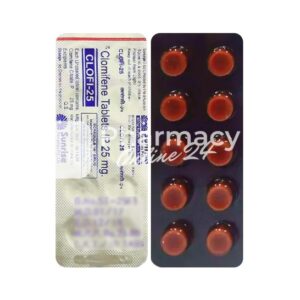
In brief
- Clomiphene is available from pharmacies as a prescription-only medicine in the UK and many other countries, though some online sellers may advertise it without a prescription. It is supplied globally under brands such as Clomid, Serophene, Omifin, Clostilbegyt and Clomiphène®.
- Clomiphene is used mainly to treat female infertility caused by anovulation, and it is sometimes used off-label for male infertility. It works as a selective oestrogen receptor modulator (SERM), helping stimulate the release of gonadotrophins and promote ovulation.
- The usual dose for female infertility is 50 mg daily for 5 days, starting early in the menstrual cycle; the dose may be increased in later cycles up to 150 mg daily if needed. For off-label male use, 25–50 mg daily is commonly used under medical supervision.
- The form of administration is oral tablets, usually available in strengths of 25 mg, 50 mg and sometimes 100 mg, depending on the market.
- Clomiphene typically starts working during the treatment cycle, with ovulation usually occurring several days after the 5-day course begins. In some patients, effects may be seen within the same cycle.
- The duration of action is about one treatment cycle for ovulation induction, and courses may be repeated for up to 6 cycles in women. In men, treatment may continue for 3 to 6 months.
- Avoid or strictly limit alcohol, as it may worsen side effects such as dizziness, nausea and visual disturbances. If you are trying to conceive, it is best to discuss alcohol use with your clinician.
- The most common side effects are hot flushes, headache, dizziness, nausea, abdominal discomfort, mood changes, breast tenderness and blurred vision. Ovarian enlargement and multiple pregnancy can also occur.
- Would you like to try clomiphene without a prescription?
Clomiphene At A Glance: What UK Buyers See First In Pharmacy Listings
- INN (International Nonproprietary Name): Clomifene, also spelled Clomiphene.
- Brand Names Available In United Kingdom: Clomid, Serophene, Omifin, Clostilbegyt, Clomiphène®, Réprefol, Fertomid.
- ATC Code: G03GB02.
- Forms & Dosages: Tablet, usually 25 mg, 50 mg or 100 mg.
- Regulatory Status: Prescription-only worldwide.
When people search for Clomid tablets or clomifene tablets, they usually want a fertility prescription in a format that is easy to recognise and easy to compare.
In UK pharmacy listings, the main things that stand out are the brand name, the tablet strength, and whether the pack is a blister pack or a carton.
That matters because clomiphene is an oral fertility medicine, so the visible details on the listing often tell a patient whether it matches what the fertility clinic prescribed.
In practice, patients may ask for clomifene tablets after hearing a specialist mention ovulation induction, or they may compare branded and generic options on an online pharmacy UK site.
Either way, the first question is usually not how the molecule works, but whether the pack is the right one for their cycle and their prescription.
Common Product Names And Pack Formats
| Product Name | Typical Market | Usual Pack Format |
|---|---|---|
| Clomid | US, UK, EU, Japan | 50 mg tablets in blister packs |
| Serophene | North America | 50 mg scored tablets, often 10-tablet boxes |
| Clostilbegyt | Eastern Europe, Russia, EAEU | 50 mg tablets in strips or bottles |
| Clomiphène® | France | 50 mg, usually 30 tablets |
Rx-Only Status And Where Patients Typically Obtain It
Clomiphene is prescription-only worldwide, including the UK.
That means it is normally obtained through a fertility clinic, an NHS prescription, or a private prescription arranged after medical review.
Patients commonly come across it through ovulation tablets discussions, repeat cycle treatment, or a fertility clinic follow-up after PCOS assessment.
In our online pharmacy, clomiphene is available without a prescription, with discreet delivery to United Kingdom in 5-14 days.
Who Clomiphene Is Usually Prescribed For In Real-World Fertility Care
Patients often ask whether clomiphene is only for women, or whether it is used when fertility treatment has stalled for months.
The short answer is that it is most often prescribed for female anovulation, especially in PCOS fertility treatment, but it is also used off-label in men.
For women, the standard fertility prescription is usually 50 mg daily for 5 days, with repeat cycle treatment if ovulation does not happen straight away.
For men, male infertility tablets may be used off-label at 25 to 50 mg daily for 3 to 6 months, alongside monitoring.
That is why clomiphene is searched alongside cycle treatment, fertility clinic appointments, and PCOS fertility treatment rather than general women’s health terms.
Female Anovulation And PCOS Pathways
- Used to trigger ovulation when cycles are irregular or absent.
- Commonly discussed in PCOS fertility treatment and ovulation induction.
- Usually started at the beginning of the menstrual cycle, then reviewed across repeat cycles.
Off-Label Male Fertility Use And Expectations
- May be considered when fertility specialists are investigating hormonal or sperm-related issues.
- Used off-label, so expectations are different from licensed female use.
- Regular sperm analysis is important during the treatment window.
Brand And Generic Options Available In The United Kingdom And Internationally
Brand choice matters because patients may know the medicine by one name but receive another at the pharmacy counter.
Clomid is the best-known branded name in the UK, but generic clomifene is also widely used, and both are part of the same fertility medicine family.
Packaging can look quite different from one country to another, especially if a patient has previously used an imported prescription medicine abroad.
For UK patients, the key point is usually not the colour of the box, but whether the tablet strength and prescription details match the treatment plan.
Clomid Versus Lesser-Known Brands
| Brand | Region | Typical Strength |
|---|---|---|
| Clomid | US, UK, EU, Japan | 50 mg |
| Serophene | North America | 50 mg |
| Clostilbegyt | Eastern Europe, Russia, EAEU | 50 mg |
| Omifin | Spain | 50 mg |
Why Packaging Can Differ By Country
Pack sizes vary because local licences, manufacturer supply, and national market rules are not the same everywhere.
That is why fertility medicine packaging may come as strips, blisters, or cartons of 10, 30, or 50 tablets.
Patients ordering from an online pharmacy UK site often notice that imported prescription medicine can have different artwork or blister layout from UK stock.
The important thing is that the product remains a tablet formulation and the strength is correct for the prescription.
How Clomiphene Works: The SERM Mechanism Explained For Patients
People usually want a simple answer here: how does one short course of tablets help the body start ovulating?
Clomiphene is a selective oestrogen receptor modulator, often shortened to SERM, which means it blocks or influences oestrogen receptors in different tissues.
That change helps the brain read the body as if oestrogen levels are lower than they really are, so the hormonal signals that support ovulation may increase.
In practical terms, that is why a short tablet course can lead to a follicle developing and ovulation happening later in the cycle.
Oestrogen Receptor Blockade And Ovulation Trigger
Simple view: tablet course → oestrogen receptor blockade → stronger ovulation signal → possible ovulation trigger.
The medicine is therefore used as an ovulation trigger rather than as a daily long-term hormone replacement.
That is also why patients are often given instructions about cycle timing and follow-up checks rather than a casual “take whenever needed” plan.
Enclomiphene And Zuclomiphene As Isomers
Only the racemic mix is marketed, and the stereoisomers are enclomiphene and zuclomiphene.
That detail is more technical than most patients need, but it helps explain why clomiphene is considered a specific fertility tablets option rather than a broad hormone product.
Available Strengths, Tablet Forms And How They Are Typically Packaged
When people search for Clomid 50mg tablets, they are usually looking for the best-known strength used in fertility care.
That is sensible, because 50 mg is the classic starting point in most female infertility cycles.
Some regions also supply 25 mg and 100 mg tablets, but the 100 mg form is much less common and is mostly seen in Asian and Indian markets.
Oral use only is the rule, and tablets should remain in their original pack until they are needed.
UK-Relevant Pack Sizes And Tablet Strengths
| Form | Strengths | Packaging Examples |
|---|---|---|
| Tablet | 25 mg, 50 mg, 100 mg | 10, 30 or 50 tablets in strips, blisters or cartons |
Why 50 Mg Is The Best-Known Strength
Most cycle regimens start with 50 mg because it is the standard initial dose for female infertility.
That makes 50 mg tablets the most familiar pharmacy item for patients who have been told to begin ovulation induction.
Pharmacy teams also recognise 50 mg as the strength most likely to appear on repeat prescriptions and fertility clinic discharge letters.
Standard Dosing And Cycle Use: What Patients Are Usually Told
Patients often worry about getting the timing wrong, especially when a cycle starts midweek and the tablets need to fit around work, appointments, and home life.
The usual female regimen starts on day 3 to 5 of the menstrual cycle, with 50 mg daily for 5 days.
If response is inadequate, the dose may be increased up to 150 mg per day, and treatment can repeat for up to 6 ovulatory cycles.
Private clinics may monitor more closely than routine NHS pathways, but both routes still rely on accurate cycle timing and prescription verification.
Typical Female Cycle Regimen
- Confirm the cycle start date with the clinic or prescription directions.
- Begin clomiphene on day 3, 4 or 5 of the menstrual cycle.
- Take 50 mg daily for 5 days unless told otherwise.
- Track ovulation using the agreed fertility monitoring method.
- Report back if the cycle does not produce the expected response.
Treatment Length And Repeat Cycles
Female treatment is usually limited to up to six cycles because ongoing review is needed if ovulation does not improve.
That is one reason fertility monitoring and cycle treatment plans are often discussed at the same time as the medicine itself.
Men using it off-label may take 25 to 50 mg daily for 3 to 6 months, with regular checks and sperm analysis.
Missed Dose, Overdose And When To Seek Urgent Help
Missed doses happen, especially when tablets are tied to a cycle rather than a fixed everyday routine.
If a dose is remembered on the same day, it should be taken then.
If a whole day has been missed, the dose should be skipped and not doubled.
Overdose is uncommon, but it should be treated seriously if extra tablets have been taken by mistake.
Missed Dose Advice
- Take the tablet as soon as remembered on the same day.
- If the day has already passed, skip it.
- Do not take two doses together.
Overdose Warning Signs
- Nausea or vomiting.
- Visual disturbances such as blurred vision.
- Ovarian enlargement symptoms.
- Any sudden or severe worsening of symptoms needs urgent medical contact.
Side Effects Patients Commonly Report And How To Talk About Them At The Pharmacy Counter
Most patients want to know the practical side effects first, not a long list of textbook terms.
Clomiphene side effects often include headache, dizziness, fatigue, mood changes, nausea, hot flushes, breast tenderness, abdominal discomfort, rash, and visual symptoms.
Blurred vision matters most because it can be a stop-and-check signal rather than something to simply “wait out”.
Pharmacy advice should stay calm and specific: mild symptoms can be monitored, but eye symptoms, significant pain, or anything that feels out of range should be escalated.
Common Mild To Moderate Adverse Effects
| System | Examples |
|---|---|
| Reproductive | Ovarian enlargement, multiple gestation |
| CNS | Headache, dizziness, fatigue, mood changes |
| Visual | Blurred vision, photophobia, visual spots |
| GI | Nausea, vomiting, abdominal discomfort |
| Others | Hot flushes, breast tenderness, rash |
Visual Symptoms As A Stop-And-Check Signal
If blurred vision, photophobia, or visual spots appear, the patient should stop and seek medical advice before taking more tablets.
Multiple pregnancy is also a known concern, so fertility monitoring is not optional when treatment is being used as planned care.
Contraindications And Who Should Not Take Clomiphene
Safety screening matters because fertility treatment can only work properly if the medicine is suitable in the first place.
Clomiphene is not for use in pregnancy, and it is also unsuitable when there is liver disease, unexplained bleeding, certain ovarian cysts, or hypersensitivity.
That is why pharmacist referral back to the prescriber is important if the supply request does not match the patient history.
Relative problems do not always rule the medicine out, but they do mean closer monitoring is needed.
Absolute Contraindications
- Pregnancy
- Category X.
- Known hypersensitivity
- To clomifene or excipients.
- Liver disease or impairment
- Use is not appropriate.
- Ovarian cysts not due to PCOS
- Needs exclusion before treatment.
- Unexplained uterine bleeding
- Must be assessed first.
- Organic intracranial lesions or tumours
- Should not be treated with clomiphene.
Relative Contraindications Needing Monitoring
- PCOS
- Risk of ovarian hyperstimulation.
- Enlarged ovaries
- Needs specialist review.
- Thyroid or adrenal dysfunction
- Should be controlled before use.
- Endometriosis or fibroids
- May require extra monitoring.
UK Prescribing Realities: NHS, Private Clinics And Pharmacy Supply Pathways
In the UK, fertility medicines usually move through supervised care rather than casual retail supply.
Clomiphene is MHRA licensed and prescription-only, so patients normally see it after review by a fertility clinic, GP, or specialist service.
NHS prescription routes can differ in access and timing from private fertility clinic pathways, and that is often why patients notice price variation.
Electronic prescription systems make fulfilment easier, whether a patient uses Boots pharmacy, LloydsPharmacy, Superdrug, or an online pharmacy UK service.
NHS Prescription Versus Private Fertility Clinics
NHS route: usually more closely tied to local service criteria and monitoring arrangements.
Private route: often faster to arrange, but costs may be higher and monitoring still matters.
Electronic Prescriptions And Pharmacy Fulfilment
Once the prescription is issued, the main job of the pharmacy is safe supply, correct dispensing, and making sure the pack matches the intended dose.
That is especially important for repeat cycle treatment, where the patient may return with the same medicine but a different schedule.
Pricing, Availability And Regional Cost Differences Across The United Kingdom
Clomiphene price in the UK can vary depending on whether the product is branded or generic, and whether the prescription is NHS or private.
Manufacturers and suppliers can also affect stock flow, which is why availability changes from one month to the next.
Parallel importation may also influence what a patient sees on the shelf, especially when UK stock is limited.
For patients on private prescriptions, the medicine cost and the dispensing fee may be shown separately.
England Versus Devolved Nations
| Area | Prescription Cost Pattern |
|---|---|
| England | Standard prescription charge structure may apply |
| Scotland | Free prescriptions |
| Wales | Free prescriptions |
| Northern Ireland | Free prescriptions |
Brand, Generic And Imported Supply Effects
Supply can reflect manufacturers such as Merck Serono, Sanofi-Aventis, Teva, Cipla, Sun Pharma, Organon, and EGIS.
That broad supply base is helpful, but it also explains why fertility tablet cost is not always uniform across the UK.
Storage, Transport And Handling For Home Use
Home storage sounds simple, but fertility patients often travel, work shifts, or keep medicine in a bathroom cupboard, which is not ideal.
Clomiphene should be stored at room temperature, protected from moisture and light, and kept in the original packaging until use.
It should not be refrigerated or frozen.
That is especially useful advice for repeat-cycle patients who may carry the tablets between home, work, and clinic appointments.
Temperature, Light And Moisture Protection
- Store at 15 to 30°C.
- Keep away from moisture.
- Protect from light.
- Do not refrigerate or freeze.
Keeping Tablets In Original Packs
Keeping the tablets in the original pack helps preserve the product details, batch information, and dispensing record.
It also makes it easier to check the right tablet during a busy cycle week.
Monitoring, Follow-Up And When Fertility Patients Need Escalation
Fertility treatment only works well when follow-up is built into the plan.
Women may need ovulation checks, cycle reviews, or ultrasound-based fertility monitoring depending on the clinic pathway.
Men using off-label treatment should have regular sperm analysis and broader checks if the response is slow.
If there is no response after several cycles, or side effects become a problem, the plan usually needs specialist referral rather than just more tablets.
Cycle Monitoring And Ovulation Checks
- Use ovulation test methods or clinic monitoring as advised.
- Review the response after each cycle.
- Watch for ovarian enlargement or suspected hyperstimulation.
- Keep fertility monitoring consistent across repeat cycles.
When To Move To Alternatives
- No ovulation response after the planned cycles.
- Side effects that affect safety or daily life.
- Suspected ovarian hyperstimulation.
- Male treatment with poor sperm analysis response.
Alternatives And Competitor Medicines Patients Compare Against Clomiphene
When clomiphene is unavailable, not tolerated, or simply not effective, patients often start comparing other fertility options.
The most common clomid alternative for PCOS is letrozole, which is used more and more in fertility induction discussions.
Other options include gonadotropins, tamoxifen, metformin, and sometimes natural cycles or IVF protocols.
The right choice depends on diagnosis, monitoring needs, cost, and how quickly a specialist wants to escalate treatment.
Letrozole, Gonadotropins And Tamoxifen
| Medicine | When Considered | Practical Note |
|---|---|---|
| Letrozole (Femara) | Fertility induction, especially in PCOS | Often compared directly with clomiphene |
| Gonadotropins (hMG, FSH) | When injectable treatment is needed | Costlier and needs close supervision |
| Tamoxifen | Limited fertility use | Another SERM, but not the main fertility choice |
Metformin And IVF Pathway Considerations
Metformin may be used in PCOS-associated ovulation induction, sometimes alongside other treatments.
Natural cycles and IVF treatment are usually considered when there is poor response, repeated failure, or a contraindication to tablet-based induction.
Delivery Across United Kingdom
| City | Region | Delivery Time |
|---|---|---|
| London | England | 5-7 days |
| Birmingham | England | 5-7 days |
| Manchester | England | 5-7 days |
| Leeds | England | 5-7 days |
| Liverpool | England | 5-7 days |
| Sheffield | England | 5-9 days |
| Bristol | England | 5-9 days |
| Glasgow | Scotland | 5-7 days |
| Edinburgh | Scotland | 5-7 days |
| Aberdeen | Scotland | 5-9 days |
| Cardiff | Wales | 5-7 days |
| Swansea | Wales | 5-9 days |
| Belfast | Northern Ireland | 5-7 days |
| Newcastle upon Tyne | England | 5-9 days |
Frequently Asked Questions About Clomiphene
Is Clomiphene The Same As Clomid?
Clomiphene is the active medicine, while Clomid is one of the best-known brand names.
Can Clomiphene Be Used For Men?
Yes, but only off-label, usually at 25 to 50 mg daily for 3 to 6 months with monitoring.
What Should A Patient Do If Vision Changes Start?
The medicine should be stopped and medical advice should be sought promptly.
How Long Is Treatment Usually Continued?
Women may have up to six ovulatory cycles, while men may be treated for several months depending on review.