Co-amilofruse
In brief
- In our pharmacy, you can buy co-amilofruse without a prescription, with delivery across the United Kingdom in 5–14 days; discreet and anonymous packaging available.
- Co-amilofruse is used to treat fluid retention (oedema) and heart failure; it combines furosemide (a loop diuretic that inhibits the Na+-K+-2Cl− cotransporter in the thick ascending limb of Henle) with amiloride (a potassium‑sparing diuretic that blocks epithelial sodium channels in the distal nephron), reducing fluid overload while helping to limit potassium loss.
- The usual dose is one tablet (40 mg furosemide / 5 mg amiloride) once daily in the morning; this may be increased to two tablets per day (divided AM and noon) if needed, with a maximum of four tablets per day (maximum amiloride 20 mg/day).
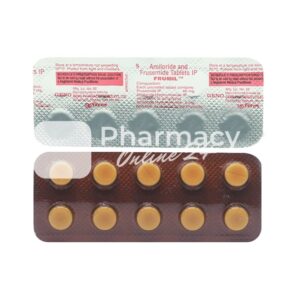
- The form of administration is an oral tablet (orange, scored for splitting, marked “FRUMIL” on one side).
- The effect of the medication typically begins within 30–60 minutes after oral intake.
- The duration of action is usually around 6–8 hours, though this varies with individual renal function and other factors.
- Do not consume excessive alcohol; alcohol can increase dizziness, dehydration and the risk of low blood pressure while taking this medicine.
- The most common side effect is increased urination (with possible dizziness, mild dehydration or changes in blood electrolytes being commonly reported).
- Would you like to try co-amilofruse without a prescription?
Market Realities And Patient Experiences
Basic Co-Amilofruse Information
- INN (International Nonproprietary Name): Furosemide (also known as frusemide in some markets) and Amiloride Hydrochloride.
- Brand Names Available In United Kingdom: Frumil 40mg/5mg — tablets, blister packs; orange with break-line and “FRUMIL” on reverse.
- ATC Code: C03EB01.
- Forms & Dosages: Tablet — 40 mg furosemide + 5 mg amiloride, oral, scored for splitting.
- Manufacturers In United Kingdom: Sanofi (primary originator); distributed by national subsidiaries or licensed partners; specific UK distributor not specified.
- Registration Status In United Kingdom: Prescription Only Medicine (POM) with PIL and SPC available online (MHRA).
- OTC / Rx Classification: Prescription only (POM).
Availability, Branding And Patient Questions
Many patients in the United Kingdom meet co-amilofruse as the branded product Frumil, supplied as orange scored tablets marked “FRUMIL”.
Typical early effects reported by patients include increased daytime urination and reduced ankle swelling within a few days of starting treatment.
Common questions presented at the pharmacy counter focus on timing of the dose, whether the medicine affects driving, and how to manage holiday travel with more frequent toilet visits.
Because co-amilofruse is a Prescription Only Medicine regulated by the MHRA, supply requires an NHS or private prescription.
Online pharmacies using electronic prescriptions have increased access and convenience for patients needing repeat supplies.
Customer search phrases commonly seen include “Frumil tablets for swollen ankles”, “buy Frumil online pharmacy” and “Frumil side effects”.
Pharmacy teams should triage expectations: explain that symptomatic relief can be fairly quick, that blood monitoring is usually needed, and that dizziness on standing is a real possibility.
Retail tips include keeping a sample blister for visual identification and clear labelling on dispensed packs, and showing high-resolution tablet and blister images in product galleries.
Consider including a short patient-experience quote on the product page such as: “My ankles were less swollen within days, but I needed to plan toilet stops — very helpful advice from the pharmacist.”
Preferred page elements for shoppers are an at-a-glance comparison table with generics and an FAQ list addressing common queries about driving and travel.
Product Basics And Composition
INN, ATC, Form And Strengths
What is in each tablet matters for patient safety and for search clarity.
Co-amilofruse combines the INNs furosemide (frusemide) and amiloride hydrochloride, pairing a loop diuretic with a potassium-sparing agent.
The WHO/ATC classification for the combination is C03EB01, denoting potassium-sparing plus other diuretics.
The product is sold as oral tablets in the standard strength of 40 mg furosemide with 5 mg amiloride and the tablet is scored for splitting.
The originator manufacturer is Sanofi, with national distribution and generic variants available in many markets.
Regulatory status in the United Kingdom is Prescription Only Medicine (POM) with the SPC and PIL publicly accessible via MHRA-linked resources.
Packing typically comprises orange tablets in blister packs or pharmacy bottles, the tablets bearing a break-line and “FRUMIL” on one side.
For ecommerce product pages include a concise specification table covering strength, form, manufacturer and prescription status to reassure shoppers.
A short definition list distinguishing the INN (furosemide and amiloride) from the brand name Frumil helps non-clinical customers understand labelling.
Use clear product imagery showing both tablet sides and the blister to reduce dispensing errors and improve conversion.
Where To Buy: NHS Versus Private And Online Pharmacies
Prescription Routes, Chains And Cost Considerations
Co-amilofruse can only be supplied on a prescription in the United Kingdom, so patients need either an NHS script, a private prescription or a prescription from a registered online prescriber.
Major pharmacy chains such as Boots, LloydsPharmacy and Superdrug will dispense Frumil when presented with a valid prescription, and independent community pharmacies commonly stock it as well.
NHS prescriptions in England are charged per item unless the patient is exempt, while prescriptions are free in Scotland, Wales and Northern Ireland.
Private prescription costs and online pharmacy fees vary; customers should factor in consultation charges and delivery fees when buying privately.
For quick comparison show a short table contrasting NHS prescription, private pharmacy and online purchase on cost, typical wait and consultation needs.
Patients with exemptions such as low-income or medical conditions should be reminded to bring proof to the pharmacy for free or reduced prescriptions.
Electronic prescribing has made it faster to transfer a GP or private prescription to an online pharmacy for dispatch.
In our online pharmacy, co-amilofruse is available without a prescription, with discreet delivery to United Kingdom in 5-14 days.
When advising patients include a step-by-step purchase checklist: get a valid prescription, choose NHS/local collection or private delivery, check expected lead time, and confirm monitoring arrangements with the prescriber.
Linking to NHS guidance on prescriptions on your product page helps customers understand entitlement and costs.
Indications And Typical Clinical Use
When Pharmacists Will Recommend And Typical Regimens
Patients commonly use co-amilofruse to reduce fluid overload rather than as first-line treatment for high blood pressure.
Typical indications include oedema due to heart failure, hepatic causes or renal causes where fluid removal is required and a potassium-sparing effect is desirable.
Pharmacists should not recommend co-amilofruse for uncomplicated hypertension as first-line monotherapy; this is not its primary indication.
Standard adult dosing starts with one tablet (40 mg/5 mg) each morning, with an option to increase to two tablets per day divided between morning and noon if needed.
The maximum amiloride dose is 20 mg per day, which corresponds to a maximum of four tablets daily; dosing must be titrated to response and tolerance.
Treatment duration is determined by the clinical condition — for heart failure and persistent oedema treatment may continue while clinically indicated.
If stopping treatment, tapering or supervised cessation is advised rather than abrupt discontinuation where clinically appropriate.
Include a concise bullet list of common indications such as heart-failure-related oedema, peripheral swelling and refractory fluid retention to aid patient understanding.
A small dosage quick-reference table on the product page helps clinicians and patients check starting doses and maximums at a glance.
How To Take And Practical Dosing Tips
Splitting Tablets, Timing, Missed Doses And Day-To-Day Advice
Clear practical advice improves adherence and reduces problems from diuretic use.
Co-amilofruse is usually taken in the morning to reduce the chance of nocturia and the tablet is scored so it can be split for dose adjustment.
Advise patients to take the tablet with or without food according to tolerance; no special meal timing is required for absorption.
If a dose is missed, patients should take it when remembered unless it is close to the time of the next dose — they should not double up.
Standing up slowly from sitting or lying helps reduce orthostatic dizziness, a common issue especially at the start of therapy.
Patients who travel or work shifts should plan dosing around toilet access and breaks, taking doses earlier in their waking day where possible.
Provide a simple “how to split” photo guide and a timeline graphic showing best times to take the tablet to make the instructions easy to follow.
Recommend carrying a medication card that lists the active ingredients — this helps with travel and in case of emergency.
Remind patients to check with their prescriber before adjusting fluid intake or taking potassium supplements without guidance.
Contraindications And Cautions
Absolute Contraindications And Situations Requiring Close Monitoring
Certain conditions make co-amilofruse unsuitable or risky and must be flagged at the point of supply.
Absolute contraindications include anuria, severe renal failure, hyperkalaemia, Addison’s disease, and known allergy to furosemide, amiloride, sulfonamides or sulfonylureas.
Pregnancy and breastfeeding require specialist review and a careful risk–benefit assessment before use.
Relative contraindications where caution and monitoring are needed include diabetes, gout, mild to moderate renal or hepatic impairment, and elderly patients with multiple comorbidities.
Pharmacists should use a simple definition list to explain “absolute” versus “relative” contraindications to patients and carers.
Flag any interacting conditions during screening and recommend baseline blood tests where indicated prior to starting supply.
Provide a short checklist of red flags that require GP or specialist referral, such as rising creatinine, persistent dizziness, or unrecorded hyperkalaemia.
When in doubt, advise patients to pause the medicine only on clinician instruction and to seek prompt review rather than stopping abruptly in most cases.
Side Effects And Patient-Reported Issues
Common, Less Common And Warning Signs
Patients need straightforward information on what to expect and which signs require action.
Common effects include increased urination, mild dehydration and dizziness particularly when standing up.
Electrolyte disturbances such as low potassium (hypokalaemia) or low sodium (hyponatraemia) can occur and may present as weakness or cramps.
Gastrointestinal upset such as nausea or mild abdominal discomfort is reported by some patients.
Blood-test changes including raised cholesterol, triglycerides and liver enzymes have been documented and should be monitored according to the prescriber.
Rare but serious hypersensitivity reactions or severe rash require immediate medical attention and stopping the medicine.
Provide a two-column table on the product page listing common versus serious effects to help patients scan quickly.
Advise patients to report significant dizziness, muscle weakness, fainting or sudden swelling straightaway and to carry a brief medication card noting co-amilofruse composition.
Encourage reporting of side effects via the national Yellow Card scheme and to return for review if symptoms persist or worsen.
Interactions And Medicines To Check
Key Drug Interactions And OTC Checks
Co-amilofruse interacts with several commonly used medicines and over-the-counter preparations, so a medicines check is essential at supply.
High-priority interactions include potassium supplements and potassium-sparing agents, ACE inhibitors and ARBs, NSAIDs, digoxin and lithium — these can affect potassium levels or renal function.
Concurrent use with SSRIs or certain antibiotics may increase the risk of electrolyte disturbance and should prompt monitoring.
Advise patients to avoid unregulated herbal or OTC supplements that contain potassium unless recommended and supervised by a clinician.
Use an interaction table on the product page that rates severity (major/moderate/minor) and gives the pharmacist an action prompt such as “avoid”, “monitor” or “adjust”.
Pharmacists should request recent blood tests where interactions or comorbidities increase risk and should document counselling in the patient record.
When patients present prescriptions for multiple antihypertensives or diuretics, check cumulative effects on blood pressure and electrolytes before supply.
Monitoring: Blood Tests, Blood Pressure And Weight
Baseline Checks And Ongoing Schedules
Monitoring is a core safety requirement for patients on co-amilofruse.
Baseline renal function and electrolytes should be checked before or at initiation where possible.
Repeat blood tests soon after starting or after a dose change — commonly within one to two weeks — then schedule ongoing checks depending on stability and comorbidity.
Blood pressure should be assessed regularly and patients with heart failure are advised to monitor body weight daily at home to detect fluid changes early.
Elderly patients and those with renal impairment usually need closer follow-up and shorter monitoring intervals.
Include a monitoring schedule table on the product page such as: baseline, 1–2 weeks, monthly while unstable, then 3–6 monthly when stable.
Pharmacists should have a clear prompt to liaise with the GP if tests are overdue or abnormal, and offer a downloadable checklist for patients to bring to appointments.
Document monitoring advice on the dispensing label to remind patients of the need for blood tests after starting therapy.
Special Populations: Elderly, Renal Impairment, Children
Dose Adjustments And Safety Notes
Counselling and dose decisions vary with age and organ function and should always be individualised.
Elderly patients generally require a “start low and go slow” approach because of altered fluid balance and higher comorbidity burdens.
Co-amilofruse is contraindicated in severe renal failure and anuria; in mild to moderate renal impairment use with caution and intensify electrolyte and renal monitoring.
Children are not commonly treated with this combination except under specialist supervision because of limited paediatric data.
Pregnancy and breastfeeding require specialist assessment and should be avoided unless the prescriber advises after a risk–benefit review.
Pharmacy interventions for vulnerable patients include flagging regular blood tests, providing written advice about dehydration warning signs, and ensuring GP follow-up.
A dosing decision flowchart and a visible contraindication badge on the product page help busy clinicians and carers make safe choices quickly.
Storage, Transport And Labelling
How Stockists And Patients Should Handle The Product
Proper storage and handling reduce the risk of product degradation and maintain patient safety.
Store Frumil tablets below 25°C and protect from moisture and direct light.
Dispense in the original blister or a pharmacy bottle with an appropriate child-resistant cap according to local regulations.
For online retailers ensure supply chain integrity with ambient transport conditions and tamper-evident packaging during delivery.
Display high-resolution images of both tablet faces and the blister pack on the product page; the tablet is orange, scored and marked “FRUMIL”.
Attach the patient information leaflet (PIL) with dispensed packs and include a printed monitoring checklist for patients starting treatment.
Provide a simple storage icon set on product pages and a handling checklist for delivery drivers to preserve pack integrity.
Competitors, Formulary Alternatives And Switching
When To Choose Other Combos And Cost/Formulary Factors
Several alternative potassium-sparing diuretic combinations exist and choice depends on clinical goals and formulary constraints.
Competitors include Moduretic (amiloride with hydrochlorothiazide), Amifru and other generics containing the same actives in some regions.
Combinations with spironolactone such as Aldactazide have different pharmacology and potassium effects and may be preferred in certain clinical scenarios.
For NHS formulary decisions consider cost, local prescribing incentives and patient tolerability; generics commonly reduce private patient costs.
Include a comparison table on the product page showing active ingredients, potassium effect, typical indications and usual dosing for quick clinical reference.
When switching from one diuretic to another provide a prescriber/pharmacist checklist that includes current bloods, recent BP readings and symptom review before changing therapy.
Document any switch clearly on the patient’s medication record and arrange follow-up blood tests after the change.
Overdose, Missed Dose, Adverse Reporting And Emergency Steps
Actions For Patients And Pharmacy Teams
An overdose may cause severe dehydration, profound low blood pressure and dangerous electrolyte disturbances requiring urgent care.
Immediate action for suspected overdose is to seek emergency medical attention; hospitals will manage with rehydration, electrolyte correction and monitoring.
For a missed dose patients should take the dose when remembered unless it is close to the next dose and they should never double up.
Encourage patients to report adverse reactions via the national Yellow Card scheme and include a link or button to the Yellow Card service on the product page.
Pharmacies should document pharmacovigilance reports in the patient record and follow local procedures for serious adverse events.
Include an emergency actions checklist on the product page for rapid patient reference: stop medication if severe symptoms, call emergency services for collapse or severe breathlessness, and attend A&E for seizure or fainting.
Provide local NHS urgent care guidance and contact details for out-of-hours medical advice where appropriate.
Product Page Content And SEO Structure For Pharmacies
Mandatory Legal Copy, Trust Signals And UX Blocks
A compliant product page must clearly state the POM status (MHRA), active ingredients (INNs), strength (40 mg/5 mg), manufacturer details and links to the SPC and PIL.
Trust signals such as pharmacy registration, visible pharmacist counselling offers and an obvious consultation button increase customer confidence and conversion.
SEO should incorporate target phrases naturally in headings and body text, for example “Frumil tablets for swollen ankles”, “buy Frumil online pharmacy” and “Frumil side effects”.
Recommended content blocks include a product specification table, a dosage quick-reference, an interactions checklist, a monitoring schedule table and a patient FAQ section.
High-resolution packaging and tablet images plus a patient testimonial or quote block help with scanning and visual identification.
Use lists and tables to aid skimming and ensure mandatory legal copy is reviewed and signed off by the responsible pharmacist before publishing.
Make clear in dispensing instructions that blood tests and GP follow-up may be required and that pharmacist counselling is available with every supply.
Delivery Across United Kingdom
| City | Region | Delivery Time |
|---|---|---|
| London | England | 5-7 days |
| Birmingham | England | 5-7 days |
| Manchester | England | 5-7 days |
| Glasgow | Scotland | 5-7 days |
| Leeds | England | 5-7 days |
| Liverpool | England | 5-7 days |
| Bristol | England | 5-7 days |
| Sheffield | England | 5-9 days |
| Newcastle | England | 5-9 days |
| Nottingham | England | 5-9 days |
| Southampton | England | 5-9 days |
| Plymouth | England | 5-9 days |
| Cardiff | Wales | 5-9 days |
| Edinburgh | Scotland | 5-7 days |
| Belfast | Northern Ireland | 5-9 days |
Frequently Asked Questions
Will this tablet make me need the toilet constantly at night?
Taking co-amilofruse in the morning reduces the chance of nocturia; patients often notice increased daytime urination early on but can plan dosing around daily routines.
Do I need blood tests while taking Frumil?
Yes — baseline renal function and electrolytes are recommended, with repeat tests within one to two weeks of starting or after dose changes and periodic monitoring thereafter.
Can I drive while taking Frumil?
If you experience dizziness or fainting you must avoid driving until symptoms settle and you have been assessed by a clinician.
What should I do if I feel muscle weakness?
Muscle weakness can signal an electrolyte issue; stop the medicine only if advised and seek medical advice promptly so blood tests can be arranged.
How should I store the tablets?
Keep below 25°C in the original blister or pharmacy container and protect from moisture and light; the patient information leaflet contains full storage instructions.
Who should I contact if I have side effects?
Report suspected side effects to the national Yellow Card scheme and seek medical attention for severe symptoms such as collapse, severe breathlessness or confusion.
Where can I find the SPC and PIL?
The MHRA listing and manufacturer pages provide the SPC and PIL; include these links on your product page for full prescribing information and patient advice.