
Meclizine
In brief
- In the UK, meclizine is supplied as meclozine 25 mg tablets for motion sickness, which are a pharmacy medicine.
- Meclizine is used for the prevention and treatment of motion sickness and for relief of vertigo or dizziness. It works as a first-generation antihistamine with antiemetic and anticholinergic effects, helping to reduce nausea, vomiting, and balance-related symptoms.
- The usual adult dose is 25–50 mg taken about 1 hour before travel for motion sickness, or 25–100 mg daily in divided doses for vertigo. The maximum daily dose is generally 100 mg.
- It is usually taken as a tablet, as a standard tablet. UK tablets are usually 25 mg.
- Meclizine usually starts working within about 1 hour after taking it.
- The effect generally lasts around 24 hours, which is why it is often taken once daily for travel-related prevention.
- Do not drink alcohol while taking meclizine, as it can increase drowsiness, reduce alertness, and intensify other central nervous system effects.
- The most common side effect is drowsiness. Other common side effects include dry mouth, blurred vision, fatigue, headache, constipation, and occasionally confusion, especially in older adults.
- Would you like to try meclizine without a prescription?
Basic meclizine information
- INN (international nonproprietary name): Meclizine (spelled meclozine in the UK).
- Brand names available in the United Kingdom: Meclozine.
- ATC code: R06AE05.
- Forms and dosages: Tablet; 25 mg.
- Registration status in the United Kingdom: Meclozine 25 mg tablets are licensed in the UK for motion sickness.
- OTC / Rx classification: Pharmacy medicine (P) for motion sickness.
Meclizine at a glance
Meclizine is an antihistamine for motion sickness, also used for vertigo and dizziness support. It is best taken before a ferry crossing, a long coach journey or other travel rather than after nausea has started.
Main uses
Meclizine is mainly used for motion sickness prevention, including seasickness and car sickness. It is also used for dizziness relief in some people.
UK naming and pack formats
In the UK, the spelling meclozine is commonly seen, while meclizine is the International Nonproprietary Name.
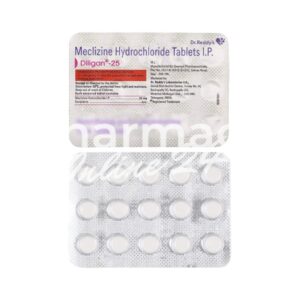
25 mg tablets are the most familiar presentation, often in blister packs that are easy to carry for travel.
Sedation, timing and convenience
The first thing many people notice is that meclizine can cause drowsiness.
That is why it is often best planned in advance rather than taken at the last minute.
A patient preparing for a ferry from Dover, for example, usually does better when the tablet is taken before travel rather than once nausea has fully set in.
Pharmacist advice usually centres on timing, safety, and whether the medicine suits the person’s usual routine.
| What it is used for | What to look for in the pack |
|---|---|
| Motion sickness, travel sickness, dizziness, vertigo support | Meclizine or meclozine, 25 mg tablets, often in blister packs |
| Pre-travel prevention | Clear dose instructions and expiry date |
Pack sizes and strengths
In the UK, meclizine is supplied under the name meclozine, usually as 25 mg tablets.
Blister packs are easier to carry than bottles because they fit into hand luggage and protect individual doses.
A clear pack label reduces confusion between meclizine, meclozine and other anti-sickness pills.
How meclizine works
Meclizine belongs to the piperazine derivative group and is classed as an antihistamine, with ATC code R06AE05.
In plain English, it is used to reduce the symptoms that come with motion sickness and some forms of dizziness.
Plain-English definition of the medicine
- What it is
- An antihistamine for motion sickness and vertigo support.
- What it does
- It helps reduce nausea and the spinning sensation that some people feel.
- What it is not
- It is not a cure-all for every cause of dizziness, and it should not replace a proper diagnosis when symptoms are new or severe.
What patients usually feel in real life
People usually hope for less nausea, less spinning, and a steadier feeling during the journey.
Those benefits are often balanced by drowsiness and dry mouth, which are the side effects most people notice first.
That is why meclizine for dizziness can be helpful for some people but may still feel too sedating for others who need to stay alert.
Compared with other anti-sickness tablets
Dimenhydrinate and promethazine are used for similar problems.
Meclizine is often positioned as a less drowsy option than some older anti-nausea tablets, although sleepiness can still happen.
Uses: motion sickness, travel sickness and vertigo support
Meclizine is used for travel sickness prevention first, and for vertigo and dizziness second.
Motion sickness prevention before travel
For motion sickness, the usual adult dose is 25–50 mg taken one hour before travel.
If needed, it can be repeated every 24 hours during travel, with a maximum daily dose of 100 mg.
That timing matters because a tablet taken just before boarding is often too late for a comfortable crossing.
Vertigo and dizziness use cases
For vertigo, the typical adult dose is 25–100 mg daily in divided doses, again with a maximum of 100 mg a day.
It may be used over several days when symptoms are being managed as directed.
Which symptoms it may and may not help
Meclizine can help with motion-related nausea and some dizziness symptoms.
It does not help every cause of vertigo, and it is not a substitute for assessment if the dizziness is new, severe, or keeps coming back.
That is especially important if the person is also dealing with hearing changes, headaches, fainting, or neurological symptoms.
| Condition | Typical adult dose | Maximum daily |
|---|---|---|
| Motion sickness | 25–50 mg 1 hour before travel | 100 mg |
| Vertigo | 25–100 mg daily in divided doses | 100 mg |
Legal status and availability in the UK
Meclizine is supplied in the UK as meclozine 25 mg tablets for motion sickness, which are sold as a pharmacy medicine.
In our online pharmacy, meclizine is available without a prescription, with discreet delivery to the United Kingdom in 9–21 days.
How to take meclizine properly for best results
Taking it at the right time makes a bigger difference than many people expect.
That is especially true when the goal is to prevent motion sickness rather than chase symptoms after they start.
Step-by-step use
- Check the pack strength and confirm it matches the intended use.
- For travel, take the dose about one hour before departure.
- During vertigo treatment, follow the divided daily regimen given on the label or by the prescriber.
- Keep to the maximum daily dose.
- Seek advice if the symptoms are not improving or seem different from usual.
With or without food
Meclizine is taken orally, so practical things matter, such as whether the tablet is easy to swallow during a travel routine.
Some people prefer to take it with food if they are already feeling queasy, while others keep it simple with water before leaving home.
If chewable tablets are used, they can be easier for travel days when swallowing a standard tablet feels unpleasant.
Missed dose basics
If a dose is missed, take it as soon as it is remembered unless the next dose is close.
Do not double dose.
That simple rule matters because the medicine is already associated with sedation and anticholinergic effects, so extra tablets raise the risk of side effects rather than improving relief.
Dosage guide by age and clinical situation
Getting the dose right is not only about the condition.
Age, sensitivity, and organ function also matter.
That is why a careful check is sensible, particularly for older adults and families planning travel.
| Group | Practical dose guidance | Key caution |
|---|---|---|
| Adults | Motion sickness 25–50 mg; vertigo 25–100 mg daily | Do not exceed 100 mg daily |
| Children under 12 | Safety data are limited; some references suggest 12.5–25 mg once daily, but consult the label or paediatrician | Use only with proper guidance |
| Older adults | Start low, for example 12.5 mg | Higher risk of sedation and anticholinergic effects |
| Liver or kidney impairment | Use with caution | Hepatic metabolism means monitoring may be needed |
Children, older adults and sensitive users
Children under 12 have limited safety data, so the label and paediatric advice matter.
In older adults, starting at the lower end is sensible because confusion, dry mouth, and sleepiness can be more troublesome.
That cautious approach also helps people who already take several medicines and want to avoid feeling wiped out on holiday.
Liver and kidney impairment cautions
Meclizine is metabolised in the liver, so people with hepatic or renal impairment need extra caution.
There is no single universal adjustment, which is why monitoring for adverse effects matters.
If there is any uncertainty, a pharmacist or GP should review the choice before the medicine is used.
Side effects people actually notice and how to reduce them
Most side effects are not dangerous, but they can spoil a trip if nobody plans for them.
That is why it helps to know what tends to show up first and what can make it worse.
| Side effect | How common | What to do |
|---|---|---|
| Drowsiness | Common | Avoid driving and plan for a slower start to the day |
| Dry mouth | Common | Drink water regularly |
| Blurred vision | Common | Do not drive if vision is affected |
| Fatigue | Common | Use at a time when rest is possible |
| Headache, vomiting, constipation, confusion in older adults | Less common | Seek advice if symptoms are troublesome or persistent |
Practical tips to manage sedation and dryness
Avoid alcohol, especially on the first dose.
Hydrate well before and during travel.
Do not take it at a time when alertness is essential, such as before a long drive or operating machinery.
For many people, the best approach is to test the timing on a day when they can rest if needed.
Warnings, contraindications and when to avoid meclizine
Whether meclizine is suitable depends on allergies, age, eye pressure, urinary symptoms, respiratory history, and whether pregnancy is involved.
- Contraindicated
- Known hypersensitivity to meclizine, meclozine, or piperazine derivatives, and children under six in most products because safety data are lacking.
- Use with caution
- Asthma, angle-closure glaucoma, prostatic hypertrophy, urinary retention, older age, pregnancy, and severe hepatic or renal impairment.
- Seek advice first
- If the dizziness is new, severe, recurrent, or not clearly linked to travel.
When to seek pharmacist or GP advice first
New dizziness should not be assumed to be travel sickness.
That is especially true if the person has chest pain, fainting, weakness, severe headache, visual changes, or hearing symptoms.
Pregnancy also deserves a proper check with a pharmacist or GP.
Drug interactions, alcohol and everyday safety
Does it interact strongly with other medicines?
Usually not in a dramatic way, but it can amplify central nervous system depressant effects.
That means alcohol and other sedating products can make the drowsiness much worse.
Safety warning: Do not combine meclizine casually with alcohol, sleeping tablets, opioid painkillers, anxiety medicines, or cold and flu products that also cause sedation.
Driving warning: Reaction time may be slower, especially after the first dose or if alcohol has been taken.
CNS depressant interactions
Sleep aids, opioids, anxiety medicines, and some cold or flu products are the main real-world concerns.
People often do not think of over-the-counter cold remedies as sedating, but they can be.
That is why a pharmacist check is worth doing before combining several products on the same trip.
Driving, machinery and holiday safety
If a journey involves driving, motorbikes, airport transfers, or heavy luggage handling, the sedative effect matters.
On the first dose, it is wise to see how the body responds before assuming it will feel like a mild tablet.
Holiday safety is about more than the journey itself; it also includes how steady and alert the traveller will feel on arrival.
How meclizine compares with similar medicines
A quick side-by-side check of similar anti-sickness medicines.
| Medicine | Typical use | How it compares |
|---|---|---|
| Meclizine | Motion sickness, vertigo support | Often chosen for travel planning and may feel less drowsy than some alternatives, though sedation still happens |
| Dimenhydrinate | Motion sickness | Related antihistamine |
| Promethazine | Nausea and vertigo | Often more sedating |
| Cinnarizine | Vertigo and motion sickness | Used for vertigo and motion sickness |
| Scopolamine transdermal | Motion sickness prevention | Patch option for some travellers |
Meclizine versus dimenhydrinate
Both are used for motion sickness, but dimenhydrinate is the original Dramamine ingredient and meclizine offers a different balance of duration and sedation.
Meclizine versus promethazine
Promethazine is useful for nausea and vertigo, but it is usually more sedating.
That makes meclizine a more appealing choice for some people who need symptom control without feeling too sleepy.
Meclizine versus cinnarizine and scopolamine
Cinnarizine is used for vertigo and motion sickness.
Scopolamine offers a patch form for prevention, which suits some travellers better than tablets.
Choice often comes down to tolerance and whether the trip needs a tablet or a patch.
Storage, transport and travel advice
Keeping the medicine in good condition is simple, but people still get it wrong when they pack in a hurry.
That is why a short checklist helps before any trip.
Correct storage conditions
Store at 20–25°C and protect from moisture and light.
Those storage conditions help keep the tablets stable while they are waiting in a bathroom cabinet or suitcase.
Keeping tablets travel-safe
- Keep tablets in the original blister pack or box.
- Carry them in hand luggage if needed during the journey.
- Do not remove the label if travelling abroad.
Checking expiry and pack integrity before trips
Expiry dates matter more than people think, especially if the pack has been sitting in a drawer since the last holiday.
If a blister is damaged or the tablets look discoloured, replace the pack before travelling.
That is particularly useful for frequent travellers who rely on travel medicine at short notice.
Delivery across the United Kingdom
| City | Region | Delivery time |
|---|---|---|
| London | England | 9–21 days |
| Birmingham | England | 9–21 days |
| Manchester | England | 9–21 days |
| Leeds | England | 9–21 days |
| Liverpool | England | 9–21 days |
| Sheffield | England | 9–21 days |
| Bristol | England | 9–21 days |
| Newcastle upon Tyne | England | 9–21 days |
| Glasgow | Scotland | 9–21 days |
| Edinburgh | Scotland | 9–21 days |
| Cardiff | Wales | 9–21 days |
| Belfast | Northern Ireland | 9–21 days |
| Nottingham | England | 9–21 days |
| Leicester | England | 9–21 days |
| Aberdeen | Scotland | 9–21 days |
Final practical takeaway
Meclizine is a familiar choice for motion sickness prevention and some vertigo support, but it should not be taken on autopilot.
The main things to check are the spelling on the box, the strength and the drowsiness risk.
If the dizziness is new or severe, a pharmacist or GP should review it first.
If the goal is a simple travel plan, taking it about one hour before travel and storing it correctly can make the difference between a rough journey and a manageable one.