Praziquantel
In brief
- Praziquantel at Pharmacy Online 24 is offered only as a 600mg tablet, with packs of 4, 12, 20, 40 or 80 and delivery to UK addresses in 9–21 days.
- It damages the surface of flatworms and paralyses them so the body can clear them, making it the usual choice for schistosomiasis (bilharzia), tapeworm and liver or lung fluke infections.
- No praziquantel product is licensed in the UK, making any supply an unlicensed medicine; weight sets the dose, which is often split into two or three parts taken 4 to 6 hours apart on one day.
- The taste is bitter, so swallow the tablets whole with water and a meal; a breastfeeding mother should skip nursing on the day of the dose and for 72 hours afterwards.
- Rifampicin reduces its effectiveness and eye cysticercosis is a reason to avoid it; light-headedness, drowsiness and abdominal discomfort usually settle within a day. It is a POM.
Basic praziquantel information
- INN (international nonproprietary name): Praziquantel
- Brand names available in the United Kingdom: Biltricide (imported), generic praziquantel.
- ATC code: P02BA01
- Forms and dosages: 600 mg film-coated tablets are the standard form.
- Manufacturers in the United Kingdom: Bayer AG (originator, Biltricide) and generic manufacturers.
- Registration status in the United Kingdom: Prescription-only medicine (POM); not licensed in the UK and usually supplied as an imported medicine.
- OTC / Rx classification: Prescription-only medicine (POM).
- Key uses: Schistosomiasis, clonorchiasis, opisthorchiasis, taeniasis, and cysticercosis.
- Storage: Room temperature, protected from light and moisture.
What praziquantel is
Praziquantel is the International Nonproprietary Name, or INN, for a prescription anti-parasitic medicine. It is used for infections such as schistosomiasis and tapeworm infestations, and it is on the WHO Model List of Essential Medicines.
In the UK it is a prescription-only medicine, usually supplied as an imported medicine.
Product formats and packaging
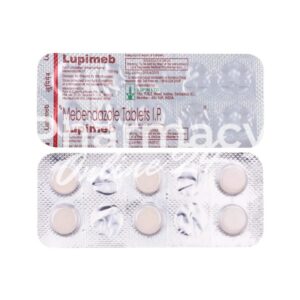
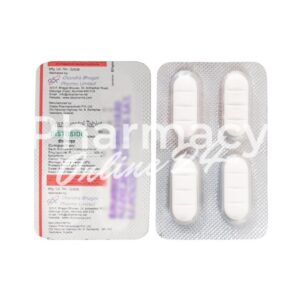
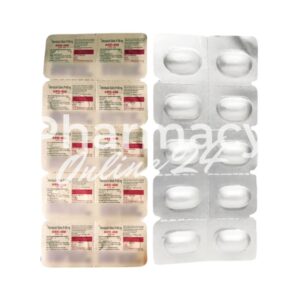
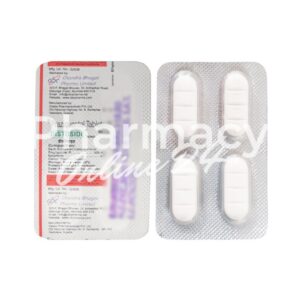
The most common format is a 600 mg film-coated tablet, usually packed in blister strips or bottles. Biltricide (Bayer) is the best-known brand, and generic praziquantel is also supplied.
Before taking any supply, check the strength, tablet count, batch number, expiry date, patient leaflet and labelling, so that the product matches the prescription.
How praziquantel works in the body and why it is used
Mechanism in plain English
Praziquantel works by disrupting the parasite’s ability to survive in the body, which makes it a cornerstone treatment for several worm infections.
It belongs to ATC group P02B, anthelmintics for oral use, under ATC code P02BA01.
That classification helps clinicians and pharmacists place it correctly among antiparasitic medicines rather than ordinary deworming tablets.
Parasite to treatment pathway: the worm is exposed to the medicine, its function is disrupted, and the infection is then cleared through treatment and follow-up.
Why clinicians and public health programmes rely on it
WHO programmes use praziquantel because it is effective and suitable for large-scale control efforts.
It is widely used in mass administration campaigns, especially for schistosomiasis eradication work.
Many treatment plans are completed in a single day, which is one reason the 600 mg tablet is so widely used in public health settings.
That simplicity is also why it is linked with school-age deworming and global disease elimination campaigns.
Conditions praziquantel is used for and the standard dosing by indication
Main infections treated
The main uses are schistosomiasis and tapeworm infection, but praziquantel is also used for clonorchiasis, opisthorchiasis, and cysticercosis.
The right dose depends on the parasite, not just on the tablet strength, so dosing advice should always be tied to the diagnosis.
| Condition | Standard dose | Typical regimen |
|---|---|---|
| Schistosomiasis | 20 mg/kg x 3 doses | Single day |
| Clonorchiasis / Opisthorchiasis | 25 mg/kg x 3 doses | Single day |
| Taeniasis | 10–25 mg/kg single dose | One dose |
| Cysticercosis | 50 mg/kg/day in 3 doses | 14–30 days |
How dosing differs depending on the parasite
For schistosomiasis, the usual total is 60 mg/kg split into three doses in one day, spaced 4 to 6 hours apart.
For clonorchiasis and opisthorchiasis, 25 mg/kg three times in one day is typical.
For taeniasis, a single dose of 10 to 25 mg/kg is often enough.
Cysticercosis is different, because it needs a prolonged course over 2 to 4 weeks.
That is the point to remember: many praziquantel treatments finish the same day they start, but not all of them do.
How to take praziquantel tablets correctly
Practical administration guidance
Tablets may need to be split for fractional dosing, especially in children, because many doses are calculated by body weight.
It is usually taken on the same day in divided doses when the prescription says so.
Most patients are advised to take it with food or as directed, to swallow it with water, and to space doses 4 to 6 hours apart when prescribed.
For children, a pharmacist can help work out how a 600 mg tablet can be divided safely for the prescribed mg/kg plan.
Missed dose and overdose advice
If a dose is missed, it should be taken as soon as remembered unless the next dose is nearly due.
Doubling up is not advised.
Overdose needs immediate medical attention because symptoms can include central nervous system changes, arrhythmia, and severe gastrointestinal effects.
Who should not take praziquantel, and who needs extra caution
Absolute contraindications
Known hypersensitivity to praziquantel or any excipient means the medicine should not be used.
Ocular cysticercosis is another important contraindication because treatment can trigger severe eye inflammation.
It is also not advised in the first trimester of pregnancy unless the benefits clearly outweigh the risk.
Relative cautions and specialist review points
Severe liver dysfunction, especially portal hypertension, needs careful review because exposure can increase.
A history of cardiac arrhythmias is another reason for caution.
Very young infants have not been routinely studied, so specialist advice is sensible before supply.
Contraindication: a situation where a medicine should not usually be used.
Precaution: a situation where the medicine may still be used, but only with extra care.
Side effects, warning signs, and what patients usually experience
Common mild to moderate side effects
The most common effects are nausea, abdominal pain, diarrhoea, vomiting, headache, dizziness, malaise, sweating, joint or muscle pain, hives, and mild fever.
Some of these symptoms may come from the parasite dying rather than from the medicine alone, which can make the first day feel a bit rough.
Temporary liver enzyme elevation can also happen.
For most patients, the effects are short-lived, but a pharmacist should be contacted if symptoms are unexpected or worsening.
- Common: stomach upset, dizziness, headache, mild fever.
- Less common: hives, sweating, muscle or joint pain.
- Contact a pharmacist: if the symptoms are troublesome, persistent, or difficult to distinguish from the infection itself.
When side effects need urgent assessment
Urgent help is needed if there is a clear allergic reaction, severe abdominal symptoms, marked confusion, abnormal heart rhythm, or signs of significant liver problems.
Patients should also seek urgent advice if they develop severe fever, fainting, or worsening neurological symptoms.
Dosing in children, older adults, and people with liver or kidney problems
Age-based practical guidance
Children generally use the same mg/kg dosing as adults, but tablets may need to be split to achieve the prescribed amount.
Older adults usually do not need a dose adjustment if liver and kidney function are normal.
Organ impairment and monitoring
Use caution in liver impairment because exposure may be higher and CNS side effects may be more likely.
Severe kidney impairment also needs caution because data are limited and accumulation is possible.
A GP or pharmacist review before supply is sensible whenever there is significant organ impairment or complex medication history.
Storage and checking the pack before use
How to store tablets safely at home
Keep tablets at room temperature, ideally between 15 and 30°C.
They should be protected from light and moisture and kept in the original packaging.
Do not freeze them or leave them in high heat, such as a hot car or an unshaded windowsill.
That advice is practical for UK homes and for travel, especially if the medicine is being taken soon after delivery.
What to inspect on receipt from a pharmacy
Check the batch number, expiry date, leaflet, seal integrity, and the tablet appearance before taking a dose.
Those checks help confirm that the label matches the medicine supplied.
If anything looks damaged, unlabelled, or inconsistent with the order, the pharmacy should be contacted before use.
- Batch number present.
- Expiry date in date.
- Leaflet included.
- Seal intact.
- Tablets look consistent with the pack description.
Legal status and availability in the UK
Praziquantel is a prescription-only medicine (POM) in the UK; it is not licensed in the UK and is usually supplied as an imported medicine.
In our online pharmacy, praziquantel is available without a prescription, with discreet delivery to the United Kingdom in 9–21 days.
Alternatives and when praziquantel is the preferred option
Common comparator medicines
Other antiparasitic medicines are sometimes discussed alongside praziquantel, but they are not interchangeable.
Albendazole and mebendazole are used for other worm infections, niclosamide is used for tapeworms, and triclabendazole is used for specific fluke infections.
| Drug | Typical use | Key note |
|---|---|---|
| Albendazole | Other helminth infections | Not a direct substitute for every parasite |
| Mebendazole | Common intestinal worms | Different spectrum of activity |
| Niclosamide | Tapeworms | Sometimes used where tapeworm treatment is needed |
| Triclabendazole | Specific fluke infections | Chosen for particular liver flukes |
Comparing treatment options
The choice of drug depends on the parasite, because tapeworm treatment is not the same as fluke infection medicine or routine deworming.
Praziquantel is often preferred when the infection is schistosomiasis, a tapeworm, or certain flukes, which is why it remains such a widely used specialist antiparasitic.
Treatment should always be based on the diagnosis.
Delivery across the United Kingdom
| City | Region | Delivery time |
|---|---|---|
| London | Greater London | 9–21 days |
| Birmingham | West Midlands | 9–21 days |
| Manchester | North West England | 9–21 days |
| Glasgow | Scotland | 9–21 days |
| Edinburgh | Scotland | 9–21 days |
| Leeds | West Yorkshire | 9–21 days |
| Liverpool | Merseyside | 9–21 days |
| Bristol | South West England | 9–21 days |
| Cardiff | Wales | 9–21 days |
| Belfast | Northern Ireland | 9–21 days |
| Newcastle upon Tyne | North East England | 9–21 days |
| Nottingham | East Midlands | 9–21 days |
| Sheffield | South Yorkshire | 9–21 days |
| Southampton | South East England | 9–21 days |
Final points to remember
Praziquantel is a well-established prescription antiparasitic medicine used for specific worm infections, not a general deworming tablet for every case.
The most common tablet strength is 600 mg, and dosing depends on the parasite, the patient’s weight, and any liver, kidney, pregnancy, or eye-related issues.
Whenever it is supplied, the important checks are the product name, pack integrity, expiry date, and suitability of the regimen.
For UK patients, that means getting the diagnosis right first, then using the correct route to supply.
That approach gives the best balance of safety, convenience, and treatment success.