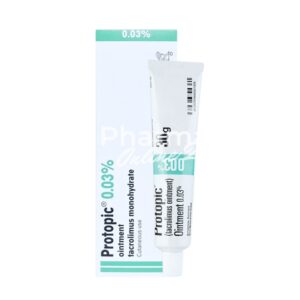
Protopic
In brief
- Protopic can be obtained from pharmacies and e-pharmacies; officially it is a prescription-only medicine in virtually all countries (FDA/EMA), though availability and enforcement vary and some pharmacies may supply it without a prescription — always check local regulations and consider consulting a clinician.
- Protopic (tacrolimus) is used to treat atopic dermatitis (eczema); it is a topical calcineurin inhibitor that reduces T-cell activation and inflammatory mediator release in the skin.
- Usual dosages: adults — tacrolimus ointment 0.03% or 0.1% applied as a thin layer to affected areas twice daily; children 2–15 years — 0.03% ointment twice daily; not approved for children under 2 years.
- Form of administration: topical ointment applied to the skin (thin layer), avoiding mucous membranes, open wounds and occlusive dressings.
- Onset time: some patients notice symptomatic relief within a few days, but clearer improvement is commonly seen within 1–3 weeks of regular twice-daily use.
- Duration of action: continued twice-daily use is required during flares until clearance; for maintenance to reduce relapses, once- or twice-weekly application to previously affected areas is commonly used.
- Alcohol warning: avoid applying alcohol-containing topical products to treated skin and be aware that some users report flushing or sensitivity related to alcohol exposure after application; there is no general prohibition on oral alcohol but minimise excessive exposure if you experience skin flushing.
- The most common side effect is transient local irritation at the application site (burning or stinging), often with itching and erythema; less commonly folliculitis or viral skin infections may occur.
- Would you like to try protopic without a prescription?
Market Realities And Patient Experiences
Basic Protopic Information
- INN (International Nonproprietary Name): Tacrolimus
- Brand Names Available In United Kingdom: Protopic; Tacrolimus Sandoz; Talimus (brand availability varies by market; Prograf is oral and not for dermatological use)
- ATC Code: D11AH01 – Tacrolimus (Topical Calcineurin Inhibitors).
- Forms & Dosages: Ointment 0.03% (for children ≥2 years and adults) and ointment 0.1% (for adults and adolescents ≥16 years). Common packaging includes tubes in a range of sizes (for example 30g and 60g) depending on market.
- Manufacturers In United Kingdom: Astellas Pharma (original manufacturer); Sandoz (generic in Europe); Glenmark, Intas, Cipla, Emcure (generic manufacturers in other markets). Availability varies by national regulation and wholesaler stock.
- Registration Status In United Kingdom: Prescription only (Rx) in virtually all markets; licensed for moderate‑to‑severe atopic dermatitis in adults and children from age 2 according to EMA/FDA registrations and national product listings.
- OTC / Rx Classification: Prescription only (Rx) — not available over the counter in virtually all markets.
How easy is it to get a steroid‑free option for eczema and does it work?
Many people look for non‑steroidal options because they worry about long‑term steroid side effects on the face and flexures.
Protopic (tacrolimus) is widely recognised as a steroid‑sparing ointment for moderate‑to‑severe atopic dermatitis and is commonly discussed in patient forums and pharmacy consultations.
Brand availability includes Protopic, Tacrolimus Sandoz and Talimus, and tacrolimus is prescription‑only in virtually all markets according to product information.
In the UK many people consult a pharmacist first and expect clear guidance on using tacrolimus for facial and eyelid eczema and on long‑term maintenance to reduce flares.
Some patients expect an NHS prescription; others choose private or online purchase for speed and convenience.
Typical patient experience includes rapid reduction in itch for many, with a transient burning or stinging sensation on initial application.
Cost sensitivity varies, so some prioritise brand name tubes while others accept generics like Tacrolimus Sandoz.
Patient Quote
“The ointment calmed my itching within a week, but the first two nights the application stung a bit — my pharmacist warned me and it passed.”
What Patients Want
- Clear instructions for facial and eyelid use.
- Options that avoid long‑term steroid use and skin thinning.
- Maintenance plans to reduce flare frequency.
- Fast access, whether NHS or private, and transparent pricing.
- Reassurance about safety and reporting side effects.
| Perceived Risk | Topical Steroids | Tacrolimus (Protopic) |
|---|---|---|
| Skin Atrophy | Higher risk with prolonged potent steroid use | Negligible risk of atrophy compared with steroids |
| Initial Irritation | Usually low; depends on potency | Common transient burning/stinging on application |
| Long‑Term Use | Monitor for thinning and striae with ongoing use | Licensed for maintenance strategies; labelled cautions exist |
What Protopic (Tacrolimus) Is — Product Basics
Active Substance And Classification
What exactly is tacrolimus and how is it classified?
Tacrolimus is the International Nonproprietary Name (INN) and belongs to the topical calcineurin inhibitors, ATC code D11AH01.
The ATC classification denotes D for dermatologicals, 11 for other dermatological preparations, H for drugs for atopic dermatitis, and 01 for tacrolimus.
Available Brands And Forms At A Glance
Which brands and formulations are commonly available?
Protopic is the originator brand with ointment in strengths 0.03% and 0.1% supplied in tubes.
Generics include Tacrolimus Sandoz in the EU and Talimus in India, also offered as ointment at 0.03% and 0.1% in various tube sizes.
Astellas Pharma is the original manufacturer; Sandoz and other firms supply generic tacrolimus ointment.
Note that topical tacrolimus is supplied as an ointment and not as a cream — user searches sometimes say “Protopic cream” but the correct vehicle is ointment.
| Brand | Country/Region | Strengths |
|---|---|---|
| Protopic | USA, EU, Japan, others | 0.03% ointment; 0.1% ointment |
| Tacrolimus Sandoz | EU (various) | 0.03% ointment; 0.1% ointment |
| Talimus | India | 0.03% ointment; 0.1% ointment (various tube sizes) |
Protopic is steroid‑free and regularly recommended for sensitive areas such as the face and eyelids when steroid sparing is required.
Indications And Who Benefits Most
Licensed Indications (Age Groups And Severities)
Who is protopic licensed for and when is it used?
Tacrolimus ointment is licensed for moderate‑to‑severe atopic dermatitis in adults and children from age 2.
The 0.03% ointment is licensed for children aged 2–15 years and for adults, while the 0.1% ointment is for adults and adolescents aged 16 and above.
It is indicated when standard therapies, typically topical corticosteroids, are insufficient or unsuitable.
Off‑Label And Cautious Uses
Who might be considered for tacrolimus but needs caution?
Patients who benefit most include those with facial or eyelid eczema, those wishing to avoid long‑term topical steroids, and those with recurrent flexural flares who need maintenance therapy.
Maintenance regimens — applying once or twice weekly to previous lesion sites — are used to reduce recurrences in some patients.
Tacrolimus is not approved for children under 2 years and should be used cautiously in immunocompromised patients or where significant skin barrier loss exists.
- Eligibility Checklist — moderate‑to‑severe atopic dermatitis; age ≥2 for 0.03% and ≥16 for 0.1%; steroid‑insufficient or steroid‑sensitive areas.
- Consider Referral — children under 2, pregnancy, active widespread infection, or immunocompromised status.
Dosage Forms, Strengths And Packaging — Practical Retail Info
Strengths And Who Uses Each
Which strengths should you pick for different ages?
Tacrolimus ointment is marketed in two strengths: 0.03% and 0.1%.
The 0.03% ointment is for children aged 2 years and older and can be used by adults when appropriate.
The 0.1% ointment is recommended for adults and adolescents aged 16 years or older.
Oral tacrolimus products such as Prograf are entirely distinct and not used for dermatological indications.
Typical Tube Sizes And Packaging Notes
What sizes do pharmacies typically stock and what should customers expect?
Common tube sizes include 30g and 60g, though exact pack sizes vary by supplier and country.
| Strength | Age Group | Typical Tube Size | Notes |
|---|---|---|---|
| 0.03% ointment | Children ≥2 years; adults | 30g, 60g | Licensed for paediatric use from age 2; Rx only |
| 0.1% ointment | Adults and adolescents ≥16 years | 30g, 60g | Higher strength for older patients; Rx only |
How To Apply — Step‑By‑Step Usage And Dosing Regimens
Daily Application For Flares
How should patients apply protopic during a flare?
- Wash and dry the affected area gently before application.
- Apply a thin film of ointment to the affected skin twice daily until the skin is clear.
- Avoid applying to the eyes, lips, or mucous membranes.
- Do not occlude the treated area with dressings unless advised by a clinician.
- Wash hands after application unless the hands are the treated site.
Improvement is usually seen within 1–3 weeks for many patients.
Maintenance (Proactive) Regimens And Duration
How is tacrolimus used to prevent flares?
After clearance of acute lesions, maintenance treatment using tacrolimus once or twice weekly to previously affected sites can reduce relapse frequency.
Stop treatment when skin is clear and follow local clinical guidance for ongoing use and review.
Missed dose guidance: apply as soon as remembered but do not double up; overdose from topical use is unlikely, but seek medical help if large amounts are ingested.
FAQ
Q: Can I use it under moisturiser?
A: Apply tacrolimus to dry skin, allow it to absorb, and then use emollients as advised.
Q: When should I see a clinician?
A: If there’s no improvement after several weeks, or if severe irritation or signs of infection develop.
Safety Profile, Contraindications And Cautions
Absolute Contraindications
Who must not use tacrolimus ointment?
- Known hypersensitivity to tacrolimus or any ointment excipients (for example mineral oil or paraffin).
- Patients with compromised immune systems such as those post‑transplant, with HIV, or on systemic immunosuppressants.
- Active skin infections including herpes simplex, varicella, or severe bacterial infections.
Situations Requiring Monitoring Or Specialist Referral
When should pharmacists advise a referral or monitoring?
Exercise caution in patients with a personal or family history of skin cancer or cutaneous premalignancies and minimise sun/UV exposure during treatment.
Stop and seek medical review if severe persistent irritation, new persistent lesions, or signs of systemic infection occur.
Pregnant or breastfeeding patients should have specialist advice; tacrolimus topical use is not routinely recommended in pregnancy unless benefits outweigh risks.
Common Side Effects And What To Expect
Very Common / Common Local Effects
What side effects do patients typically report and how should they be managed?
| Symptom | Frequency | Management |
|---|---|---|
| Burning or stinging at application site | Very common / common | Usually transient; cooling compresses and avoiding irritant products can help. |
| Itching, erythema, tingling | Common | Often settles in a few days; continue as advised unless severe. |
| Folliculitis, herpes simplex | Less common | Advise assessment by clinician and consider stopping if viral infection suspected. |
Less Common, Serious Signals And Reporting
Are there rare but serious concerns?
The product label contains a caution about a theoretical malignancy risk which has led to labelled warnings and the need for cautious use in patients with a history of malignancy.
Systemic exposure is minimal with topical use, but monitor compromised skin and stop treatment if severe reactions occur.
Report suspected adverse reactions via the Yellow Card scheme (MHRA) and advise patients to seek urgent care for severe or systemic symptoms.
- Report via Yellow Card and document the reaction in the patient record.
- Refer patients for medical review if a serious adverse event is suspected.
Comparative Positioning Versus Alternatives
When To Choose Tacrolimus Over Topical Steroids
Why pick tacrolimus rather than a corticosteroid?
Tacrolimus is steroid‑free and does not cause the same risk of skin atrophy seen with prolonged topical steroid use, making it preferable for delicate areas like the face and eyelids and for long‑term maintenance.
High‑potency topical steroids still play a role for rapid control of severe flares, but tacrolimus is a steroid‑sparing option when thinning is a concern.
Comparisons With Pimecrolimus (Elidel) And Crisaborole
How does Protopic compare with other non‑steroidal treatments?
Pimecrolimus (Elidel) is another topical calcineurin inhibitor, usually provided as 1% cream, and clinician choice may depend on age, severity and local formulary preferences.
Crisaborole is a topical PDE4 inhibitor for mild‑to‑moderate eczema and may be chosen for some milder cases where calcineurin inhibitors are not required.
| Drug | Mechanism | Ideal Use | Steroid‑Sparing? |
|---|---|---|---|
| Tacrolimus (Protopic) | Topical calcineurin inhibitor | Moderate‑to‑severe atopic dermatitis; sensitive areas | Yes |
| Pimecrolimus (Elidel) | Topical calcineurin inhibitor | Mild‑to‑moderate; paediatric options depend on age | Yes |
| Crisaborole | PDE4 inhibitor | Mild‑to‑moderate eczema | Partially |
Pros and cons for each product should be discussed with the prescriber or pharmacist to match severity, site and patient preference.
Summary Of Clinical Evidence And Safety Data
Key Efficacy Outcomes Relevant To Patients
What do trials and long‑term data tell patients to expect?
Selected studies show clinical efficacy in reducing itch, improving dermatitis clearance and lowering flare frequency with proactive maintenance use.
Clinical follow‑up data exist for up to four years in selected long‑term studies, supporting maintenance strategies in appropriate patients.
Long‑Term Safety Findings And Regulatory Stance
How do regulators view tacrolimus?
Regulatory authorities such as the FDA and EMA have approved topical tacrolimus for moderate‑to‑severe atopic dermatitis in adults and children aged ≥2 years with labelled warnings regarding theoretical malignancy risk.
Although causal links between topical tacrolimus and malignancy are not definitively proven, labels advise caution in patients with a history of malignancy and recommend minimising unnecessary exposure.
Regulatory Fact Box: Licensed by FDA/EMA for moderate‑to‑severe atopic dermatitis in patients aged 2 years and older; prescription only in virtually all markets.
Prescribing, Legal Status And UK Access Pathways
NHS Prescribing And Private Prescription Differences
How can UK patients obtain tacrolimus?
Tacrolimus ointment is prescription‑only and is usually initiated by GPs or dermatology specialists on the NHS, with some local formularies preferring generics such as Tacrolimus Sandoz.
Private options include private clinics and e‑prescription services used by online pharmacies, with turnaround usually faster than NHS initiation.
Regional prescription cost differences apply: prescriptions are free in Scotland, Wales and Northern Ireland; in England NHS prescription charges apply unless the patient is exempt.
In our online pharmacy, protopic is available without a prescription, with discreet delivery to United Kingdom in 5‑14 days.
MHRA Status And Pharmacy Responsibilities
What are the pharmacist’s legal obligations?
MHRA oversight applies and pharmacists must dispense prescription‑only medicines only against a valid prescription and must counsel on cautions and adverse event reporting.
Pharmacies should check prescription validity, confirm appropriate age and strength, document counselling and report suspected adverse reactions via the Yellow Card scheme.
| Route | Cost | Typical Turnaround |
|---|---|---|
| NHS Prescription (England) | NHS prescription charge unless exempt | Days to weeks depending on appointment and referral |
| Private Prescription / Online | Variable; brand usually more expensive than generic | Often 1–7 days depending on service |
Pharmacy Stock, Suppliers And Generic Availability
Key Manufacturers And Supply Considerations
Where do pharmacies source tacrolimus and what affects availability?
Astellas Pharma is the originator; Sandoz supplies generic tacrolimus in Europe and other manufacturers such as Glenmark, Intas and Cipla produce generic ointments in other markets.
Local wholesaler stock levels and national procurement decisions determine which brands are readily available in the UK.
Handling Shortages And Substitution Advice
How should pharmacy staff handle supply interruptions?
Where substitution is permitted, generics are acceptable alternatives but pharmacists should inform patients of any excipient or tube size differences which may affect tolerance or dosing perception.
If shortages occur, discuss short‑term alternatives such as switching to pimecrolimus, crisaborole where appropriate, or supervised use of topical corticosteroids until supply resumes.
- Supplier Table — keep contacts for Astellas, Sandoz and key wholesalers to track stock.
- Substitution Checklist — confirm prescriber permission if brand‑sensitive, document discussion and note any patient tolerability reports.
Pricing, Reimbursement And Online Retail Considerations
Typical UK Price Drivers And Prescription Charges
What influences what patients pay for protopic?
NHS prescription rules affect out‑of‑pocket costs: free in Scotland, Wales and Northern Ireland; prescription charges apply in England unless exempt.
Private prices vary across chains and online pharmacies with branded Protopic typically costing more than generic Tacrolimus Sandoz or imported generics.
Safe Online Purchase Tips And Pharmacy Chains
How can customers buy safely online?
- Buy only from MHRA‑registered and GPhC‑registered pharmacy websites that require a valid prescription.
- Check for secure checkout, visible pharmacist contact details and an MHRA Yellow Card reporting link.
- Compare unit price per gram and check pack sizes (e.g., 30g vs 60g) before choosing.
Avoid unregulated sellers; if in doubt ask your pharmacist to verify the product and supplier credentials.
Storage, Transport And Packaging Advice For Retailers And Patients
Optimal Storage Conditions And Shelf Life
How should tacrolimus ointment be stored?
Store below 25°C, do not freeze, and keep the tube tightly closed and protected from light.
Typical unopened shelf life is up to three years and approximately 12 months after opening, but always check the package insert for the exact expiry details.
Handling During Dispensing And Shipping
What should pharmacies and couriers keep in mind?
- Temperature‑controlled storage away from heat and direct sunlight.
- Label the tube with the opening date and document in the pharmacy record.
- When shipping, use discreet but protective packaging to prevent tube puncture and include the patient information leaflet and counselling points.
| Specification | Guidance |
|---|---|
| Storage Temperature | Below 25°C; do not freeze |
| Shelf Life (Typical) | 3 years unopened; ~12 months after opening (check leaflet) |
Counselling Scripts And Pharmacist Checklist For Product Pages
Key Patient Counselling Points To Display
What should the pharmacist tell the patient at supply?
- Confirm the prescription and that the strength matches age: 0.03% for children 2–15 and 0.1% for patients ≥16 years.
- Explain application: thin film twice daily during flares; once or twice weekly for maintenance to previous lesions.
- Warn about transient burning or stinging and advise soothing measures such as cool compresses.
- Advise not to apply to eyes, mucous membranes or open wounds and to avoid occlusion.
- Encourage sun protection and advise to stop and seek review if severe irritation or infection develops.
- Explain Yellow Card reporting for suspected adverse reactions.
When To Refer And Documentation Advice
When should the pharmacist refer the patient back to the prescriber?
Refer patients for review if there is no improvement after the expected response period, if severe or persistent irritation occurs, or if signs of infection develop.
Document the advice given in the patient record, note brand and batch where appropriate and keep a record of any reported adverse effects.
SEO And Ecommerce Optimisation For The Product Page
High‑Value Keywords And Meta Content Guidance
How should product pages be optimised for search and conversion?
Use focused meta titles combining brand, strength and regulatory cue such as: “Protopic Ointment 0.1% (Tacrolimus) — Rx Only | Order With Prescription”.
Meta descriptions should highlight prescription requirement and trust signals: “Order with prescription from an MHRA‑registered pharmacy — discreet UK delivery.”
UX Elements, Trust Signals, And Conversion Tactics
What UX elements encourage safe conversion?
- Prominent prescription requirement badge and pharmacist consultation call‑to‑action.
- Clear age/strength selector and patient experiences block.
- Visible safety warnings, link to Yellow Card reporting and manufacturer credentials (Astellas, Sandoz).
Include structured content such as dosage tables, contraindication lists and supplier information to increase E‑E‑A‑T and reduce cart abandonment.
Delivery Across United Kingdom
| City | Region | Delivery time |
|---|---|---|
| London | England | 5‑7 days |
| Birmingham | England | 5‑7 days |
| Manchester | England | 5‑7 days |
| Glasgow | Scotland | 5‑7 days |
| Edinburgh | Scotland | 5‑7 days |
| Belfast | Northern Ireland | 5‑7 days |
| Cardiff | Wales | 5‑7 days |
| Liverpool | England | 5‑9 days |
| Leeds | England | 5‑9 days |
| Sheffield | England | 5‑9 days |
| Bristol | England | 5‑9 days |
| Coventry | England | 5‑9 days |
| Newcastle | England | 5‑9 days |
| Nottingham | England | 5‑9 days |
| Southampton | England | 5‑9 days |