Sertraline
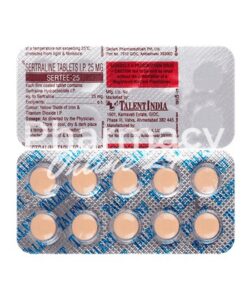
In stock
25mg · 50mg · 100mg
from 32,73 £
In brief
- Sertraline is an SSRI that raises serotonin activity, prescribed for depression, panic, OCD, social anxiety and post-traumatic stress.
- Three strengths, 25, 50 and 100 mg, are stocked, and every one can be ordered in 30 to 360 tablets.
- Sertraline is prescription-only in Britain, so the choice of dose and the length of treatment rest with your doctor or prescriber.
Sertraline: an SSRI for low mood and anxiety illnesses
Sertraline works on serotonin, the brain messenger linked to mood and anxiety, by slowing its re-absorption into nerve cells; that is what places it among the SSRIs. The gradual build-up in the junctions between nerves can ease low mood and the physical and mental tension of anxiety. In adults the UK SmPC covers major depressive episodes and their prevention, panic disorder, obsessive compulsive disorder, social anxiety disorder and post-traumatic stress disorder. For anyone between 6 and 17, OCD is the only licensed use. Lustral is the original UK brand, and a large number of generics share the same prescription-only status.
Choosing between three strengths
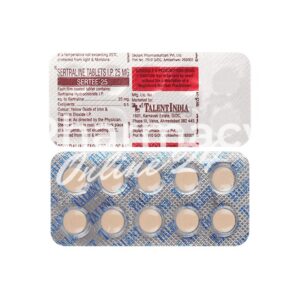
There are 25, 50 and 100 mg tablets, and each comes in 30, 60, 90, 120, 180, 270 or 360. Adults typically start at 50 mg once a day, whereas in panic disorder, social anxiety and PTSD the first week is 25 mg before moving to 50 mg. Further rises are made in 50 mg steps no sooner than a week apart, and the ceiling is 200 mg a day. Young OCD patients begin on 25 mg if aged 6 to 12 and on 50 mg between 13 and 17. The range of strengths makes it easy to build up gradually.
Taking it day to day
One dose a day, whichever time suits you and whether or not you have eaten, is how sertraline is normally taken, at the amount your prescriber has set. A few people notice a change in the first week, but the full benefit often arrives more slowly. In depression, the SmPC suggests continuing for six months or longer after feeling well to reduce the chance of relapse. Where the liver is impaired a lower or less frequent dose is used and severe impairment is avoided; the dose does not change for kidney problems. The carton or strip on an imported pack may be marked for another market, so confirm the strength each time.
Who should not take it
Pimozide and irreversible MAO inhibitors cannot be taken with sertraline. It must be separated from an irreversible MAO inhibitor by at least 14 days, and the MAO inhibitor started no sooner than 7 days after the last sertraline dose. Take care in epilepsy, mania, a prolonged QT interval, low sodium and bleeding disorders. Suicidal thoughts may emerge, particularly under the age of 25, and should be reported straight away. The SmPC recommends leaving alcohol alone during treatment.
Other medicines to mention
Other drugs that boost serotonin, among them tramadol, fentanyl, triptans, lithium and St John’s wort, raise the risk of serotonin syndrome when taken together with it. Warfarin, aspirin and other NSAIDs raise the chance of bleeding when taken with an SSRI. Natural remedies count too, since herbal does not mean free of interactions. Mention liver disease, previous fits, easy bruising and any plan for a pregnancy as well.
Early weeks and coming off
Nausea, loose stools, a dry mouth, headache, difficulty sleeping, dizziness, sleepiness, tiredness and sexual problems such as delayed ejaculation are very common, while a reduced appetite, anxiety, tremor and sweating are common. Stopping abruptly may cause dizziness, tingling, anxiety and disturbed sleep, so the dose is lowered over at least one to two weeks, and often longer. Starting or stopping on your own initiative is unwise: that choice should be made with the prescriber. Seek urgent help for thoughts of self-harm, a rash with swelling, or signs of serotonin syndrome such as agitation, sweating, shaking and a racing heart. A short diary of mood and sleep in the first weeks gives useful evidence of progress.