Tamoxifen
In brief
- Tamoxifen sold through Pharmacy Online 24 comes as 10mg or 20mg tablets in 30, 60, 90, 120, 180 and 360 packs, delivered within the UK in 9–21 days.
- The drug occupies oestrogen receptors in breast cells so the hormone cannot fuel tumour growth, and it is used after surgery for hormone-receptor-positive breast cancer as well as in advanced disease.
- 10mg and 20mg tablets are both licensed in the UK; a regular daily time suits most people, and reliable non-hormonal contraception is needed because pregnancy is to be avoided.
- There is a modestly higher risk of blood clots and of endometrial thickening, so report any unexpected vaginal bleeding, and mention planned surgery or long-haul travel to your care team.
- Hot flushes, nausea, leg cramps and thinner hair can occur, while sudden visual disturbance needs prompt assessment. Tamoxifen is a POM in the UK.
Basic tamoxifen information
- INN (international nonproprietary name): Tamoxifen
- Brand names available in the United Kingdom: Nolvadex, Soltamox (oral solution); generic tamoxifen
- ATC code: L02BA01
- Forms and dosages: Oral tablets 10 mg and 20 mg; oral solution 10 mg/5 mL
- Manufacturers in the United Kingdom: Teva, Sandoz, Accord Healthcare and other generic suppliers
- Registration status in the United Kingdom: Prescription-only medicine (POM)
- OTC / Rx classification: Prescription-only medicine (POM)
Tamoxifen at a glance
Looking at tamoxifen for the first time, many patients want the same straightforward answer: what is it, who uses it, and why does the pharmacy ask for a prescription?
In UK practice, tamoxifen is a prescription-only medicine and an MHRA-approved oral anti-oestrogen used mainly in breast cancer care.
It is part of the SERM class, which means selective oestrogen receptor modulator, and it is commonly supplied as tamoxifen 20mg tablets or, less often, as an oral solution.
Brand names include Nolvadex and Soltamox; the generic name is tamoxifen citrate.
Not every request is suitable for supply, though, because this medicine is not for OTC sale and needs a proper clinical review first.
- What it is
- A prescription-only oral antiestrogen used in hormone-responsive conditions.
- Available forms
- Usually 10 mg or 20 mg tablets, or Soltamox oral solution 10 mg/5 mL.
- What it is used for
- Breast cancer treatment, recurrence prevention, risk reduction, and selected specialist-led off-label use.
Who it is for: adults prescribed tamoxifen citrate for breast cancer, risk reduction, or specialist-guided hormonal management.
Who it is not for: people who are pregnant, breastfeeding, or have a history of DVT or PE, unless a specialist says otherwise.
Prescription-only status and why it matters
Because tamoxifen is Rx-only, the pharmacy has to check the prescription, the dose, and the clinical reason before supply.
That matters for safety because of the clotting and eye-related risks.
Real-world use cases: breast cancer treatment, risk reduction, fertility, gynaecomastia
Most prescriptions relate to early breast cancer, ductal carcinoma in situ, metastatic disease, or risk reduction in higher-risk patients.
Specialists also sometimes use it off-label for gynaecomastia or fertility regimens, where tamoxifen can be part of a hormone therapy plan.
Legal status in the UK
Tamoxifen is a prescription-only medicine (POM) in the UK.
In our online pharmacy, tamoxifen is available without a prescription, with discreet delivery to the United Kingdom in 9–21 days.
Brand names, generics and packaging
Patients often think they are changing medicines when they see a different box, but the active ingredient may still be tamoxifen.
In the UK, the names most commonly seen are Nolvadex and Soltamox (oral solution), alongside generic tamoxifen tablets.
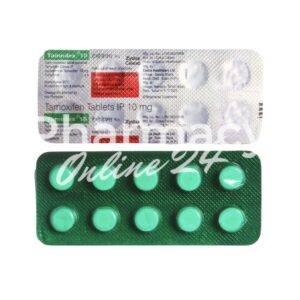
Tablets are supplied as blister strips of 10 mg and 20 mg, and the oral solution (10 mg/5 mL) is supplied in bottles for those who cannot swallow tablets.
Generic versus branded: generic tamoxifen and branded Nolvadex tablets contain the same active medicine, but the pack appearance and supplier can differ.
That is why patients should always check the strength, the name on the label, and the directions on the dispensing bag.
Pack sizes, tablet blisters and liquid option
Most people receive tablets in standard blister packaging, while the liquid form is usually reserved for specific situations.
Generic tamoxifen versus branded Nolvadex
When patients compare generic tamoxifen with branded Nolvadex tablets, the main differences are usually the manufacturer and the outer packaging.
What tamoxifen is and how it works in plain English
People are often told tamoxifen blocks oestrogen, but that phrase needs a bit of explanation to be useful.
It is a selective oestrogen receptor modulator, or SERM, which means it behaves differently in different tissues.
In some tissues it acts as a competitive oestrogen blocker, while in others it has more mixed activity.
The medicine is listed in the ATC system as L02BA01, which places it in endocrine therapy under anti-oestrogens.
After the body processes it, part of its effectiveness depends on conversion through CYP2D6 to endoxifen.
- SERM
- A medicine that acts on oestrogen receptors in a tissue-specific way.
- Oral antiestrogen
- A tablet or liquid medicine taken by mouth to block oestrogen signalling in selected cancers.
- Endoxifen
- An active metabolite linked to tamoxifen efficacy.
Simple pathway: tamoxifen tablets are taken by mouth, the liver helps convert part of the dose, and endoxifen contributes to the anti-oestrogen effect.
Why this matters: medicines that affect CYP2D6 can change the amount of active metabolite the patient gets.
Definition: selective oestrogen receptor modulator
This drug class is why tamoxifen can be useful in breast tissue without behaving the same way everywhere in the body.
Why it blocks oestrogen in some tissues but not all
The receptor effect varies by tissue, so the clinical result depends on where the oestrogen signal needs to be blocked.
Why metabolism to endoxifen matters
Some patients may need endoxifen level testing if there are concerns about metabolism, interactions, or response.
Who tamoxifen is prescribed for in UK practice
Patients usually want to know whether the prescription they have been given matches the condition they have been told about.
In UK practice, tamoxifen is used for early breast cancer after surgery, ductal carcinoma in situ, metastatic disease, and risk reduction in selected high-risk patients.
It may also be used off-label in specialist settings for gynaecomastia or fertility regimens.
| Indication | Typical adult dose | Usual duration |
|---|---|---|
| Early breast cancer after surgery | 20 mg once daily | 5 to 10 years |
| Ductal carcinoma in situ | 20 mg once daily | 5 years |
| Metastatic breast cancer | 20 to 40 mg daily, split if needed | As long as clinical benefit continues |
| Risk reduction in high-risk patients | 20 mg once daily | 5 years |
| Off-label specialist use | 10 to 20 mg once daily | Varies |
For many patients, hormone therapy is not a short course but part of a long treatment plan.
That is why oncology specialist input matters before changing anything.
Early breast cancer after surgery
This is one of the most common uses, and the standard dose is usually 20 mg once daily.
Ductal carcinoma in situ and recurrence prevention
After surgery for DCIS, tamoxifen may be prescribed for five years to lower the chance of recurrence.
Metastatic breast cancer and extended treatment
When breast cancer is metastatic, the dose may be 20 to 40 mg a day and treatment continues while there is benefit.
Off-label use: gynaecomastia and fertility specialist regimens
These uses are specialist guided.
Dosage forms and strengths
Formulation choice is often practical rather than dramatic: can the patient swallow tablets, and what strength has been prescribed?
Most prescriptions are for tablets, usually 10 mg or 20 mg, but an oral solution is available as 10 mg/5 mL.
Compounded suspension may be used by a hospital pharmacy when a child or a very specific formulation is needed.
| Form | Strength | Practical use |
|---|---|---|
| Oral tablets | 10 mg and 20 mg | Standard adult supply |
| Oral solution | 10 mg/5 mL | Useful if swallowing tablets is difficult |
| Compounded suspension | Custom | Rare, hospital-led paediatric supply |
For most adults, tamoxifen 20mg tablets are the default choice.
Liquid tamoxifen is practical when a tablet blister is not suitable, but it still needs careful checking before use.
Tablets, oral solution, and compounded suspension
Tablets are the usual form, oral solution is less common, and compounded forms are rare.
Choosing 10 mg versus 20 mg packs
Strength selection depends on the prescribed daily dose and the pack size needed for the treatment plan.
When a liquid form is practical
Oral solution can help when swallowing is a problem, but the dose must be measured accurately every time.
How to take tamoxifen safely and consistently
Many patients worry about getting the routine right, especially when the medicine is taken for years rather than weeks.
Once-daily dosing helps, but only if the patient can build it into a stable habit.
A simple morning routine, a phone reminder, or keeping the pack beside other regular medicines can make a real difference.
- Take it at the same time each day.
- Swallow tablets with water.
- Keep the dose consistent rather than changing it on your own.
- Record any missed dose in a note or medication app.
Do: take a missed dose as soon as remembered if it is still appropriate to do so.
Don’t: double up to make up for a forgotten dose.
If someone has taken too much, symptoms may include tremor, unsteady gait, and dizziness, and medical advice should be sought promptly.
Once-Daily routine and adherence tips
Adherence is easier when the dose is linked to a regular daily activity.
Food, swallowing, and timing habits
Patients usually focus on being consistent rather than worrying about elaborate timing rules.
What to do with missed doses
The key message is simple: take it when remembered, unless it is nearly time for the next dose, and never double up.
Overdose signs and advice
Overdose advice is symptom-based because there is no specific antidote.
Duration of treatment: why tamoxifen is often a long-term medicine
This medicine is often taken for years, which can surprise patients who expected a short course.
Chronic administration is usually required for hormone-responsive cancers, and adjuvant treatment commonly lasts five to ten years.
That long horizon is why treatment plans are often reviewed over time rather than finished after one appointment.
Timeline:
Start treatment after specialist decision.
Continue daily therapy through the planned adjuvant period, often five years and sometimes up to ten.
Review for tolerability, interactions, and benefit during follow-up.
Only stop or switch under oncology specialist guidance.
Some people stay on therapy longer if the oncologist believes the clinical benefit remains strong.
Five-year and ten-year treatment plans
Five years is common, while ten years may be used in selected adjuvant regimens.
When therapy may be extended or stopped
Side effects, resistance, or specialist reassessment can lead to continuation, interruption, or a switch.
Why specialist review matters before discontinuation
Stopping without oncology advice can undermine the treatment plan and should be avoided.
Contraindications and when tamoxifen should not be used
Before supply, pharmacists need to check for a few clear red flags.
The main ones are pregnancy, breastfeeding, past or active DVT or PE, hypersensitivity, and concurrent coumarin-type anticoagulant use.
These are not minor warnings, because the risk profile changes substantially in those settings.
- Absolute contraindications
- Pregnancy, lactation, hypersensitivity, active or past deep vein thrombosis or pulmonary embolism, and coumarin-type anticoagulant use.
- Relative cautions
- Severe hepatic impairment, pre-existing uterine disease or endometrial cancer, hyperlipidaemia, bone metastases at initiation, and blood cell disorders.
Warning: tamoxifen should be used carefully in liver impairment, and severe liver impairment is not recommended.
Because clot risk is a known issue, any new calf swelling, chest pain, or sudden breathlessness needs urgent assessment.
Absolute contraindications
These include pregnancy, lactation, hypersensitivity, active or past DVT or PE, and coumarin-type anticoagulants.
Relative contraindications and higher-risk situations
Uterine disease, severe hepatic impairment, and bone metastases can all make the treatment decision more cautious.
Pregnancy, breastfeeding, and anticoagulant interactions
These situations need specific prescriber review rather than routine supply.
Side effects patients notice most often — and what is more serious
Most patients want to know what is likely to happen day to day, and what should trigger a call to the clinic.
Common effects are often manageable, but a few problems need prompt attention.
| Common mild to moderate effects | Serious effects requiring prompt review |
|---|---|
| Hot flushes, fatigue, nausea, vomiting | Thromboembolic events |
| Vaginal discharge or bleeding, menstrual irregularities | Endometrial cancer risk with long-term use |
| Leg cramps, myalgia, headache, skin rash, thinning hair | Vision changes |
Hot flushes are one of the most common reasons patients say the medicine is hard to tolerate.
Vaginal bleeding should always be reported, particularly if it is new or persistent.
Long-term therapy also means the uterus, clotting system, and eyes need proper attention during follow-up.
Common mild-to-moderate effects
These include flushing, fatigue, nausea, vomiting, vaginal discharge or bleeding, menstrual changes, cramps, headache, rash, and thinning hair.
Red flags requiring prompt clinical review
Blood clot symptoms, vision changes, and persistent abnormal bleeding should never be ignored.
Uterine, clotting, and vision-related concerns
These risks are part of why review appointments matter during long-term treatment.
Interactions, metabolism, and endoxifen testing
This is one of the most important sections for safe prescribing, because tamoxifen efficacy is partly linked to CYP2D6 metabolism.
Some antidepressants can reduce the amount of active metabolite formed, which may reduce efficacy.
In particular, paroxetine and fluoxetine are medicines that should be avoided or carefully reviewed with the prescriber.
The interaction issue is one reason pharmacists ask about all regular medicines, including over-the-counter products and mental health treatments.
| Medicine or class | Clinical relevance |
|---|---|
| Paroxetine | Can reduce tamoxifen efficacy through CYP2D6 inhibition |
| Fluoxetine | Can reduce tamoxifen efficacy through CYP2D6 inhibition |
| Other CYP2D6 inhibitors | May alter endoxifen formation |
| Selected patients | Endoxifen level testing may be considered |
Blood monitoring for endoxifen is not routine for everyone, but it may be recommended in selected populations.
That is particularly relevant when response, side effects, or drug interactions are causing concern.
CYP2D6 and why some antidepressants matter
CYP2D6 helps convert tamoxifen to endoxifen, so inhibition can matter clinically.
SSRIs to avoid or review with a prescriber
Paroxetine and fluoxetine are the clearest examples.
When blood monitoring may be considered
Endoxifen level testing may be useful in selected patients where metabolism is in doubt.
Special populations: age, renal function, liver disease, and paediatrics
Most adults do not need a routine dose change simply because they are older.
The elderly usually need no adjustment, although side effects still need monitoring because metabolism may slow with age.
Renal impairment does not require a specific dose adjustment, but caution is still sensible in practice.
The liver is more important here, because tamoxifen is hepatically metabolised and severe hepatic impairment is not recommended.
Paediatric use is rare, unlicensed, and specialist led, which means routine community supply is unusual.
| Patient group | Usual approach | Caution level |
|---|---|---|
| Elderly patients | No routine dose adjustment | Monitor for side effects |
| Renal impairment | No specific dose adjustment required | Caution advised |
| Hepatic impairment | Use cautiously | High caution; severe impairment not recommended |
| Paediatric use | Rare and unlicensed | Specialist only |
In short, age alone rarely changes the dose, but liver disease can.
Elderly patients and routine adjustment
No routine adjustment is needed, but regular review is still sensible.
Renal impairment versus hepatic impairment
Kidney function is less of a dosing issue than severe liver impairment.
Paediatric use and unlicensed scenarios
Children should only receive it under specialist guidance, usually in hospital-led care.
Storage and handling at home
Storage is straightforward, but it matters because the medicine is often kept at home for a long time.
Store it at 15 to 30 degrees Celsius, in the original packaging, away from moisture and direct sunlight.
Oral solutions must not be frozen, and expiry dates should be checked before travel or repeat dispensing.
- Keep tablets in the original blister or carton.
- Do not store the medicine in a damp bathroom cupboard.
- Protect bottles and blisters from heat and sunlight.
- Check the expiry date before taking it on holiday.
Room temperature storage and moisture protection
Original packaging gives the best protection in day-to-day home use.
Transport advice for travel and repeat prescriptions
Travelling patients should carry enough supply, especially if treatment is long term.
Oral solution handling and expiry checks
The oral solution needs the same careful attention, with no freezing and no use past expiry.
Alternatives, switching, and how tamoxifen compares with other hormone treatments
Sometimes patients are surprised when their specialist mentions a switch from tamoxifen to another hormone treatment.
That usually reflects menopause status, side effects, or resistance rather than a mistake in care.
Tamoxifen is a SERM, while anastrozole, letrozole, and exemestane are aromatase inhibitors, so the medicines do not work in the same way.
Fulvestrant is an oestrogen receptor antagonist, and raloxifene is another SERM used for osteoporosis and breast cancer risk reduction.
| Medicine | Class | Typical use | How it compares |
|---|---|---|---|
| Tamoxifen | SERM | Breast cancer treatment and risk reduction | Often used across different menopause groups |
| Anastrozole | Aromatase inhibitor | Postmenopausal breast cancer | Different mechanism from tamoxifen |
| Letrozole | Aromatase inhibitor | Postmenopausal breast cancer | Alternative when aromatase blockade is preferred |
| Exemestane | Aromatase inhibitor | Postmenopausal breast cancer | Another switch option |
| Fulvestrant | Oestrogen receptor antagonist | Breast cancer | Used in a different treatment setting |
| Raloxifene | SERM | Osteoporosis and breast cancer risk reduction | Related class, different main use |
Switch decisions may reflect tolerability, menopausal status, or resistance, including situations where treatment interruption is considered.
Before a switch, patients should ask about the reason, the new side-effect profile, and any monitoring needed.
How tamoxifen differs from aromatase inhibitors
Aromatase inhibitors reduce oestrogen production, while tamoxifen blocks the receptor in a tissue-selective way.
When fulvestrant or raloxifene may be discussed
These may be considered in different clinical pathways, depending on the treatment goal.
Why patients are switched between treatments
Menopause status, side effects, and response all influence the decision.
UK counselling points before a switch
Patients should confirm the new dose, timing, interaction risk, and follow-up plan before changing therapy.
Delivery across the United Kingdom
| City | Region | Delivery time |
|---|---|---|
| London | Greater London | 9–21 days |
| Birmingham | West Midlands | 9–21 days |
| Manchester | North West England | 9–21 days |
| Glasgow | Scotland | 9–21 days |
| Edinburgh | Scotland | 9–21 days |
| Liverpool | North West England | 9–21 days |
| Leeds | Yorkshire and the Humber | 9–21 days |
| Sheffield | Yorkshire and the Humber | 9–21 days |
| Bristol | South West England | 9–21 days |
| Cardiff | Wales | 9–21 days |
| Newcastle upon Tyne | North East England | 9–21 days |
| Nottingham | East Midlands | 9–21 days |
| Coventry | West Midlands | 9–21 days |
| Belfast | Northern Ireland | 9–21 days |