Methotrexate
In brief
- In our pharmacy, you can buy methotrexate without a prescription, with delivery in 9–21 days throughout the United Kingdom. Discreet and anonymous packaging.
- Methotrexate is used to treat certain cancers, rheumatoid arthritis, psoriasis and other autoimmune conditions; it is an antineoplastic and immunomodulating antimetabolite (a folic acid analogue) that inhibits dihydrofolate reductase and thus DNA synthesis and lymphocyte proliferation.
- Usual doses vary by indication: for inflammatory diseases 7.5–25 mg once weekly (single weekly dose is common); oncological regimens use much higher, weight- or body-surface-area–based doses administered intravenously or intramuscularly under specialist supervision.
- Forms of administration include oral tablets and solutions, subcutaneous or intramuscular injection (vials, ampoules, prefilled syringes and autoinjectors) and intravenous injection, depending on formulation and indication.
- For autoimmune conditions, clinical effects typically begin within 2–8 weeks (full benefit may take several months); cytotoxic effects in chemotherapy are more immediate but clinical responses vary by regimen.
- The duration of action depends on dose and indication: plasma half-life is generally a few hours (approx. 3–10 hours for low-dose therapy), but intracellular effects (polyglutamated metabolites) and clinical immunosuppression persist between weekly doses; oncological regimens have variable durations.
- Do not consume alcohol while taking methotrexate, as alcohol increases the risk of liver toxicity and other adverse effects.
- The most common side effect is nausea.
- Would you like to try methotrexate without a prescription?
Basic methotrexate information
- INN (international nonproprietary name): Methotrexate
- Brand names available in the United Kingdom: Jylamvo (oral solution); Maxtrex; Metoject; Nordimet; generic methotrexate
- ATC code: L01BA01 (antineoplastic use); L04AX03 (low-dose immunomodulatory use)
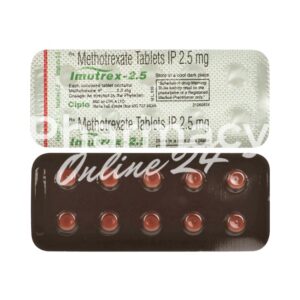
- Forms and dosages: Oral tablets 2.5 mg and 10 mg; oral solution 2 mg/ml (Jylamvo); pre-filled syringes/pens (Metoject, Nordimet); injection vials/ampoules 10 mg/ml and 25 mg/ml
- Manufacturers in the United Kingdom: Pfizer (Maxtrex); medac (Metoject); Nordic Pharma (Nordimet); generic manufacturers
- Registration status in the United Kingdom: Prescription-only medicine (POM)
- OTC / Rx classification: Prescription-only medicine (POM)
Product overview and formulations
INN, ATC and available forms
What exactly will you see on a prescription or product label for methotrexate?
Methotrexate is classified under ATC code L01BA01 as an antineoplastic and immunomodulating agent.
Patients will most commonly encounter three presentations: oral tablets, oral solution, and injectable preparations supplied as vials, prefilled syringes or autoinjectors.
| Form | Typical dosages | Common packaging |
|---|---|---|
| Oral tablets | 2.5 mg, 10 mg | Blister strips, bottles |
| Oral solution | 2 mg/ml | Bottles (various sizes), e.g. Jylamvo |
| Injection (vial/prefilled) | 10 mg/ml, 25 mg/ml | Vials, ampoules, prefilled syringes, autoinjectors |
- INN: International Nonproprietary Name used on prescriptions and product literature.
- Brand: Manufacturer’s trade name for a specific product presentation.
- Autoinjector: A prefilled device that delivers a subcutaneous dose with a hidden needle to reduce needle anxiety.
- POM: Prescription-Only Medicine; methotrexate is supplied under clinical supervision.
Common product names in the UK include Jylamvo for oral liquid and Nordimet or Metoject for injectable devices.
Indications and how UK prescribers use methotrexate
Rheumatology, dermatology and oncology contexts
Who prescribes methotrexate, and why?
- Rheumatology: Low-dose weekly methotrexate is a cornerstone treatment for rheumatoid arthritis and psoriatic arthritis.
- Dermatology: Used in severe psoriasis and psoriatic disease at low weekly doses under specialist supervision.
- Oncology: Higher-dose methotrexate is used in cancer chemotherapy and is prescribed and monitored by oncology teams.
- Shared care: Initial prescribing often starts in hospital clinics, followed by GP repeat dispensing under a shared-care agreement and local monitoring protocols.
- Counselling differences: Immunomodulatory use requires infection-risk advice and vaccine timing, whereas anticancer use involves specialist toxicity and hydration instructions.
The typical pathway moves from hospital initiation to GP community prescribing when the patient is stable and monitoring arrangements are agreed.
| Step | Action |
|---|---|
| Hospital specialist | Initiates methotrexate and arranges baseline tests |
| Shared-care agreement | Defines GP monitoring and repeat dispensing responsibilities |
| GP / community pharmacy | Provides repeat prescriptions, dispensing and counselling under agreement |
Legal status and availability in the UK
Methotrexate is a prescription-only medicine (POM) in the UK.
In our online pharmacy, methotrexate is available without a prescription, with discreet delivery to the United Kingdom in 9–21 days.
Typical dosing regimens and administration
Weekly dosing, oral vs injectable technique
How should methotrexate be taken to avoid mistakes?
- Low-dose regimens for rheumatology and dermatology are almost always given once weekly, not daily.
- Oncology dosing follows specialist high-dose protocols and is not comparable to rheumatology dosing.
- Common sources of dosing errors include unclear instructions and mismatched packaging; pharmacies reduce risk with prominent weekly-dose stickers and dosing calendars.
Oral tablets: take the full weekly dose on the same day each week, or as instructed by the prescriber.
Oral solution: measure carefully using the dosing syringe supplied and follow the same weekly schedule.
Injectables: prefilled syringes and pens (for example Nordimet and Metoject) are used for subcutaneous administration and may require demonstration.
Stepwise injection checklist for subcutaneous methotrexate:
- Check the prescription and device strength matches the dose prescribed.
- Wash hands and prepare a clean surface.
- Inspect the solution for particles or discolouration and check expiry date.
- Choose and clean the injection site as instructed.
- Activate the autoinjector or draw up from the prefilled syringe and inject subcutaneously as trained.
- Place used sharps into an approved sharps bin immediately.
A weekly dosing checklist and a visual guide for injection steps and sharps disposal are helpful.
Safety monitoring and required tests
Baseline checks and ongoing blood monitoring
What tests are needed before and during treatment with methotrexate?
Baseline checks typically include a complete blood count, liver function tests and renal function tests, with additional investigations such as a chest X-ray according to local protocols.
After baseline tests many shared-care protocols recommend monthly blood tests for the first three months then every two to three months, adjusted to the individual patient and clinician advice.
Monitoring should be up to date before each supply, and overdue tests should be raised with the prescriber.
| Test | Frequency | Purpose |
|---|---|---|
| Full blood count | Baseline, monthly for 3 months, then 2–3 monthly | Detect bone marrow suppression and cytopenias |
| Liver function tests | Baseline, monthly for 3 months, then 2–3 monthly | Monitor hepatotoxicity |
| Renal function | Baseline, regular intervals as per protocol | Adjust dose for renal impairment |
| Chest X-ray | Baseline where indicated | Assess pulmonary disease risk |
Folic acid co-prescription is routinely used to reduce common side-effects and should be discussed at initiation and reminded at each supply.
Pregnancy testing and contraception counselling are mandatory for people of childbearing potential before starting methotrexate.
Common adverse effects and management
Practical counselling for patients
What side-effects should patients expect and how can they be managed?
- Common effects include nausea, mouth ulcers, hair thinning and fatigue.
- Red-flag symptoms requiring urgent review include fever, new or worsening signs of infection, jaundice, and unexplained bleeding or bruising.
- Patients should be advised to stop methotrexate and seek urgent advice if they develop serious symptoms suggestive of infection or liver injury.
Practical pharmacy advice includes taking folic acid on a different day to methotrexate to reduce nausea and stomatitis, recommending mouth care for ulcers, and advising when to withhold doses pending clinician advice.
All suspected adverse reactions should be reported to the MHRA via the Yellow Card Scheme, and pharmacies should remind patients how to report events.
| Side effect | Practical advice |
|---|---|
| Nausea | Take folic acid on a different day; antiemetic advice from prescriber if needed |
| Mouth ulcers | Good oral hygiene and topical mouthcare products |
| Fatigue | Monitor and report; review dosing schedule with prescriber |
Caution: seek urgent medical review for fever, unexplained bleeding, severe abdominal pain or jaundice.
Drug interactions and contraindications
Key interacting medicines and patient comorbidities
Which medicines and conditions increase methotrexate risk?
Some interactions increase methotrexate toxicity and require pharmacist vigilance and prescriber discussion.
| Drug | Interaction | Action |
|---|---|---|
| Trimethoprim | May potentiate bone marrow suppression | Query prescriber and advise monitoring |
| NSAIDs / high-dose aspirin | Some NSAIDs can reduce renal excretion and increase toxicity | Check dose and duration; advise prescriber if concurrent |
| Phenytoin | Potential pharmacokinetic interactions | Review specialist advice and monitor levels where applicable |
| Certain antibiotics | Some may increase methotrexate levels | Advise prescriber and consider enhanced monitoring |
OTC supplements such as high-dose folate should be timed to avoid reducing immunomodulatory effect, and herbal remedies should be disclosed to the prescriber.
- Contraindications: pregnancy, severe liver disease and significant renal impairment.
- When to query: if a patient has advanced liver disease, severe renal dysfunction or is prescribed interacting antimicrobials.
Switching brands, generics and substitution guidance
Bioequivalence, patient concerns and supply changes
Are different brands interchangeable and how should switches be handled?
Methotrexate is supplied under several brand names and generics are typically bioequivalent, but patients often notice differences in device feel or tolerability and should be counselled.
| Device / brand | Type | Notes for patients |
|---|---|---|
| Nordimet / Metoject | Prefilled syringe | More familiar feel to some patients than autoinjectors |
| Generic tablets | Oral tablets | Tablets are usually interchangeable, but label and packaging may differ |
Patients should be told before any substitution, shown how the device works if switching between an autoinjector and a syringe, and should report any change in tolerance, side-effects or disease control after a switch.
Special populations and precautions
Pregnancy, renal impairment, elderly and paediatrics
Who needs extra caution when taking methotrexate?
- Pregnancy: Methotrexate is teratogenic and strict contraception plus pregnancy testing are essential for people of childbearing potential.
- Men: Reproductive planning conversations are recommended for men as part of counselling.
- Renal impairment: Dose adjustments and increased monitoring are required when renal function is reduced.
- Elderly: Start at lower doses, review polypharmacy and monitor for increased adverse effects.
- Paediatrics: Paediatric oncology dosing is specialist-managed and community pharmacies should only dispense with clear hospital instructions.
Alert: avoid methotrexate in pregnancy and ensure robust contraception counselling and pregnancy testing where relevant.
Storage, handling and disposal guidance
Home storage, handling injections and sharps disposal
How should patients store and dispose of methotrexate safely at home?
Tablets and solutions should be stored according to manufacturer directions, usually at room temperature away from direct light and kept out of reach of children.
Check expiry dates before use and never use products past expiry.
For injectables and autoinjectors, handle devices carefully and place used needles immediately into an MHRA-approved sharps bin.
Pharmacies can supply sharps bins and advise on local disposal services once bins are full.
- Store tablets and liquids in original packaging away from heat and light.
- Keep all methotrexate medicines out of reach of children.
- Do not flush sharps down the toilet — use an approved sharps bin and local council or pharmacy return schemes.
| Home storage checklist |
|---|
| Store at room temperature away from light and moisture. |
| Keep in original container and check expiry dates. |
| Keep out of reach of children and pets. |
Key counselling points
- Clear weekly dosing instructions: the same day each week, never daily.
- Keeping baseline and ongoing monitoring blood tests up to date.
- Pregnancy risk, contraception and the need for pregnancy testing where applicable.
- Interacting medicines, including OTC medicines and recently started antibiotics.
- Folic acid advice and its timing relative to methotrexate.
- Injection technique and device-specific instructions where relevant.
- Written patient information such as the NHS leaflet and the manufacturer’s patient information leaflet.
Suspected side effects can be reported through the Yellow Card Scheme.
Delivery across the United Kingdom
| City | Region | Delivery Time |
|---|---|---|
| London | England | 9–21 days |
| Birmingham | England | 9–21 days |
| Manchester | England | 9–21 days |
| Glasgow | Scotland | 9–21 days |
| Leeds | England | 9–21 days |
| Liverpool | England | 9–21 days |
| Edinburgh | Scotland | 9–21 days |
| Bristol | England | 9–21 days |
| Sheffield | England | 9–21 days |
| Newcastle Upon Tyne | England | 9–21 days |
| Nottingham | England | 9–21 days |
| Leicester | England | 9–21 days |
| Cardiff | Wales | 9–21 days |
| Belfast | Northern Ireland | 9–21 days |
| Southampton | England | 9–21 days |