Timoptic
In stock
0.5%
from 23,80 £
In brief
- Timoptic is a beta-blocker eye drop (timolol 0.5%) used when glaucoma or ocular hypertension leaves the pressure inside the eye too high.
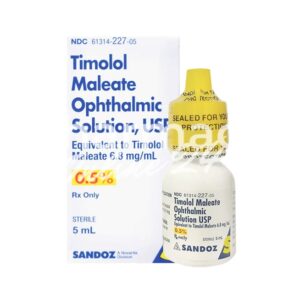
- The 0.5% bottle can be ordered as 2, 4 or 6 bottles.
- No UK medicine carries the Timoptic name; UK timolol eye drops are prescription-only and an eye clinic or prescriber guides their use.
Timoptic and timolol for eye pressure
Timoptic eye drops contain timolol maleate, a beta-blocker that reduces the production of aqueous humour, the fluid inside the eye, and so brings the pressure down. The UK SmPC for timolol eye drops covers raised eye pressure (ocular hypertension), chronic open-angle glaucoma, including in patients without a lens, and some forms of secondary glaucoma. Glaucoma damages the optic nerve, often without pain, which is why drops are used regularly and checked by an optometrist or ophthalmologist.
Bottles on offer and the UK name
The listing is for 0.5% drops, and 2, 4 or 6 bottles may be ordered. UK pharmacies dispense timolol under names such as Timoptol and as unbranded generics, but no UK medicine is called Timoptic. A bottle that was prepared for another market may be labelled differently, so confirm the strength and the expiry date. After opening, a bottle should be used within 28 days and not kept after that.
A drop-by-drop routine for Timoptic
The SmPC begins with a single drop of the weaker 0.25% strength in the affected eye morning and evening, switching to 0.5% twice daily if control is not achieved. When the pressure has settled, one drop once a day may be enough. Pressure is checked about four weeks after a change. After the drop goes in, press a finger on the inner corner of the eye, next to the nose, for two minutes, which reduces the amount reaching the bloodstream. Contact lenses must come out first; soft lenses should wait 15 minutes before going back, because the preservative benzalkonium chloride can discolour them. If you use a second eye medicine, leave about five minutes between the two. Glaucoma often gives no early warning, so keep every eye test appointment even when the eyes feel comfortable.
Why a beta-blocker drop like Timoptic can affect the whole body
Part of every drop is absorbed into the body, so timolol can cause the same problems as a beta-blocker tablet. It is contraindicated in asthma or a history of asthma, severe chronic obstructive pulmonary disease, sinus bradycardia, sick sinus syndrome, sinoatrial block, second- or third-degree atrioventricular block not controlled by a pacemaker, overt heart failure and cardiogenic shock. Caution is needed with coronary heart disease, low blood pressure, Raynaud’s phenomenon, diabetes and an overactive thyroid; timolol can mask signs of low blood sugar and hyperthyroidism. Two beta-blocking eye drops should not be combined, and the SmPC does not recommend it.
Interactions and special situations
Oral beta-blockers, calcium channel blockers, digoxin and amiodarone can add to the effect on the heart and circulation, and medicines that inhibit CYP2D6 raise timolol levels. In pregnancy and breastfeeding the prescriber must weigh the risks first. Mention any treatment for the heart, blood pressure or lungs before starting.
Local irritation and wider body effects
Stinging, burning, a red or watery eye, blurred vision and dry eyes are the more usual local effects. Because some timolol reaches the bloodstream, tiredness, dizziness, a slow heartbeat, breathlessness or a wheeze should be reported to the prescriber. Do not drive until your vision has cleared after using the drops. Treatment for glaucoma is long term, and the decision on Timoptic, or an alternative, rests with the eye clinic or prescriber.