Tropicamide
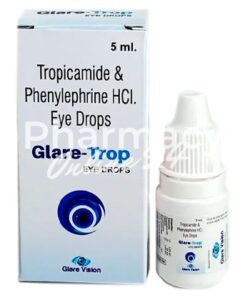
In stock
1%
from 27,52 £
In brief
- Tropicamide is a short-acting antimuscarinic eye drop that enlarges the pupil so that the back of the eye can be inspected.
- Only a 1% solution is listed, with one to five bottles per order.
- A POM in the UK, where Mydriacyl and Minims are licensed; this page lists imported bottles.
Tropicamide and the muscles of the iris
Tropicamide belongs among the drugs that block muscarinic receptors. Applied to the eye it blocks acetylcholine at the sphincter muscle that narrows the pupil, and at the ciliary muscle that changes the lens for close focus. With both relaxed, the pupil opens wide and the clinician sees the retina and optic nerve without obstruction. Onset takes minutes and recovery hours. Atropine drops dilate for days, so tropicamide is the usual choice when an ordinary eye test is the aim.
Why an optometrist or doctor chooses it
The UK SmPC calls tropicamide a diagnostic agent. It is used for examining the fundus through a widened pupil, for cycloplegic refraction (focusing is paralysed for a while so that the true glasses prescription emerges, a point of particular value in children) and for brief dilation before or after eye surgery. Children’s eyes focus strongly, and in some tropicamide cannot fully paralyse the effort, in which case atropine may be used instead.
The 1% bottles and instillation
Only a 1% solution is listed, ordered as one, two, three, four or five bottles. The listing says nothing about bottle size or preservative. For fundoscopy, the SmPC specifies one or two drops of 0.5% solution 15 to 20 minutes before examination; for cycloplegic refraction, it specifies 1% solution. For cycloplegic refraction the same amount is repeated after five minutes, and a further drop can be given if the examination has not started within twenty to thirty minutes. Very small infants are limited to the 0.5% strength by the SmPC, which rules out the 1% drops here. Afterwards, pressing lightly at the inner corner of the eye, over the tear duct, for two minutes or longer limits what reaches the bloodstream. Any other eye product waits five minutes, ointments going in last.
Eyes and people that call for care
An eye prone to angle closure, or with closed-angle glaucoma, should not receive the drops, and neither should anyone allergic to it. Narrow angles can be silent, particularly in later life, so the SmPC advises caution in older people, as well as in children, in Down syndrome and where atropine-like medicines have caused reactions. Wash hands after treating a child. Some drops, Mydriacyl among them, contain benzalkonium chloride, which can be absorbed by soft contact lenses, so lenses should go back in only after fifteen minutes. Eye pain, coloured rings round lights, or a red, firm eye may mean acute angle closure and demands urgent attention. Sunglasses help while the pupil is wide.
After the drops
Expect blurred vision and discomfort in bright light for up to about six hours; driving and machinery must wait. A pupil that stays large for much longer deserves advice. Reported reactions include stinging, a red eye, headache, dizziness, nausea, fainting, low blood pressure and prolonged dilation, all of unknown frequency. Children take up more of the drug and so develop body-wide anticholinergic effects sooner. Drugs with similar actions, namely amantadine, antihistamines, antipsychotics, phenothiazines and tricyclic antidepressants, can reinforce it.
Legal category in Britain
Prescription-only status applies in the UK, subject to exemptions that let certain professionals supply it, including a pharmacy filling an optometrist’s signed order. Mydriacyl 1% drops and Minims single-dose units (0.5% and 1%) hold UK licences. Mydriacyl bottles are thrown away four weeks after opening; the imported bottles should be handled according to their own leaflet, or a pharmacist can advise on the date. Choosing Tropicamide for a given examination is the call of the optometrist, ophthalmologist or other prescriber.