Ursodeoxycholic acid
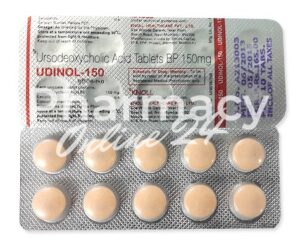
In stock
300mg
from 95,19 £
In brief
- Ursodeoxycholic acid is prescribed to treat primary biliary cholangitis and to dissolve some gallstones by making bile flow more freely.
- The 300 mg strength is offered with 30, 60, 90, 120 or 180 tablets per pack.
- It is prescription-only in the UK, and a doctor sets the dose by body weight and monitors the liver.
Ursodeoxycholic acid and what it does in the liver
Ursodeoxycholic acid occurs naturally in trace amounts in bile. Used as a medicine, it makes bile flow more freely, protects liver cells from damage by stronger bile acids, and cuts the amount of cholesterol the liver sends into the bile. The UK SmPC lists primary biliary cholangitis (PBC), the dissolving of radiolucent cholesterol gallstones in people whose gallbladder still works, and, for ages 6 to under 18, liver and bile duct disease linked to cystic fibrosis. PBC is a chronic condition in which the small bile ducts inside the liver are slowly damaged, so treatment is generally long term, whereas gallstone treatment is a time-limited course. Ursofalk and several generics are on the UK market.
Strength and packs offered
The 300 mg tablet is the only strength, and ursodeoxycholic acid is offered here in packs of 30, 60, 90, 120 or 180. UK products come in several forms and strengths, so a prescriber may need to convert the dose, and the imported pack should be checked against the prescribed regimen for the number of tablets a day. Keep the strips in a dry place at room temperature.
A dose worked out per kilogram
With ursodeoxycholic acid in primary biliary cholangitis, the daily dose is 10 to 15 mg per kilogram, split into two to four doses. For gallstones the usual range is 6 to 12 mg per kilogram a day, up to 15 in people who are obese, taken at bedtime or in divided doses. Dissolution can take up to two years, with a further three months advised after the stones disappear, and imaging at six to ten months shows progress. Liver tests are checked regularly. The dose depends on weight, so it is for the doctor to calculate.
Situations where it is ruled out
Ursodeoxycholic acid is excluded by the SmPC in acute inflammation of the gallbladder or bile ducts, blockage of the bile ducts, frequent biliary colic, calcified stones and a gallbladder that does not work, and in anyone allergic to it. Some product leaflets also advise against use in pregnancy and breastfeeding, so women should discuss this with their doctor first. Gallstone treatment also depends on the gallbladder showing up on imaging and still working.
Binding agents and hormones that interfere
Because colestyramine, colestipol, charcoal and aluminium-containing antacids bind bile acids in the gut, leave a gap of at least two hours between any of them and ursodeoxycholic acid. Ciclosporin absorption may rise, so blood levels are checked. Oestrogens, oral contraceptives and clofibrate can raise cholesterol in bile and may work against the treatment for gallstones.
Likely reactions and warning signs
Softer stools or diarrhoea are the commonest reaction. Other effects include abdominal pain, itching, rash, and in a few people a worsening of symptoms of PBC at the start. Gallstone calcification can occur. Liver blood tests are done regularly, often more frequently in the early months. Tell the doctor if yellowing of the skin or eyes, severe stomach pain or dark urine develops. Whether the tablets are appropriate for your condition is a decision for your doctor or prescriber.