Antabuse
In brief
- Antabuse (disulfiram) is a prescription-only medicine (POM) in the UK.
- Antabuse is used to support the treatment of alcohol dependence. It works by inhibiting aldehyde dehydrogenase, which causes an unpleasant reaction if alcohol is consumed, helping to discourage drinking.
- The usual adult dose is 800 mg as a single dose on day 1, reduced over 5 days to a maintenance dose of 100–200 mg once daily, depending on response and tolerance.
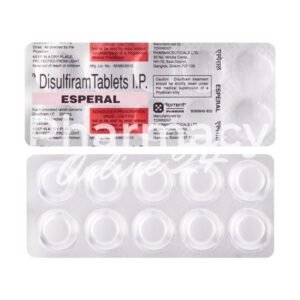
- The form of administration is an oral tablet (200 mg).
- The onset of action is not immediate for its alcohol-deterrent effect; it builds up over the first few days of treatment and the aversive effect can persist after dosing.
- The duration of action is prolonged, and the alcohol-reaction risk can remain for up to 2 weeks after the last dose.
- Do not drink alcohol while taking Antabuse, and avoid alcohol-containing products as it can trigger a severe reaction with flushing, palpitations, low blood pressure, nausea, vomiting and breathlessness.
- The most common side effects are drowsiness, fatigue, metallic or garlic-like aftertaste, nausea and skin rash.
- Would you like to try Antabuse without a prescription?
Basic Antabuse information
- INN (international nonproprietary name): Disulfiram
- Brand names available in the United Kingdom: Antabuse
- ATC code: N07BB01
- Forms and dosages: tablets 200 mg
- Manufacturers in the United Kingdom: Accord Healthcare, Teva, Mylan and other generic manufacturers
- Registration status in the United Kingdom: Prescription-only medicine (POM)
- OTC / Rx classification: Prescription-only medicine (POM)
What the medicine does in plain terms
Antabuse is the UK brand name for disulfiram, a prescription-only medicine used in alcohol dependence treatment.
In simple terms, it helps make drinking alcohol feel unpleasant rather than rewarding.
That is why it is described as alcohol-aversion therapy or disulfiram therapy.
It is not designed to reduce cravings in the same way as some other options.
People usually take it as part of a wider plan that includes counselling, behavioural support, and relapse prevention work.
The medicine is known under the INN disulfiram and the ATC code N07BB01.
In the UK, it may be prescribed through the NHS or privately, depending on the patient’s pathway and local access.
For someone who has relapsed several times, Antabuse can act as a practical deterrent when willpower alone has not been enough.
Who typically considers disulfiram treatment
People often consider disulfiram after repeated setbacks with alcohol dependence medication plans.
It tends to suit patients who want a clear boundary around alcohol use and who are committed to avoiding alcohol completely.
A pharmacist or prescriber may discuss it with someone already engaging with counselling but still struggling with relapse risk.
Because the reaction with alcohol can be severe, it is usually chosen when the patient understands the rules and accepts the consequences of drinking.
How Antabuse differs from other alcohol dependence medicines
| Medicine | Main approach | What patients usually notice |
|---|---|---|
| Antabuse | Deterrence-based alcohol aversion | It makes alcohol feel unacceptable or risky to drink |
| Naltrexone | Craving reduction | Often discussed when the aim is to reduce urges |
| Acamprosate | Craving support | Usually used alongside a recovery plan after stopping alcohol |
The key difference is that Antabuse works through consequence, not craving reduction.
That makes it a very different experience for the patient, both mentally and practically.
Available forms and strengths
Antabuse is supplied as an oral tablet product.
The UK strength is 200 mg.
Match the strength, batch number, expiry date and dispensing label before starting treatment.
How Antabuse works in alcohol dependence
Why alcohol feels worse after taking it
Disulfiram blocks the normal breakdown of alcohol.
As a result, alcohol-disulfiram reaction symptoms can appear soon after drinking.
People may feel flushed, sick, dizzy, or generally unwell because alcohol is no longer processed in the usual way.
The effect is intentional: it turns alcohol into something the body strongly rejects.
Why deterrence only works if the patient is committed
Antabuse only works properly when the tablet is taken consistently and the patient understands that drinking alcohol brings consequences.
If someone is not ready to avoid alcohol completely, the medicine is unlikely to help and may create risk instead.
This is why disulfiram alcohol aversion is best used with strong motivation and ongoing support.
The alcohol-disulfiram reaction can also occur for up to 2 weeks after the last dose, so stopping the tablets does not remove the risk immediately.
Legal status and availability in the UK
Antabuse (disulfiram) is a prescription-only medicine (POM) in the UK.
It may be prescribed by a GP, addiction service or private prescriber.
In our online pharmacy, Antabuse is available without a prescription, with discreet delivery to the United Kingdom in 9–21 days.
Checks before supply
- Whether alcohol has been taken recently.
- Whether there is a history of liver disease, heart disease, psychosis, or pregnancy.
- Whether the patient understands the alcohol-free requirement.
- Whether the full medicine list has been reviewed for disulfiram interactions.
- Whether the dose and strength match the prescriber’s plan.
This pharmacist consultation step matters because a safe supply depends on more than simply handing over the pack.
Standard doses and treatment duration
Initial dose and maintenance dose
| Stage | Usual dose | Practical note |
|---|---|---|
| Initial | 800 mg as a single dose on day 1, reduced over 5 days | Often started under clinician supervision |
| Maintenance | 100 to 200 mg once daily | Dose is adjusted to the individual patient |
Adults often begin at the higher starting dose, then move to a maintenance dose once the early phase is established.
Older patients are usually started at the lower end, with closer monitoring of liver and kidney function.
Liver concerns always need careful review before disulfiram tablets are supplied.
How long treatment usually lasts
Many treatment plans continue for several months.
Some patients stay on it for up to or beyond one year, especially when relapse risk remains high.
The tablet is most useful when it sits alongside counselling and behavioural support rather than being used on its own.
Who should not take Antabuse
Absolute contraindications
Do not use if:
- Alcohol has been taken within the last 24 hours.
- There is severe myocardial or coronary disease.
- There is psychosis or severe mental impairment.
- There is hypersensitivity to disulfiram.
- The patient is pregnant or breastfeeding.
- There is severe hepatic insufficiency.
Conditions that need extra monitoring
- Use with monitoring
- Mild to moderate liver or kidney disease, diabetes, epilepsy or seizure disorders, and cerebrovascular disease may need closer supervision.
- Why this matters
- A pharmacist or prescriber will usually ask about these conditions before dispensing Antabuse.
Side effects and what patients commonly experience
Common mild effects
| Mild effects | Moderate effects |
|---|---|
| Drowsiness and fatigue | Headache |
| Metallic or garlic-like aftertaste | Acneiform eruptions |
| Transient skin rash | Peripheral neuropathy |
| Rare, reversible impotence | Hepatic dysfunction |
| Nausea and vomiting | Allergic dermatitis |
When side effects need urgent review
Mild tiredness or a metallic aftertaste is often reported early on.
Those effects may settle, but nausea, rash, persistent headache, or any sign of liver trouble should be taken seriously.
If the patient feels unwell in a way that suggests the tablet is not being tolerated, the prescriber should be contacted promptly.
The same applies to any new symptoms that could be linked to Antabuse side effects rather than the alcohol recovery process itself.
The alcohol-disulfiram reaction and its risks
Warning: Drinking alcohol while taking disulfiram can cause a severe and potentially life-threatening reaction.
Typical symptoms:
- Flushing
- Palpitations
- Chest pain
- Breathlessness
- Dizziness
- Low blood pressure
- Nausea and vomiting
The reaction can happen for up to 2 weeks after the last dose.
That long tail is one reason patients are told to be strict about alcohol avoidance, even after stopping treatment.
Hidden alcohol in medicines, sauces, mouthwash, or other products can also matter, so people need to read labels carefully.
For anyone considering Antabuse for alcoholism, this is the single most important safety point to understand before starting.
Interactions, hidden alcohol and practical lifestyle issues
Medicines and products that may matter
Disulfiram interactions are often practical rather than obscure.
A pharmacist should review every medicine the patient is taking, including over-the-counter products.
Cough syrups, tonics, some mouthwashes, and other liquid medicines may contain alcohol.
That can matter just as much as a pint, especially for someone using alcohol dependence medication as a deterrent.
Everyday items patients often forget
- Mouthwashes and oral rinses.
- Cough and cold remedies.
- Some sauces, marinades, and desserts.
- Perfumes or cosmetic products used very close to the mouth.
- Any medicine label that lists ethanol or alcohol.
Simple label-checking can prevent avoidable problems and helps the treatment fit into ordinary daily life.
Missed dose, overdose and what to do next
If a dose is forgotten
- Take it as soon as remembered.
- Do not double up.
- If the next dose is due soon, skip the missed dose.
If too much is taken
- Seek urgent medical help immediately.
- Possible symptoms include severe nausea, vomiting, low blood pressure, and seizures.
That action plan is brief for a reason: in an emergency, speed matters more than anything else.
Storage and checks on receipt
How to store tablets safely at home
Keep Antabuse at room temperature, ideally 20 to 25°C.
Protect the tablets from light and moisture.
Leave them in the original packaging until use.
What to check when you receive the pack
- Packaging integrity.
- Expiry date.
- Batch number.
- Matching strength on the label.
- Clear dispensing information from the pharmacy.
These checks are simple, but they help confirm the medicine has arrived as expected.
How Antabuse compares with other alcohol dependence treatments
Where it fits versus naltrexone and acamprosate
| Treatment | How it works | Best for | Key limitation |
|---|---|---|---|
| Antabuse | Creates a deterrent by making alcohol unpleasant | People who want a clear, firm boundary around drinking | Only works if alcohol is strictly avoided |
| Naltrexone | Opioid antagonist that reduces craving | People who want craving-focused support | Not a deterrent medicine |
| Acamprosate | Modulates glutamatergic neurotransmission and supports abstinence | People aiming to stay off alcohol after stopping | Does not create an alcohol reaction |
| Topiramate | Off-label option with some evidence for harm reduction | Selected patients under specialist care | Off-label use |
Who tends to prefer deterrence-based treatment
Antabuse suits people who want something concrete and difficult to ignore.
That can include patients who know they are more likely to relapse when alcohol is easy to access.
It also appeals to those who prefer a clear, behaviour-based commitment rather than a craving-reduction approach.
For the right patient, disulfiram tablets can be an effective part of a structured recovery plan, provided the alcohol-free rule is taken seriously.
Delivery across the United Kingdom
| City | Region | Delivery time |
|---|---|---|
| London | Greater London | 9–21 days |
| Birmingham | West Midlands | 9–21 days |
| Manchester | North West England | 9–21 days |
| Leeds | West Yorkshire | 9–21 days |
| Glasgow | Scotland | 9–21 days |
| Edinburgh | Scotland | 9–21 days |
| Liverpool | North West England | 9–21 days |
| Bristol | South West England | 9–21 days |
| Cardiff | Wales | 9–21 days |
| Newcastle upon Tyne | North East England | 9–21 days |
| Sheffield | South Yorkshire | 9–21 days |
| Nottingham | East Midlands | 9–21 days |
| Leicester | East Midlands | 9–21 days |
| Southampton | South East England | 9–21 days |
Availability and delivery timing can vary by stock, route, and the dispensing requirements for the order.