Bimatoprost
In brief
- In our pharmacy, bimatoprost is available to buy without a prescription, with delivery throughout the United Kingdom in discreet packaging. Bimatoprost eye drops are prescription-only medicines in the UK.
- Bimatoprost is used to reduce raised intraocular pressure in open-angle glaucoma and ocular hypertension. It is a prostaglandin analogue/prostamide that increases the outflow of aqueous humour from the eye.
- The usual dose is 1 drop in the affected eye(s) once daily, typically in the evening or at night. Do not use more often than prescribed.
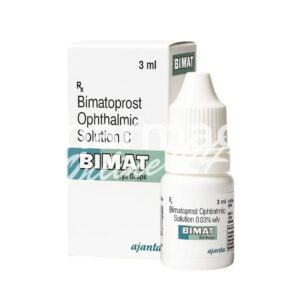
- The form of administration is ophthalmic solution (eye drops). Cosmetic lash/eyebrow products may be sold in similar dropper bottles, but these are unapproved for that use.
- The pressure-lowering effect begins within about 4 hours and reaches its maximum after about 8–12 hours.
- The duration of action is about 24 hours, which is why it is generally used once daily. Treatment is often long term and continued as long as eye-pressure control is needed.
- Alcohol does not have a known direct interaction with bimatoprost eye drops, but heavy alcohol intake may worsen dehydration or reduce treatment adherence.
- The most common side effects are red eyes (ocular hyperaemia), eyelash growth, eye itching, dry or irritated eyes, and darkening of the eyelid skin.
- Would you like to try bimatoprost without a prescription?
Basic bimatoprost information
- INN (international nonproprietary name): Bimatoprost
- Brand names available in the United Kingdom: Lumigan, generic bimatoprost
- ATC code: S01EE03
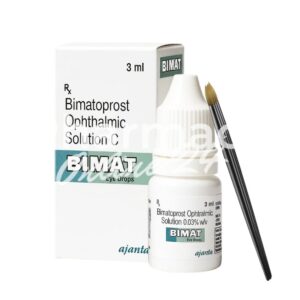
- Forms and dosages: Ophthalmic solution/drops, 0.03% (0.3 mg/mL), topical use in the eye; 3 mL and 5 mL plastic bottles with dropper top
- Manufacturers in the United Kingdom: AbbVie/Allergan; Lupin; Alembic; Apotex; Eugia Pharma; Gland Pharma; Hikma; Mankind; Micro Labs; Sandoz
- Registration status in the United Kingdom: Prescription-only medicine (POM)
- OTC / Rx classification: Prescription-only medicine (POM)
Bimatoprost at a glance
Bimatoprost is used as Lumigan 0.03% or as a generic bimatoprost eye drop for glaucoma or ocular hypertension.
The main counselling points are once-daily use, correct eye-drop technique, noting the opening date, and when to seek advice if symptoms change. Using more than one drop a day does not give extra pressure control.
What bimatoprost is and how it is classified
INN, drug class and ATC code
Bimatoprost is the International Nonproprietary Name, and its ATC code is S01EE03.
It is an ophthalmic solution in the prostaglandin analogue / prostamide group used in eye care.
It is different from lubricating drops, allergy drops, or cosmetic serums that are sold for a very different purpose.
How it is positioned in eye-care treatment
In practice, bimatoprost is used to lower intraocular pressure in glaucoma and ocular hypertension.
It is not a simple comfort drop and it is not a general eye moisturiser.
Knowing that distinction matters when comparing prescription eye drops, because treatment choice depends on the pressure problem being managed.
It must not be confused with cosmetic eyelash growth serums, which are sold for a very different purpose and are not licensed ophthalmic solutions.
Brand names, pack sizes and manufacturers
The best-known originator brand is Lumigan, made by AbbVie/Allergan. Generics are produced by companies such as Lupin, Alembic, Apotex, Eugia Pharma, Gland Pharma, Hikma, Mankind, Micro Labs and Sandoz. Most ophthalmic solution products are supplied in 3 mL or 5 mL plastic bottles with a dropper top.
| Brand name | Pack | Notes |
|---|---|---|
| Lumigan | 3 mL bottle | 0.03% w/v, dropper-type, carton |
| Generic bimatoprost | 3-5 mL bottle | Brand may change with supply |
Generic substitution can mean a different carton even when the active ingredient is the same, so check the name, strength and manufacturer details rather than relying on the front of the box alone.
Legal status and availability in the UK
Bimatoprost is a prescription-only medicine (POM) in the UK and is supplied on a valid prescription after clinician assessment.
In our online pharmacy, bimatoprost is available without a prescription, with discreet delivery to the United Kingdom in 9–21 days.
What bimatoprost is used for in practice
Main licensed use: glaucoma and ocular hypertension
The licensed role of bimatoprost is reduction of intraocular pressure in open-angle glaucoma and ocular hypertension.
That is the core reason patients are prescribed Lumigan eye drops or a generic bimatoprost eye drop.
How it fits into treatment pathways
Depending on the patient’s response, bimatoprost may be used as a first-line or add-on therapy.
The key outcome is eye pressure lowering, not short-term symptom relief.
If the pressure is not adequately controlled or the drop is not tolerated, a prescriber may review the whole glaucoma regimen.
Glaucoma treatment and cosmetic eyelash use
Glaucoma treatment and cosmetic eyelash use are not the same indication, and a cosmetic eyelash product is not automatically suitable for eye treatment.
Standard dosage, timing and how to use the drops correctly
Standard regimen
The standard dosage is 1 drop in the affected eye or eyes once daily, typically at night.
More is not better with this medicine, and extra dosing does not mean extra pressure control.
Step-by-step administration
- Wash your hands first.
- Tilt your head back and pull down the lower eyelid.
- Instil one drop without touching the tip to the eye or lashes.
- Close the eye gently and use punctal occlusion if advised.
- Replace the cap straight away.
Good eye-drop technique matters because it reduces contamination and helps the dose stay where it should.
Missed dose and overdose basics
If a dose is missed, instil it as soon as remembered, unless it is nearly time for the next dose.
Do not double dose.
If too much is used, rinse with warm water; if swallowed, supportive care may be needed and clinical monitoring is sensible, although systemic toxicity is rare.
Bottle use
Write the opening date on the carton or bottle when possible.
Once opened, the bottle is typically discarded after 4 weeks to reduce contamination risk.
Treatment duration, monitoring and when to reassess
Long-term treatment
Bimatoprost is usually used chronically for as long as eye-pressure lowering is required.
There is no defined maximum duration in the source data.
When follow-up matters
Regular eye-pressure checks and treatment review remain important because glaucoma is monitored over time, not just at the first prescription.
If the medicine is working but causing troublesome symptoms, the prescriber may need to reassess the plan.
Adherence and repeat prescriptions
Good adherence, repeat prescriptions, and contacting the prescriber if symptoms change are important.
A repeat prescription is only useful if the patient is actually using the drops correctly and attending follow-up appointments.
Side effects
Common effects
The most commonly reported effects are red eye, itching, dry eye sensation, eyelash growth, foreign body sensation, and darkening of the eyelid skin.
Less common but important effects
Less common but clinically important effects include iris pigmentation changes, blurred vision, eye discomfort, and rare macular oedema.
Iris colour changes may be permanent, especially in mixed-colour irises.
| Common effects | Less common or important effects |
|---|---|
| Red eye | Iris pigmentation changes |
| Itching | Blurred vision |
| Dry eye sensation | Macular oedema |
| Eyelash growth | Eye discomfort |
| Darkening of eyelid skin | Permanent colour change in the iris |
When to seek advice quickly
Seek advice quickly if there is pain, worsening redness, a change in vision, or signs of allergy.
Those symptoms should not be ignored as simple irritation.
Red-flag symptoms: pain, vision change, marked redness, or swelling around the eye need prompt assessment.
Contraindications, cautions and who needs extra care
Absolute contraindications
Do not use bimatoprost if there is allergy to bimatoprost or excipients, active ocular infection such as conjunctivitis, or severe ocular surface disease such as decompensated cornea.
Relative cautions
Extra care is needed in patients with uveitis, iritis, aphakia or pseudophakia with ruptured posterior lens capsule, ocular inflammatory conditions, or severe respiratory distress and a history of bronchospasm.
Pregnancy and breastfeeding also require a risk-benefit discussion with the prescriber because data are limited.
Interactions, co-use and combination therapy
Using bimatoprost with other eye drops
If the patient is on more than one eye drop, spacing them apart is sensible so the previous drop is not washed out immediately.
The order of administration should follow prescriber or pharmacist advice when multiple products are involved.
Combination products in practice
Bimatoprost plus timolol is widely available, and that matters because not every glaucoma drop is interchangeable.
Timolol, latanoprost, travoprost, and tafluprost all sit in different parts of the treatment conversation even when the end goal is the same.
Glaucoma drops are not interchangeable
Patients should not assume that all glaucoma drops do the same job in the same way.
Storage and bottle life
How to store correctly
Store below 25°C, do not freeze, and keep away from heat and light.
After opening
The bottle is typically discarded 4 weeks after opening to prevent contamination.
That helps protect both potency and eye safety.
Why this matters
An opened bottle that has been kept too long is not just less reliable; it can also carry contamination risk.
Storage do’s and don’ts: keep it cool, keep it closed, and do not use it beyond the opening period.
Alternatives to bimatoprost
How bimatoprost compares with common alternatives
Latanoprost, travoprost, and tafluprost are also prostaglandin analogues, while timolol is a non-selective beta-blocker.
In practice, the choice depends on response and tolerance.
| Drug | Class | Typical use | Notes |
|---|---|---|---|
| Bimatoprost | Prostaglandin analogue / prostamide | Lowering eye pressure | Often supplied as Lumigan 0.03% or generic bimatoprost |
| Latanoprost | Prostaglandin analogue | Glaucoma treatment | Prostaglandin analogue option |
| Travoprost | Prostaglandin analogue | Glaucoma treatment | Another prescription eye drop option |
| Tafluprost | Prostaglandin analogue | Glaucoma treatment | Used when a different option is needed |
| Timolol | Non-selective beta-blocker | Eye pressure lowering | Often used alone or in combination therapy |
When a prescriber might switch treatment
A prescriber might change treatment if response is not strong enough, or if side effects become troublesome.
Switching is therefore a clinical decision, not just a brand preference.
Delivery across the United Kingdom
| City | Region | Delivery time |
|---|---|---|
| London | England | 9–21 days |
| Birmingham | England | 9–21 days |
| Manchester | England | 9–21 days |
| Leeds | England | 9–21 days |
| Liverpool | England | 9–21 days |
| Sheffield | England | 9–21 days |
| Bristol | England | 9–21 days |
| Newcastle upon Tyne | England | 9–21 days |
| Glasgow | Scotland | 9–21 days |
| Edinburgh | Scotland | 9–21 days |
| Cardiff | Wales | 9–21 days |
| Belfast | Northern Ireland | 9–21 days |
| Nottingham | England | 9–21 days |
| Leicester | England | 9–21 days |
| Plymouth | England | 9–21 days |
Key takeaways for UK patients
Bimatoprost is a prescription eye medicine used mainly to lower eye pressure in glaucoma and ocular hypertension.
The main points are simple: use one drop once daily, store the bottle correctly, discard it after opening as advised, and seek help if side effects or symptoms change.