Spironolactone
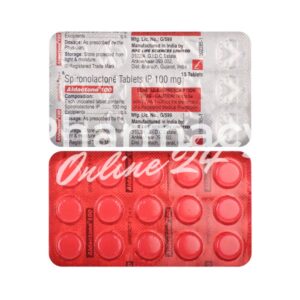
In brief
- In our pharmacy, you can buy spironolactone without a prescription, with delivery in 9–21 days throughout the United Kingdom. Discreet and anonymous packaging is available.
- Spironolactone is a potassium‑sparing diuretic and aldosterone (mineralocorticoid) receptor antagonist used to treat oedema (heart failure, cirrhosis, nephrotic syndrome), hypertension, primary aldosteronism, certain cases of hypokalaemia and, off‑label, acne and hirsutism; it works by blocking aldosterone’s effects to reduce sodium retention and conserve potassium.
- Usual doses vary by indication: oedema 25–200 mg/day (typical 100 mg/day), hypertension 25–100 mg/day, primary aldosteronism 100–400 mg/day, hirsutism/acne 50–200 mg/day; paediatric dosing is approximately 1–3 mg/kg/day (specialist guidance required).
- Form of administration is oral: tablets commonly 25 mg, 50 mg and 100 mg; oral suspensions are less common and sometimes compounded; combination tablets with hydrochlorothiazide are also available.
- Onset time: diuretic effects usually begin within 24–48 hours, with more noticeable fluid reduction over several days; anti‑androgenic effects for acne/hirsutism may take 3–6 months.
- Duration of action: effects are generally sustained for 24–72 hours due to active metabolites, allowing once‑daily or divided dosing depending on clinical need.
- Alcohol warning: avoid excessive alcohol — it can worsen dizziness, hypotension and dehydration when taking spironolactone; exercise caution with alcohol consumption.
- The most common side effect is gastrointestinal upset (nausea); other frequent or important adverse effects include hyperkalaemia, menstrual irregularities, gynaecomastia in men, dizziness and electrolyte disturbances.
- Would you like to try spironolactone without a prescription?
Basic spironolactone information
- INN (international nonproprietary name): Spironolactone.
- Brand names available in the United Kingdom: Aldactone; Aldactide (spironolactone with hydroflumethiazide); generic spironolactone.
- ATC code: C03DA01 — potassium‑sparing agent, aldosterone antagonist.
- Forms and dosages: tablets (25 mg, 50 mg, 100 mg); oral suspension (less common, sometimes compounded by pharmacies); combination tablets with hydroflumethiazide.
- Manufacturers in the United Kingdom: Pfizer (Aldactone) and generic manufacturers.
- Registration status in the United Kingdom: authorised by the MHRA; prescription-only medicine (POM).
- OTC / Rx classification: Prescription-only medicine (POM).
Legal status and availability in the UK
Spironolactone is a prescription-only medicine (POM) in the UK.
In our online pharmacy, spironolactone is available without a prescription, with discreet delivery to the United Kingdom in 9–21 days.
Forms and strengths
Spironolactone tablets are available in 25 mg, 50 mg and 100 mg strengths. Combination tablets with hydroflumethiazide and compounded oral suspensions (less common) are also used.
Licensed indications versus off‑label use
Indications and typical adult doses
| Indication | Typical adult dose | Monitoring note |
|---|---|---|
| Oedema (heart failure, cirrhosis, nephrotic syndrome) | 25–100 mg/day (typical 100 mg/day range 25–200 mg/day) | Monitor weight, fluid status and electrolytes. |
| Hypertension (adjunct) | 25–100 mg/day | Check blood pressure and potassium regularly. |
| Primary aldosteronism | 100–400 mg/day (specialist management) | Specialist only; close cardiac and renal monitoring. |
| Heart failure (adjunctive) | 12.5–50 mg/day | Start low; monitor renal function and potassium. |
| Hirsutism/acne (off‑label) | 50–200 mg/day (specialist oversight recommended) | Expect 3–6 months for benefit; monitor electrolytes. |
Paediatric use is specialist only with typical ranges around 1–3 mg/kg/day divided, and elderly patients require lower starting doses and closer monitoring.
Contraindications, cautions and patient suitability
Who should not take spironolactone
Which patients must not take spironolactone?
- Acute renal insufficiency
- Risk: accumulation and life‑threatening hyperkalaemia; do not start.
- Anuria
- Rationale: lack of urine output prevents safe diuresis and potassium handling.
- Addison’s disease
- Rationale: baseline aldosterone deficiency — spironolactone would worsen electrolyte balance.
- Known hypersensitivity
- Rationale: avoid allergic reactions to active drug or excipients.
- Baseline hyperkalaemia
- Rationale: spironolactone is potassium‑sparing and will raise potassium further.
Relative cautions include renal impairment (avoid if CrCl <30 mL/min without specialist advice), significant hepatic dysfunction, pregnancy and lactation, elderly frailty and diabetes with nephropathy.
Warning: stop and seek review if potassium is elevated at baseline or renal function is rapidly worsening.
Mechanism of action and pharmacology
How spironolactone works in plain English
What does spironolactone do inside the body?
Spironolactone blocks aldosterone receptors in the kidney’s distal tubule, reducing sodium and water retention while conserving potassium.
It is classified under ATC code C03DA01 as a potassium‑sparing, aldosterone antagonist.
Active metabolites such as canrenone contribute to the overall effect and give spironolactone a longer effective half‑life than the parent compound alone.
For acne and hirsutism the drug has anti‑androgenic effects via androgen receptor antagonism and reduced androgen production.
- Aldosterone: a hormone that increases sodium retention and potassium loss.
- Potassium‑sparing: reduces potassium loss, which can cause hyperkalaemia.
- Active metabolite: canrenone extends action and affects steady‑state timings.
Dosing, titration and special population guidance
Titration plans
How should dosing be started and adjusted in practice?
| Indication | Starting dose | Titration and monitoring |
|---|---|---|
| Hypertension | 25 mg once daily | Review BP and potassium at 1–2 weeks; increase to 50–100 mg as needed. |
| Heart failure (adjunct) | 12.5–25 mg once daily | Target 12.5–50 mg/day; monitor renal function and potassium frequently. |
| Oedema | 25–100 mg/day | Adjust per fluid response; check weights and electrolytes. |
| Paediatrics | 1–3 mg/kg/day divided | Specialist only; close monitoring of electrolytes and growth. |
| Elderly | Start low (e.g. 12.5–25 mg) | Monitor electrolytes and renal function more frequently. |
When lower doses are needed, advise safe tablet splitting where manufacturers allow; compounded suspensions are an option for paediatric dosing when supplied by a registered pharmacy.
Renal impairment guidance: avoid if CrCl <30 mL/min unless managed by a specialist and monitor potassium very closely if used.
Monitoring requirements and red‑flag alerts
Laboratory and clinical monitoring
What tests and checks are needed and when?
- Baseline: serum potassium and renal function (eGFR/CrCl) before starting.
- Early follow‑up: repeat blood tests within 3–7 days of initiation or after dose change.
- Ongoing: periodic monitoring frequency depends on comorbidity and interacting drugs (ACE inhibitors, ARBs, NSAIDs).
Clinical signs to watch for include palpitations, muscle weakness or sudden dizziness which may indicate hyperkalaemia or hypotension.
Interacting drugs that raise hyperkalaemia risk include ACE inhibitors, ARBs, potassium supplements, trimethoprim, NSAIDs and heparin.
For patients with cirrhosis or heart failure also monitor daily weights, fluid status and peripheral oedema as part of clinical review.
Urgent action: if hyperkalaemia is suspected, stop spironolactone and follow local hyperkalaemia protocols; arrange urgent blood tests and assessment.
Adverse effects, frequency and management strategies
Common and clinically significant adverse events
What side effects should patients expect and how are they managed?
| Adverse effect | Frequency | Management |
|---|---|---|
| Gastrointestinal upset (nausea, diarrhoea) | Common | Take with food; if persistent, review with prescriber. |
| Drowsiness, headache, muscle cramps | Common | Monitor symptoms; adjust dose if necessary. |
| Hyperkalaemia | Clinically significant | Stop drug; implement potassium‑lowering measures per local protocol; urgent review. |
| Menstrual irregularities | Moderate | Discuss with prescriber; consider alternatives if troublesome. |
| Gynaecomastia, impotence (males) | Less common | Consider switching to eplerenone where appropriate. |
For cosmetic indications such as acne, advise patients the earliest meaningful improvement is usually after three months and to stop treatment and seek review for intolerable side effects.
- When to seek care: severe dizziness, fainting, palpitations, muscle weakness or breathing difficulty warrant immediate medical attention.
Drug interactions
High‑risk combinations
Which medicines raise the risk when combined with spironolactone?
- ACE inhibitors and ARBs — increased risk of hyperkalaemia and reduced renal perfusion.
- Potassium supplements and high‑potassium salt substitutes — avoid concurrent use.
- Trimethoprim, NSAIDs and heparin — increase potassium or impair renal function.
- Lithium — potential for altered lithium levels; monitor closely.
- Other potassium‑sparing diuretics (amiloride, triamterene) — combination usually contraindicated.
Alternatives and switching
When to use eplerenone or other potassium‑sparing agents
What are reasonable alternatives and when might a switch be appropriate?
| Drug | Class | Pros / cons |
|---|---|---|
| Eplerenone | Aldosterone antagonist | Fewer hormonal effects than spironolactone. |
| Amiloride | Potassium‑sparing diuretic | Less anti‑androgenic; useful when potassium conservation is desired. |
| Triamterene | Potassium‑sparing diuretic | Alternative to spironolactone for potassium conservation; sometimes used in combos. |
| Thiazide diuretics | Thiazide | Used for hypertension/oedema but not potassium‑sparing; often combined in practice. |
Switching advice: review current dose, allow washout if clinically indicated, and recheck electrolytes within 3–7 days after the switch.
Counselling points, storage and patient leaflets
Practical advice for safe use and adherence
What should patients know when they start spironolactone?
Take spironolactone consistently at the same time each day and, if advised, with food to reduce stomach upset.
Avoid potassium supplements and salt substitutes containing potassium.
Report any muscle weakness, palpitations, severe dizziness or fainting immediately.
If a dose is missed, take it as soon as remembered unless it is near the next dose; do not double up.
Overdose signs include severe hyperkalaemia, drowsiness and confusion — seek emergency help.
Store at 20–25°C, protect from moisture and light and avoid freezing.
Women of childbearing potential should discuss contraception and pregnancy planning with their prescriber before starting spironolactone.
Delivery across the United Kingdom
| City | Region | Delivery Time |
|---|---|---|
| London | Greater London | 9–21 days |
| Birmingham | West Midlands | 9–21 days |
| Manchester | Greater Manchester | 9–21 days |
| Glasgow | Scotland | 9–21 days |
| Edinburgh | Scotland | 9–21 days |
| Leeds | West Yorkshire | 9–21 days |
| Liverpool | Merseyside | 9–21 days |
| Bristol | South West England | 9–21 days |
| Sheffield | South Yorkshire | 9–21 days |
| Newcastle Upon Tyne | North East England | 9–21 days |
| Cardiff | Wales | 9–21 days |
| Belfast | Northern Ireland | 9–21 days |
| Nottingham | Nottinghamshire | 9–21 days |
| Leicester | Leicestershire | 9–21 days |
Final notes
Quick reference
When switching between spironolactone and alternatives such as eplerenone, arrange blood tests within 3–7 days of the change and advise close monitoring for hyperkalaemia.
For acne or hirsutism, remind patients that meaningful improvement commonly takes three to six months and specialist oversight is recommended for doses above 50 mg/day.
If in doubt about interactions or suitability, speak to your prescriber or pharmacist.