Levothyroxine
In stock
25mcg · 100mcg · 50mcg · 200mcg · 75mcg · 125mcg
from 44,22 £
In brief
- Levothyroxine is a synthetic form of the thyroid hormone thyroxine, taken to replace what an underactive thyroid cannot make.
- Six tablet strengths run from 25 to 200 mcg, and each pack holds between 100 and 400 tablets.
- Levothyroxine is prescription-only in the UK, and your doctor chooses the dose after blood tests.
Levothyroxine: standing in for what a sluggish thyroid lacks
Levothyroxine sodium is a manufactured version of T4, the hormone the thyroid gland normally secretes into the bloodstream. When the gland is underactive, the body slows down: tiredness, feeling cold, weight gain, constipation and low mood are the typical signs. The UK SmPC lists replacement in hypothyroidism first, followed by uses in goitre, suppression of thyroid-stimulating hormone after treatment of thyroid cancer, and as an addition to antithyroid medicines in hyperthyroidism once it is under control. Most people who start it for an underactive thyroid need it for life.
Six strengths, large packs
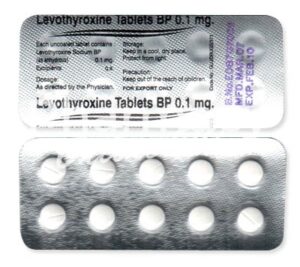
The tablets are listed in 25, 50, 75, 100, 125 and 200 mcg. The 25, 50, 100 and 200 mcg strengths come in packs of 100, 200, 300 or 400, while 75 and 125 mcg come in 100 or 200. Such a range lets a prescriber move the dose in small steps. Several companies hold UK licences for these tablets and an oral solution exists, so the shape and colour of tablets differ between makers. Imported packs may be labelled for another market; confirm the strength on the foil each time.
How the SmPC describes dosing
For adults under 50 with no heart disease, treatment commonly begins at 50 to 100 mcg daily, and the dose is raised by 50 mcg every three to four weeks until the usual maintenance dose of 100 to 200 mcg a day is reached. Over 50, or when there is heart disease, the start is lower: 50 mcg or less, and for people with cardiac problems 25 mcg daily or 50 mcg on alternate days, with a 25 mcg increase each month. Take the whole daily amount of levothyroxine as one dose, in the morning, ideally on an empty stomach and about half an hour before breakfast. Blood tests guide every adjustment, so do not change the amount yourself.
Medicines and foods that interfere
Absorption falls if levothyroxine is swallowed together with calcium, iron, antacids or sucralfate, and colestyramine should be separated from it by four to five hours. Rifampicin, barbiturates, carbamazepine, phenytoin and St John’s wort speed up its breakdown. A woman who starts oestrogen therapy may find her requirement goes up. Levothyroxine in turn strengthens warfarin, so clotting tests may need to be repeated, and it may alter what is needed of diabetes drugs. Proton pump inhibitors, orlistat, imatinib, amiodarone and sertraline can also affect the level. Tell the prescriber about everything you take, including supplements.
Who needs extra care
The SmPC excludes people with untreated adrenal insufficiency, pituitary insufficiency or thyrotoxicosis, and anyone with a recent heart attack or acute myocarditis. Older patients and those with angina, hypertension or arrhythmia are started cautiously, since too much hormone can strain the heart. For hypothyroidism, dosing usually aims to keep TSH within the reference range; thyroid cancer treatment may require deliberate TSH suppression. In pregnancy the requirement often rises, which makes early contact with the doctor sensible.
Side effects and routine monitoring
At the correct dose levothyroxine causes few side effects. An excess produces the symptoms of an overactive thyroid: palpitations, tremor, sweating, diarrhoea, headaches, anxiety, trouble sleeping and weight loss. Chest pain or a racing, uneven heartbeat needs prompt medical advice. A forgotten tablet can be taken once you notice, unless the next one is close, in which case skip it rather than doubling. Generic levothyroxine is suitable for most patients; tell your prescriber if symptoms develop after switching products, and have thyroid blood tests as advised.