Ddavp
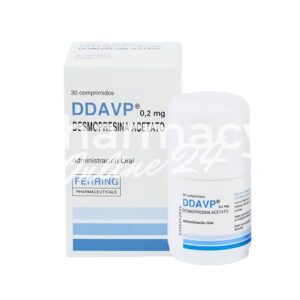
In brief
- In our pharmacy, you can buy Ddavp without a prescription, with delivery across the United Kingdom in 9–21 days and discreet, anonymous packaging.
- Ddavp (desmopressin) is used to treat central diabetes insipidus, nocturnal enuresis (bedwetting) and certain bleeding disorders (e.g., mild haemophilia A, von Willebrand disease); it is a synthetic vasopressin analogue that acts on renal V2 receptors to increase water reabsorption and on endothelial cells to release clotting factor stores.
- Usual doses vary by indication and formulation: for nocturnal enuresis oral tablets 0.1–0.4 mg at night (often 0.2 mg); for diabetes insipidus oral 0.1–0.4 mg two to three times daily; intranasal doses are typically 10–40 µg daily in one or two doses, depending on response; doses must be individualised and started low with careful monitoring.
- Available forms include oral tablets, oral melt/sublingual tablets, intranasal spray, and parenteral injection (IV/SC) for hospital use.
- Onset of effect is generally within 30–60 minutes for oral formulations (nasal spray may act faster, from about 15–30 minutes).
- Duration of action depends on formulation but is commonly around 8–12 hours for oral preparations (some formulations and routes may produce effects lasting up to 24 hours in individual patients).
- Do not consume alcohol excessively while taking Ddavp; alcohol can interfere with fluid balance and increases the risk of water intoxication and hyponatraemia.
- The most common side effect is headache; other important adverse effects include hyponatraemia (which can be serious), nausea, nasal irritation with sprays and fluid retention.
- Would you like to try Ddavp without a prescription?
Legal status and availability in the UK
Ddavp is a prescription-only medicine (POM) in the UK.
In our online pharmacy, Ddavp is available without a prescription, with discreet delivery to the United Kingdom in 9–21 days.
Basic Ddavp information
- INN (international nonproprietary name): Desmopressin (as desmopressin acetate)
- Brand names available in the United Kingdom: Ddavp; Desmotabs; DesmoMelt; generic desmopressin
- ATC code: H01BA02
- Forms and dosages: Tablets; oral lyophilisates (melts); nasal spray; solution for injection
- Manufacturers in the United Kingdom: Ferring Pharmaceuticals and generic manufacturers
- Registration status in the United Kingdom: Licensed by the MHRA
- OTC / Rx classification: Prescription-only medicine (POM)
What is DDAVP (desmopressin) — mechanism and definition
INN, pharmacology and action
What exactly is desmopressin and how does it work?
Desmopressin (INN: desmopressin acetate) is a synthetic analogue of vasopressin with preferential V2 receptor activity at the kidney.
The V2 receptor selectivity increases renal water reabsorption and concentrates urine, which reduces urine volume.
This antidiuretic mechanism is the basis for use in central diabetes insipidus and short-term control of nocturnal enuresis.
When used for haemostasis in mild haemophilia A and some von Willebrand disorders, desmopressin causes release of von Willebrand factor and factor VIII from endothelial stores.
How that translates to patients
How do these actions change daily life for patients?
Clinically, reduced nocturia means fewer night-time awakenings and better sleep quality for patients and carers.
Improved haemostasis after desmopressin doses can reduce bleeding during minor procedures in selected patients.
- INN: desmopressin acetate.
- Class: vasopressin analogue.
- Receptor target: V2 renal receptor primarily.
- Onset/duration by formulation: Onset and duration differ between intranasal, sublingual and parenteral forms and must be checked per product.
Licensed indications and common off‑label uses
Licensed (UK/MHRA) indications
When is desmopressin approved for use in routine practice?
DDAVP is licensed for central diabetes insipidus, selected cases of nocturnal enuresis and for short-term prevention or treatment of bleeding in mild haemophilia A and certain von Willebrand disorders.
Some product licences include perioperative haemostasis under specialist supervision.
Off‑label and special‑case uses
Where might clinicians use desmopressin outside the licence?
Off‑label uses include specific paediatric nocturia patterns, adjunctive diagnostic testing and symptomatic adult nocturia when other causes are excluded.
| Indication | Typical formulation | Prescriber |
|---|---|---|
| Central diabetes insipidus | Sublingual melt or intranasal | Secondary care / endocrinology |
| Nocturnal enuresis | Oral lyophilisate or nasal spray | Primary or secondary care depending on age |
| Perioperative haemostasis | IV/SC injection | Hospital specialist teams |
Formulations, strengths and packaging
Main formulations
Which formulations are available?
Common formulations include intranasal sprays with microgram dosing per spray, sublingual melts or oral lyophilisates in microgram strengths and injectable IV/SC preparations for hospital use.
Brand availability and pack sizes vary between suppliers and may be hospital-only for some parenteral products.
Packaging and presentation
How is desmopressin usually supplied?
Expect small spray bottles for intranasal products and blister packs for sublingual melts.
Injectable vials are typically supplied to hospitals and are not for routine community dispensing.
| Formulation | Common strengths | Onset | Duration | Typical pack sizes | Route of supply |
|---|---|---|---|---|---|
| Intranasal spray | Microgram per spray | Rapid | Variable | Small spray bottles | Community / Hospital |
| Sublingual melt (oral lyophilisate) | Microgram strengths | Rapid | Several hours | Blister packs | Community / Hospital |
| Injection (IV/SC) | Higher haemostatic doses | Immediate | Short | Vials and ampoules | Hospital only |
Exact desmopressin strengths and pack sizes should be confirmed from the MHRA product information.
Dosing guidelines and practical administration
Typical dosing by indication
What doses will clinicians prescribe?
Dosing is indication- and formulation-specific and must be individualised and titrated to response and serum sodium.
In central diabetes insipidus, doses are titrated to control urine output and maintain normal serum sodium.
Nocturnal enuresis commonly uses low-dose bedtime regimens with the oral or sublingual formulation.
Haemostatic doses for bleeding events are higher and typically administered IV or SC in hospital under specialist protocols.
Practical counselling
What should patients be told at each supply?
- Do: Take the bedtime dose at the scheduled time and follow fluid restriction instructions as advised.
- Do: Show and check intranasal technique if using spray to ensure consistent delivery.
- Do: Place sublingual melts correctly under the tongue and avoid eating or drinking until dissolved.
- Don’t: Take extra doses if symptoms persist; contact the prescriber instead.
- Titration steps: Start low and adjust in small steps with serum sodium checks as required.
- Monitoring triggers: Recheck sodium after initiation, dose change or with intercurrent illness.
Contraindications, cautions and risk stratification
Absolute contraindications
Who must not take desmopressin?
Desmopressin is contraindicated in patients with known hyponatraemia and in those with hypersensitivity to desmopressin or formulation excipients.
Severe cardiac disease where fluid retention would be dangerous is also an absolute contraindication for use without specialist oversight.
Risk modifiers requiring close monitoring
Which patients need extra vigilance?
Elderly patients and those on diuretics, SSRIs or with low body weight have higher risk of hyponatraemia and may need closer sodium monitoring.
Intercurrent illness such as vomiting or diarrhoea, recent surgery or reduced oral intake should prompt re-assessment before continuing desmopressin.
Side effects, adverse events and monitoring strategy
Common and significant adverse effects
What are the side effects patients should know about?
The most frequent and clinically important adverse event is hyponatraemia due to inappropriate water retention.
Symptoms of hyponatraemia include nausea, headache, confusion and in severe cases seizures and coma.
Other more common, less severe effects include nasal irritation with sprays and headache or abdominal discomfort with oral forms.
Monitoring and laboratory checks
How should clinicians monitor safety after starting desmopressin?
Obtain baseline serum sodium before initiation in adults and children where appropriate.
Recheck sodium within 2–7 days after starting or changing dose, and sooner if patients feel unwell.
Provide patients with clear red-flag symptoms and a written monitoring checklist at initiation.
- Baseline: Serum sodium before first dose.
- Follow-up: serum sodium at 48–72 hours and again at 1 week for many patients.
- Red flags: New vomiting, severe headache, confusion, seizure activity—stop drug and seek urgent care.
Drug interactions and safeguards
Key interactions to flag
Which medicines increase the risk of hyponatraemia when combined with desmopressin?
Concomitant use of SSRIs, SNRIs, carbamazepine, oxcarbazepine and certain NSAIDs can increase antidiuretic effects or impair sodium handling and raise hyponatraemia risk.
Diuretics and some antihypertensives may complicate fluid and sodium balance and require careful review before initiation.
Pharmacy checks and communication
What should pharmacists do at each supply to reduce harm?
Reconcile current medicines and ask specifically about SSRIs, diuretics and recent changes in therapy.
Counsel patients on symptom recognition and advise serum sodium monitoring when interacting drugs are started or stopped.
Liaise promptly with prescribers if interacting drugs are identified to plan monitoring or a dose change.
| Interacting drug class | Mechanism of interaction | Recommended action |
|---|---|---|
| SSRIs / SNRIs | Increase risk of hyponatraemia | Recommend baseline sodium and early recheck; counsel on symptoms |
| Carbamazepine / Oxcarbazepine | Enhances antidiuretic effect | Close monitoring; consider alternative where possible |
| NSAIDs | Increase renal sensitivity to ADH | Avoid regular NSAID use during initiation; monitor sodium |
Storage and stability
Storage requirements
How should desmopressin be stored?
Most formulations require protection from moisture and extremes of temperature and should be stored in their original packaging until use.
Avoid freezing and prolonged exposure to heat for both nasal sprays and sublingual melts.
Missed dose, overdose and emergency management
Practical advice for missed doses
What should patients do if they miss a bedtime dose for enuresis?
If a sleep-time dose for enuresis is missed, skip it and resume the next scheduled dose.
Do not double up doses to make up for a missed administration.
For central diabetes insipidus, patients should follow an individualised plan from their specialist and contact the clinician if multiple doses are missed.
Overdose and acute management
What are the emergency steps for suspected desmopressin overdose?
Overdose centres on water intoxication and severe hyponatraemia with symptoms such as headache, nausea, confusion and seizures.
Immediate actions include stopping desmopressin, restricting free water intake and obtaining urgent serum sodium.
Ambulance transfer to emergency care is required for seizures, severe confusion or persistent vomiting.
Emergency department priorities include rapid assessment of sodium and fluid status and intravenous hypertonic saline in life‑threatening hyponatraemia under critical care guidance.
- Immediate patient actions: Stop medication; limit fluid intake; seek urgent review.
- Ambulance criteria: New seizures, severe reduced consciousness or progressive neurological signs.
- ED priorities: Serum sodium, fluid balance, consider hypertonic saline for severe hyponatraemia.
Alternatives and combination therapy
Alternative strategies
What can be tried before or alongside desmopressin for bedwetting?
Behavioural interventions such as bladder training, bed alarms and fluid management remain first-line approaches for many patients with nocturnal enuresis.
Adjunctive pharmacotherapies such as anticholinergics can be considered when bladder overactivity is present and under specialist advice.
For bleeding disorders, factor concentrates and other haemostatic agents are alternatives depending on severity.
Other options
How does desmopressin sit among other options?
Desmopressin can be used alongside non-pharmacological interventions and specialist haemostatic products, and is often part of combined strategies for short-term haemostasis.
| Indication | Alternatives | Pros / cons |
|---|---|---|
| Nocturnal enuresis | Bed alarms; fluid management; anticholinergics | Non-drug options avoid hyponatraemia risk but need adherence; drugs may offer faster benefit |
| Mild haemophilia A | Factor concentrates; antifibrinolytics | Factor concentrates treat severe bleeds; desmopressin useful for minor procedures in selected patients |
Counselling points and patient resources
Core counselling points
What are the essentials to tell each patient at supply?
- Explain correct administration for the chosen formulation.
- Stress the importance of fluid restriction during the dosing window.
- Describe early signs of hyponatraemia and when to seek immediate help.
- Advise baseline sodium checks and repeat monitoring after initiation or dose change.
- Provide written information and safety cards where available.
Useful guidelines and further reading
Where can clinicians and patients read more?
Refer patients to national clinical guidance and MHRA product information for licensed indications and safety details.
Local specialist services, bladder charities and bleeding disorder patient groups provide practical support and peer advice.
Delivery across the United Kingdom
| City | Region | Delivery Time |
|---|---|---|
| London | Greater London | 9–21 days |
| Birmingham | West Midlands | 9–21 days |
| Manchester | Greater Manchester | 9–21 days |
| Glasgow | Scotland | 9–21 days |
| Edinburgh | Scotland | 9–21 days |
| Bristol | South West | 9–21 days |
| Leeds | West Yorkshire | 9–21 days |
| Newcastle | North East | 9–21 days |
| Nottingham | East Midlands | 9–21 days |
| Cardiff | Wales | 9–21 days |
| Belfast | Northern Ireland | 9–21 days |
| Brighton | South East | 9–21 days |
| Norwich | East Anglia | 9–21 days |
| Exeter | South West | 9–21 days |
Quick FAQs
Can desmopressin cause serious problems?
Yes, the principal risk is hyponatraemia which can be life‑threatening.
Patients must be counselled on fluid restriction and early warning signs prior to starting therapy.
When should a pharmacist refer back to the prescriber?
Refer for suspected hyponatraemia, new interacting medicines such as SSRIs or carbamazepine, unclear dosing or supply interruptions.
Who is responsible for monitoring?
Monitoring responsibility is shared between prescribers and community services depending on local pathways, but pharmacists play a vital role in safety checks and patient education.
Key takeaway for patients
Desmopressin can make a large practical difference for people with central diabetes insipidus or children with problematic bedwetting when used safely.
Careful dosing, strict fluid management and early sodium monitoring are essential to reduce risk.