Disulfiram
In brief
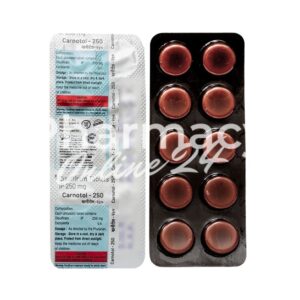
- Disulfiram at Pharmacy Online 24 is listed as 250mg tablets (packs from 30 to 360) and 500mg tablets (30 to 180), with UK delivery in 9–21 days.
- It blocks the enzyme that clears acetaldehyde, a by-product of alcohol, so drinking while on treatment causes flushing, nausea, a thumping pulse and headache; knowing this is coming gives many people a firm reason to abstain, ideally with counselling.
- In the UK the licensed tablet is 200 mg, which means the 250mg and 500mg options listed here fall outside UK strengths; your doctor chooses the dose and may lower it once you are settled in recovery.
- Hidden alcohol turns up in cough syrups, mouthwash, sauces, cosmetics and toiletries, and the sensitivity can last roughly 14 days after the final dose.
- People with severe heart disease or a psychotic illness should not take it, and jaundice, marked tiredness or pins and needles in the limbs should be reported promptly. Supply is as a prescription-only medicine (POM).
Basic disulfiram information
- INN (international nonproprietary name): Disulfiram (also known as N,N,N’,N’-tetraethylthiuram disulfide)
- Brand names available in the United Kingdom: Antabuse
- ATC code: N07BB01
- Forms and dosages: tablets 200 mg (Antabuse)
- Manufacturers in the United Kingdom: Accord Healthcare, Teva, Mylan and other generic manufacturers
- Registration status in the United Kingdom: Prescription-only medicine (POM)
- OTC / Rx classification: Prescription-only medicine (POM); no over-the-counter sales
Disulfiram at a glance
Disulfiram is best known as an alcohol deterrent medication for chronic alcohol dependence.
In the UK, it is a prescription-only medicine (POM) and is supplied on an NHS or private prescription.
The usual UK strength is 200 mg tablets (Antabuse).
For patients, the practical question is simple: can this medicine help keep alcohol out of the picture while relapse support is in place?
Used properly, it can be part of prescription treatment, pharmacy advice and abstinence support that fits real life.
How disulfiram works: the alcohol reaction explained
- What it does
- Disulfiram blocks the normal breakdown of alcohol, so alcohol stays in the body in a form that causes an unpleasant reaction.
- What people may feel
- Flushing, nausea, vomiting, palpitations and headache can occur if alcohol is consumed.
- Why regular use matters
- It works best when taken consistently as part of supervised treatment and relapse prevention.
- Why alcohol must be avoided widely
- Alcohol can also be hidden in mouthwash, some medicines, sauces and tinctures.
Think of it as an alcohol intolerance trigger rather than a cure.
The disulfiram ethanol reaction is the deterrent, so the medicine only makes sense when abstinence is the goal.
That is why clinicians use it in chronic alcohol use disorder management, not as a stand-alone shortcut.
Brand names, strengths and packaging
| Brand | Usual strength |
|---|---|
| Antabuse | 200 mg tablets |
| Disulfiram (generic) | 200 mg tablets |
Packaging differs by manufacturer, so box sizes are not fixed. The main point is the tablet strength rather than the label on the box.
Legal status and availability in the UK
Disulfiram is a prescription-only medicine (POM) in the UK; there are no over-the-counter sales. Supply is only when a qualified prescriber is satisfied that it is appropriate.
On the NHS, it is usually part of addiction support rather than a quick standalone issue.
In our online pharmacy, disulfiram is available without a prescription, with discreet delivery to the United Kingdom in 9–21 days.
Who disulfiram is for: indications, suitability and patient selection
- Main indication
- Chronic alcohol use disorder, also called alcohol dependence.
- Best fit
- People committed to abstinence who can follow a structured programme and attend supervision.
- How it is used
- As part of a medically supervised plan, not as a cure by itself.
- Good real-world scenarios
- Recent detox, high relapse risk, and a strong support network around the patient.
Patients who ask for alcohol dependence treatment often want something that makes drinking less tempting in the moment.
That is exactly where supervised disulfiram therapy can help, especially when motivation is strong and follow-up is reliable.
A pharmacist would usually look for the bigger picture too: recent alcohol use, liver history, and whether the patient has a safe abstinence programme in place.
Dosage guide: starting dose and maintenance dose
| Phase | Typical dose | How it is used |
|---|---|---|
| Initial dose | 800 mg as a single dose on day 1, reduced over 5 days | Start of treatment under clinical supervision |
| Maintenance dose | 100 to 200 mg once daily | Adjusted by the clinician |
| Duration | Often months | Continuous treatment as part of a supervised programme |
The dose is not fixed for everyone.
Clinicians adjust the dosage regimen for effect and tolerability, and many patients remain on a daily tablet for months.
Timing matters, so the same time each day is usually the simplest way to keep a maintenance therapy routine on track.
If adherence is a problem, supervised dosing can make a real difference.
Adjusting treatment safely: age, liver function, kidney function and monitoring
| Group | Advice | Monitoring point |
|---|---|---|
| Children and adolescents | Not recommended | Safety and efficacy are not established |
| Elderly patients | Use with caution | Lower initial doses may suit some patients |
| Mild to moderate liver dysfunction | May need dose reduction | Liver enzyme monitoring |
| Severe hepatic disease | Contraindicated | Avoid treatment |
| Renal impairment | Use with caution | Adjust according to clinical response |
These checks are not box-ticking.
They are what keeps treatment practical and safer, especially for older patients or anyone with known liver enzyme monitoring needs.
Contraindications and interaction risks: when disulfiram must not be used
- Absolute contraindications
- Known hypersensitivity to disulfiram or thiuram derivatives, severe hepatic or renal impairment, alcohol ingestion within the past 24 hours, psychosis, and severe cardiovascular disease.
- Relative contraindications
- Pregnancy, breastfeeding, mild to moderate liver dysfunction, cardiovascular disease history, epilepsy or seizure disorders, and diabetes mellitus.
- Interaction risk
- Alcohol-containing products and some medicines can trigger the same reaction, so full medication disclosure is essential.
Warning: Tell the pharmacist about every prescribed medicine, over-the-counter product, supplement and alcohol-free looking product that may still contain alcohol.
That includes mouthwash, cough mixtures and tinctures.
Drug interactions are a big reason pharmacist advice matters before supply.
Side effects patients most commonly report
- Metallic or garlic-like aftertaste.
- Skin rash or acneiform eruptions.
- Sleepiness and mild headache.
- Nausea, vomiting or other gastrointestinal upset.
- Fatigue.
- Mild transaminase elevations.
Most of these effects are manageable, but they still deserve attention if they do not settle.
Gastrointestinal upset and fatigue are the ones patients mention most often in practice, especially early on.
Any worsening symptoms, particularly if liver tests are abnormal, should be reviewed by a clinician.
Serious risks and when urgent medical help is needed
Seek urgent medical attention if any of the following happen.
Severe disulfiram-ethanol reaction can cause chest pain, severe vomiting, confusion or collapse.
Possible overdose may lead to hepatotoxicity and neurological symptoms.
Liver injury warning signs include jaundice, dark urine and upper abdominal pain.
Mental health changes, severe palpitations or other cardiovascular symptoms also need immediate review.
This is the reason disulfiram should never be treated like an ordinary everyday tablet.
Missed doses, overdose and what to do next
- If a dose is missed, take it as soon as remembered unless it is close to the next dose.
- If the next dose is nearly due, skip the missed tablet and continue the normal schedule.
- Do not take a double dose.
- If too much has been taken, seek immediate medical attention.
- Do not restart treatment after alcohol intake without professional advice.
These are simple rules, but they prevent common medicine safety mistakes.
People sometimes assume a missed daily tablet can just be caught up later, yet double dosing is not the answer here.
Storage and shelf life
- Store at 15-30°C.
- Keep the medicine protected from moisture and light.
- Leave tablets in the original blister pack or bottle until use.
- Keep out of sight and reach of children.
- Check the expiry date before taking.
Disulfiram versus naltrexone, acamprosate and other alcohol dependence medicines
| Medicine | How it works | Typical use case |
|---|---|---|
| Disulfiram | Creates an alcohol deterrent reaction | Best when abstinence commitment is strong |
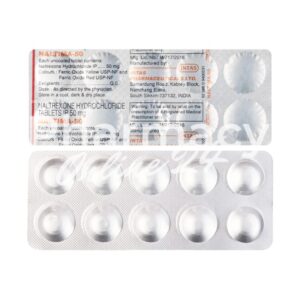
| Naltrexone | Opioid antagonist | Used to reduce craving and drinking reward |
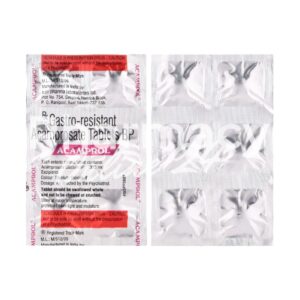
| Acamprosate | Modulates glutamatergic neurotransmission | Used to support abstinence after stopping alcohol |
| Baclofen | GABA-B agonist | Off-label in some settings |
| Topiramate | Various neurotransmitter effects | Off-label use |
Choice depends on the person, not just the medicine.
Disulfiram may be preferred when a deterrent effect is needed and the patient wants a clear boundary around drinking.
Other alcohol dependence medicines may suit patients with different goals, side effect concerns or medical histories, so the decision should always be made with a clinician or pharmacist.
Delivery across the United Kingdom
| City | Region | Delivery time |
|---|---|---|
| London | England | 9–21 days |
| Birmingham | England | 9–21 days |
| Manchester | England | 9–21 days |
| Leeds | England | 9–21 days |
| Liverpool | England | 9–21 days |
| Newcastle upon Tyne | England | 9–21 days |
| Sheffield | England | 9–21 days |
| Bristol | England | 9–21 days |
| Edinburgh | Scotland | 9–21 days |
| Glasgow | Scotland | 9–21 days |
| Cardiff | Wales | 9–21 days |
| Belfast | Northern Ireland | 9–21 days |
| Aberdeen | Scotland | 9–21 days |
| Plymouth | England | 9–21 days |
| Norwich | England | 9–21 days |
Disulfiram is only one part of alcohol misuse care, but for the right patient it can be a practical deterrent that supports abstinence and supervised recovery.