Naltrexone
In brief
- Naltrexone is a prescription-only medicine (POM) in the UK.
- Naltrexone is used to help treat opioid dependence after detoxification and to support alcohol dependence treatment. It works as an opioid receptor antagonist, blocking opioid effects and reducing the rewarding effects of alcohol and opioids.
- The usual oral dose is 25 mg as a test dose, then 50 mg once daily; some regimens use 100 mg on Mondays, Wednesdays and Fridays or 150 mg on Fridays.
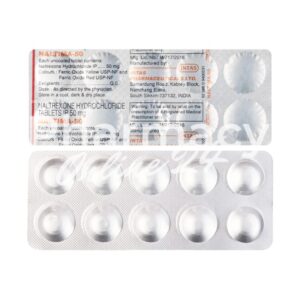
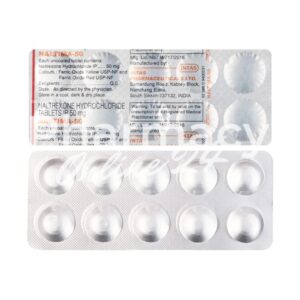
- The form of administration is a 50 mg tablet taken by mouth.
- When taken by mouth, naltrexone starts working within about 1–2 hours, although the full clinical benefit builds up over time with continued use.
- The duration of action is about 24 hours for oral doses.
- Avoid alcohol during treatment if you are taking naltrexone for alcohol dependence, as the medicine is meant to reduce drinking and may affect how you feel when drinking. Do not use it if you have acute hepatitis, liver failure, or any current opioid use/dependence.
- The most common side effects are nausea, headache, dizziness, abdominal pain, insomnia, anxiety, and increased liver enzymes.
- Would you like to try naltrexone without a prescription?
Basic naltrexone information
- INN (international nonproprietary name): Naltrexone
- Brand names available in the United Kingdom: Adepend; Naltrexone Accord
- ATC code: N07BB04
- Forms and dosages: film-coated tablets 50 mg
- Manufacturers in the United Kingdom: Accord Healthcare
- Registration status in the United Kingdom: Licensed by the MHRA; prescription-only medicine
- OTC / Rx classification: Prescription-only medicine (POM)
Naltrexone at a glance
In day-to-day pharmacy practice, naltrexone tablets are used for alcohol dependence support and for opioid dependence after detoxification.
The oral tablets are 50 mg; in the UK the product context includes Naltrexone Accord and Adepend.
For many people, the first worry is suitability, especially if opioids were used recently or if there is liver disease.
Tablets means oral naltrexone, 50 mg.
Rx only means it cannot be sold over the counter.
Opioid antagonist means a medicine that blocks opioid receptors rather than creating opioid effects.
Legal status and availability in the UK
Naltrexone is a prescription-only medicine (POM) in the UK.
In our online pharmacy, naltrexone is available without a prescription, with discreet delivery to the United Kingdom in 9–21 days.
Brand names and formulations in the UK
In the UK naltrexone is supplied as 50 mg film-coated tablets, for example Naltrexone Accord (Accord Healthcare) and Adepend.
Generic naltrexone may look different from brand to brand, but pack differences do not automatically mean a different medicine effect.
Who naltrexone is for: common use cases and patient profiles
Who tends to be offered naltrexone in real clinic life?
Most often, it is prescribed for people who want support with alcohol dependence or opioid dependence after detoxification.
It is also suitable for people who prefer a non-addictive option and want structured follow-up rather than a medicine that creates sedation or euphoria.
Many patients are already receiving counselling or psychosocial treatment, because naltrexone is usually one part of a wider plan.
The medicine is classified under ATC code N07BB04, which places it in the group used for alcohol dependence treatment.
Typical patient scenarios include the person trying to reduce relapse risk after a sober period, or the carer asking whether opioid effects can be blocked safely once detox is complete.
In adult practice, oral doses are commonly 50 mg/day.
- Alcohol dependence support alongside counselling.
- Opioid dependence after detox, when opioids are fully cleared.
- Patients who want supervised therapy with regular follow-up.
- People looking for a non-addictive treatment approach.
How naltrexone works and why pharmacists warn about opioids first
Why does a pharmacist ask so many questions about opioids before dispensing?
Because naltrexone is an opioid antagonist, not an opioid agonist.
It works by blocking opioid receptors, which means opioids cannot produce their usual effects while the medicine is active.
That blockade is helpful in relapse prevention, but it also means any opioid still in the body can trigger acute withdrawal if treatment starts too early.
This is why detox must come first and why a positive opioid urine test is an absolute stop before initiation.
For day-to-day use, many patients notice less reward from alcohol or opioids and no “high” effect.
Adherence matters, because a missed course can weaken the protective effect and make relapse prevention less reliable.
A simple way to picture it is this:
Naltrexone → blocks opioid receptors → less opioid effect → support for relapse prevention.
Opioids still present → blockade starts too soon → risk of acute withdrawal.
Available dosage forms, strengths and packaging details
What exactly comes in the pack?
In the UK naltrexone is supplied as 50 mg oral tablets.
Packaging matters because tablets should be protected from moisture; keeping the medicine in its original packaging also helps safe use.
| Formulation | Strength | Usage notes |
|---|---|---|
| Oral tablet | 50 mg | Usually taken daily or on a supervised schedule |
Dosage guidance for adults: what prescribers usually start with
How do prescribers usually begin treatment?
For alcohol dependence, the usual starting and maintenance dose is 50 mg daily, often alongside psychosocial support.
For opioid dependence, the usual approach is a 25 mg test dose first, then 50 mg daily if tolerated and if the patient is fully detoxed.
Some maintenance schedules use 100 mg on Monday, Wednesday and Friday, or 150 mg on Friday, depending on the clinical plan.
Treatment duration is commonly at least 3 to 6 months for alcohol dependence, and 12 weeks or more for detoxed opioid dependence, with longer use if needed.
In practice, the prescriber will balance craving control, follow-up attendance and whether counselling is being continued.
| Indication | Starting dose | Maintenance dose | Typical duration |
|---|---|---|---|
| Alcohol dependence | 50 mg/day | 50 mg/day | At least 3-6 months, prolonged if needed |
| Opioid dependence after detox | 25 mg test dose, then 50 mg/day | 50 mg/day | 12+ weeks per guidelines |
Dose adjustments and special populations
Are there groups who need extra caution?
Yes, especially when liver function, kidney function, pregnancy or age may change the way treatment is used.
Children under 18: naltrexone is not typically recommended, because safety and efficacy are not established.
Older adults: no routine dose adjustment is specified, but monitoring is sensible if there is organ impairment or frailty.
Hepatic impairment: use with caution and check liver function tests, because acute hepatitis or liver failure are contraindications.
Renal impairment: no standard adjustment is listed, but severe impairment needs closer monitoring.
Pregnancy and breastfeeding: use only if the benefits outweigh the risks, and only after a proper clinical review.
For anyone with liver disease, the phrase “monitor closely” really means a documented review rather than casual observation.
How to take naltrexone safely in real life
What does safe use look like once the medicine is started?
Oral naltrexone is taken daily in most cases, though supervised dosing three times per week is sometimes used.
Regular counselling and psychosocial support often sit alongside treatment, because medication alone is rarely enough.
If a dose is missed, the usual advice is simple: take it as soon as remembered unless the next dose is due soon, and never double up.
Overdose does not have a specific antidote and is treated supportively, so urgent medical review is needed if severe symptoms appear.
- Take the missed oral dose as soon as remembered.
- Skip it if the next dose is nearly due.
- Do not take two doses together.
- Seek urgent help for severe nausea, liver toxicity symptoms or marked confusion.
Side effects
Will it make you feel ill straight away?
Some people tolerate naltrexone well, while others notice early side effects in the first days of treatment.
The most common problems are nausea, vomiting, abdominal pain, diarrhoea, headache, dizziness, insomnia, anxiety, joint pain, muscle pain and increased liver enzymes.
Persistent vomiting, worsening yellowing of the skin, dark urine or severe mood change needs prompt review.
For practical use, the key is separating the predictable early effects from the symptoms that suggest a more serious problem.
| Type | Examples | What to do |
|---|---|---|
| Common | Nausea, headache, dizziness, insomnia, abdominal discomfort | Monitor, and speak to a pharmacist if they persist |
| Less common | Joint or muscle pain, anxiety, diarrhoea, increased liver enzymes | Review with a prescriber if troublesome |
| Urgent | Worsening liver signs, severe vomiting, serious mood changes | Seek medical advice promptly |
Contraindications and checks
What must be ruled out before naltrexone is supplied?
Several issues are absolute contraindications, not just cautions.
Current physiologic opioid dependence is a major one, because treatment can precipitate acute withdrawal.
A positive opioid urine test before starting is another reason to stop and review.
Acute hepatitis, liver failure and known hypersensitivity to naltrexone or its excipients also rule out treatment.
Hepatotoxic medicines, opioid-containing products and any history that suggests the medicine could be unsafe should also be flagged.
A careful UK-style pre-treatment screen usually includes medication history, liver tests and confirmation that the patient is opioid-free.
- Check for current opioid use or recent detoxification.
- Review liver history and recent liver function tests.
- Ask about opioid-containing cough, pain or cold medicines.
- Confirm allergies and previous reactions.
Naltrexone versus alternatives
Is naltrexone the only option for alcohol or opioid dependence?
No, and that is why treatment choice is usually a conversation rather than a one-size-fits-all decision.
For alcohol dependence, acamprosate, disulfiram and nalmefene are commonly discussed alternatives.
For opioid dependence, methadone and buprenorphine are the main alternatives or adjunctive therapies.
The best fit often depends on adherence, supervision, access and patient preference.
Some people prefer a blocker like naltrexone because it is non-addictive, while others do better with a different maintenance strategy.
| Medicine | Main use | Route | Note |
|---|---|---|---|
| Acamprosate | Alcohol abstinence support | Oral | Useful when abstinence is the goal |
| Disulfiram | Alcohol aversion therapy | Oral | Requires strong commitment and supervision |
| Nalmefene | Alcohol dependence | Oral | Used in selected patients |
| Methadone | Opioid dependence | Oral | Structured maintenance treatment |
| Buprenorphine | Opioid dependence | Oral or sublingual | Often used in supervised care pathways |
Storage
Tablets should be stored at 20-25°C and protected from moisture.
Keep the medicine in its original packaging and out of reach of children.
Patients should contact a pharmacist or prescriber if opioids are used, if liver disease is present or if side effects begin after starting treatment.
Delivery across the United Kingdom
| City | Region | Delivery time |
|---|---|---|
| London | England | 9–21 days |
| Birmingham | England | 9–21 days |
| Manchester | England | 9–21 days |
| Liverpool | England | 9–21 days |
| Leeds | England | 9–21 days |
| Sheffield | England | 9–21 days |
| Bristol | England | 9–21 days |
| Edinburgh | Scotland | 9–21 days |
| Glasgow | Scotland | 9–21 days |
| Cardiff | Wales | 9–21 days |
| Belfast | Northern Ireland | 9–21 days |
| Nottingham | England | 9–21 days |
| Newcastle upon Tyne | England | 9–21 days |
| Leicester | England | 9–21 days |