Risperdal
In stock
1mg · 2mg · 3mg · 4mg
from 4,49 £
In brief
- Risperdal is imported risperidone, an atypical antipsychotic taken for schizophrenia, for mania and, within tight limits, for persistent aggression.
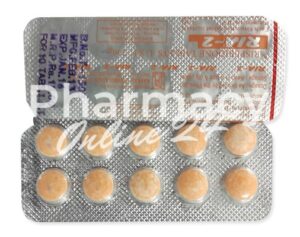
- It is offered in 1 mg, 2 mg, 3 mg and 4 mg tablets, with packs of 10 up to 360.
- In the UK risperidone is a prescription-only medicine marketed under generic names, which makes this Risperdal an import.
Risperdal and what risperidone does in the brain
Risperdal is an imported tablet containing risperidone, a second-generation (atypical) antipsychotic. By reducing signalling at dopamine D2 and serotonin 5-HT2A receptors it helps to settle hallucinations, delusions and disorganised thinking. Stiffness and tremor were a feature of older drugs in this class; risperidone causes them less, but not never. Tablets are swallowed once or twice daily, with or without a meal.
Uses listed in the UK SmPC
Four are named. Schizophrenia and moderate to severe mania in bipolar disorder are the main ones. Two further uses are restricted to a maximum of six weeks: persistent aggression in moderate to severe Alzheimer’s dementia, where non-drug measures have failed and someone may be harmed, and persistent aggression in conduct disorder, for children aged five and over and adolescents whose intellectual functioning is below average, always as one strand of a wider plan.
Four strengths and how doses build up
Every strength (1, 2, 3 and 4 mg) can be had in 10, 30, 60, 90, 120, 180 or 360, which helps with the gradual titration the SmPC describes. For schizophrenia in adults the opening dose is 2 mg, increased to 4 mg on day two; most people then stay on 4 to 6 mg. Gains above 10 mg are doubtful, movement disorders become more likely, and nothing above 16 mg has been studied. In mania treatment starts at 2 mg, with changes of 1 mg no more often than daily, within a 1 to 6 mg range. Older patients begin on 0.5 mg twice a day, and aggression in dementia on 0.25 mg twice a day. With kidney or liver impairment, every dose is halved. Coming off is done gradually: a sudden stop may cause nausea, vomiting, sweating and insomnia.
Dementia, cataract surgery and other warnings
Among older people with dementia, antipsychotics increase mortality and the likelihood of stroke, and the SmPC names furosemide users as particularly exposed. At any age the label warns of neuroleptic malignant syndrome, tardive dyskinesia (movements that may not go away), raised blood glucose, high prolactin, a lower white cell count, dizziness on standing and QT prolongation. Anyone due for cataract surgery should tell the surgeon, as floppy iris syndrome has been linked with risperidone. Risperdal can cause marked drowsiness in the opening days, so driving should wait. Regular checks of weight, blood sugar and prolactin may accompany Risperdal treatment. Because there are four strengths, the strip should be read carefully to make sure the strength matches what was prescribed.
Other medicines in the picture
Levels climb with paroxetine and fluoxetine and fall with carbamazepine and rifampicin. Alcohol and sedatives intensify sleepiness, and risperidone itself works against levodopa and dopamine agonists. Care is needed with any other drug that stretches the QT interval.
Side effects and the UK licence position
Very common effects are drowsiness, headache, insomnia and parkinsonism (stiffness, tremor, slowed movement). Weight gain, a bigger appetite, anxiety, a blocked nose, blurred sight, constipation, indigestion, nausea and tiredness occur commonly, as does akathisia, an inner restlessness that makes sitting still hard. In the UK a prescription is needed for every risperidone product: generic tablets, orodispersible tablets and an oral solution; the electronic medicines compendium lists Risperdal solely as the Consta injection. For that reason the tablets here are imported stock. Whether to begin, adjust or stop Risperdal is a matter for the prescriber.